BPC-157 and Dopamine: What Happened When Rats on Amphetamine Got This Peptide
Adderall does not give you dopamine. It borrows it.
That is why the dose that used to give you laser focus now barely gets you out of bed.
A gut peptide called BPC-157 keeps showing up in dopamine research, and the results are strange.
The amphetamine experiments
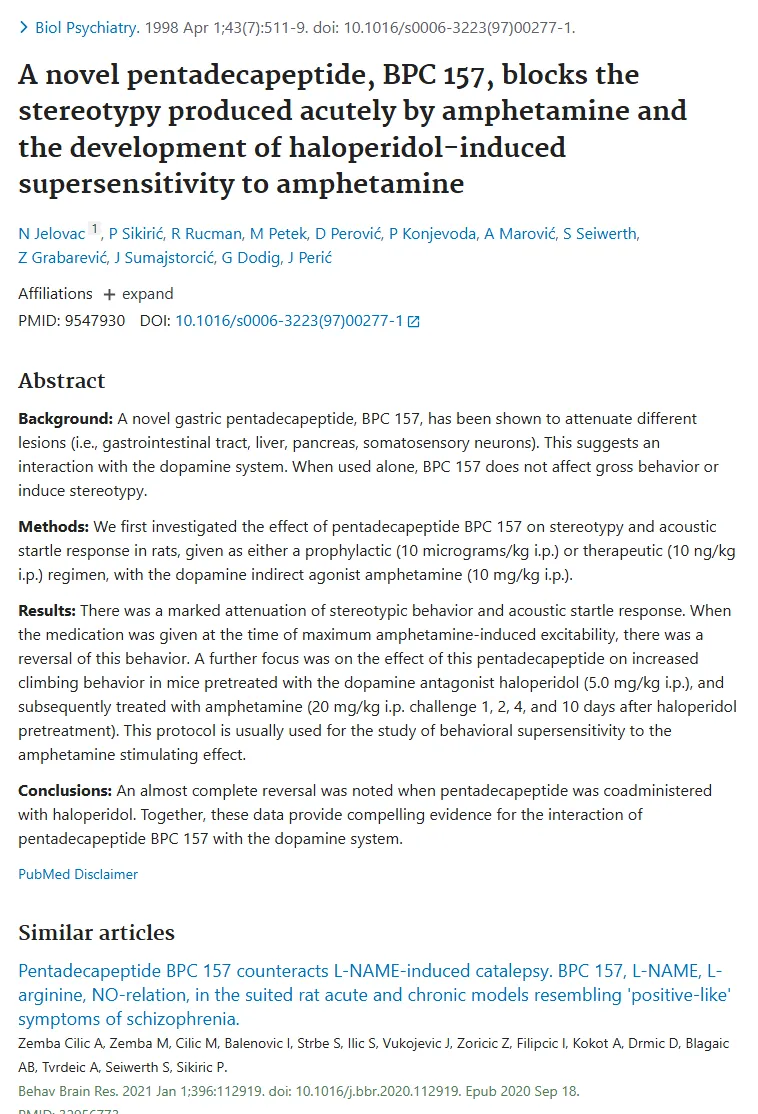
Researchers gave rats a large dose of amphetamine. The rats went into stereotypy, the repetitive, over-stimulated behavior of a flooded dopamine system.
Rats that also got BPC-157 showed far less of it. When BPC-157 was given at the peak of the amphetamine effect, the behavior reversed.
On its own, BPC-157 did nothing to behavior. It is not a stimulant and not a sedative.
It also worked in the other direction
When dopamine receptors are blocked with haloperidol, they become supersensitive, and the next amphetamine dose hits much harder. BPC-157 given together with haloperidol almost completely prevented that.
In a second study it reduced the changes that build up with chronic amphetamine use, the ones researchers call tolerance and reverse tolerance.
Too much dopamine signaling or too little, the peptide pushed the system back toward normal. That is why reviews describe it as counteracting dopamine disturbances rather than raising or lowering dopamine.
Where the gut comes in
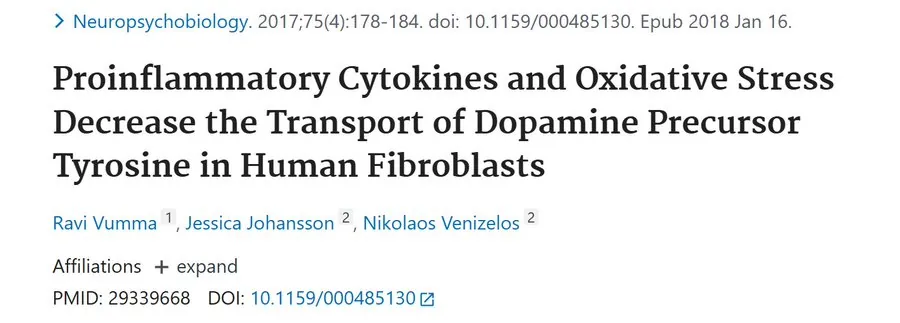
Inflammation makes dopamine harder to build. In human cells, inflammatory cytokines and oxidative stress cut the transport of tyrosine, the raw material for dopamine.
A leaky, inflamed gut is a steady source of those cytokines. BPC-157 is best known for healing the gut, so it may help dopamine from both sides.
The honest part
These are rat and mouse studies. Nobody has run a human trial of BPC-157 for stimulant tolerance or ADHD, and it is not an approved drug. Do not stop a prescription because of a peptide.
How people take it
I take 2 capsules in the morning.
BPC-157 Capsulesrealpeptides.coView productFor the full strategy, read Reset your brain's reward system.
Quick answers
Does BPC-157 increase dopamine?
Not directly. In animal studies it had no effect on behavior by itself, but it counteracted both amphetamine overstimulation and the supersensitivity caused by blocking dopamine receptors.
Can BPC-157 help with Adderall tolerance?
In rats it reduced the behavioral changes of chronic amphetamine exposure. There are no human trials, so this is a hypothesis, not a treatment.
The studies
- A novel pentadecapeptide, BPC 157, blocks the stereotypy produced acutely by amphetamine and the development of haloperidol-induced supersensitivity to amphetamineBiol Psychiatry · 1998 · PMID 9547930
- Pentadecapeptide BPC 157 attenuates chronic amphetamine-induced behavior disturbancesActa Pharmacol Sin · 2002 · PMID 11978191
- Pentadecapeptide BPC 157 and the central nervous systemNeural Regen Res · 2022 · PMID 34380875
- Proinflammatory Cytokines and Oxidative Stress Decrease the Transport of Dopamine Precursor Tyrosine in Human FibroblastsNeuropsychobiology · 2017 · PMID 29339668