80 Overweight People Took Vitamin E for 3 Months. Their Blood Sugar and Insulin Dropped.
Insulin resistance is not only about sugar.
People with insulin resistance have more oxidative stress and lower antioxidant levels in their blood. So researchers asked a simple question: what happens if you give them an antioxidant?
The trial
- 80 overweight adults (BMI above 27)
- Randomized: vitamin E or a matching placebo
- 800 IU a day for 3 months, then 1,200 IU a day for 3 more months
- Published in Diabetes Care
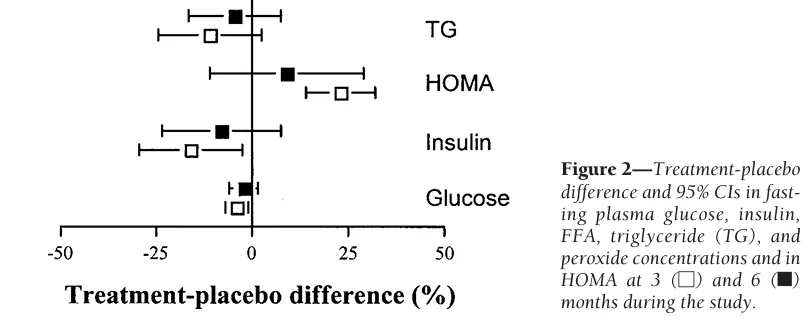
The results at 3 months
- Fasting glucose: significantly lower
- Fasting insulin: significantly lower
- Insulin sensitivity: improved
- Oxidative stress (plasma peroxides): down 27%
The catch at 6 months
At 6 months the glucose and insulin improvements were no longer there. The authors call the effect on insulin resistance transient.
Two things did last the whole study:
- Oxidative stress stayed down, 29% at 6 months.
- The liver enzyme ALT kept falling, a sign of a less stressed liver.
What I take from it
Vitamin E is not a blood sugar drug. It lowers the oxidative load on your liver and cells, and that helps glucose handling, at least for a while.
The basics still decide the result: enough carbs to keep cortisol down, enough protein, sunlight, sleep.
The trial used alpha-tocopherol only. I use a full-spectrum vitamin E, here is why.
E-Complete Oral Supplementskin.foodView productQuick answers
Does vitamin E improve insulin sensitivity?
In a randomized trial of 80 overweight adults, 800 IU a day lowered fasting glucose and insulin at 3 months. The effect was gone at 6 months, while oxidative stress and the liver enzyme ALT stayed lower.
How much vitamin E was used in the insulin resistance trial?
800 IU a day for 3 months, then 1,200 IU a day for another 3 months.
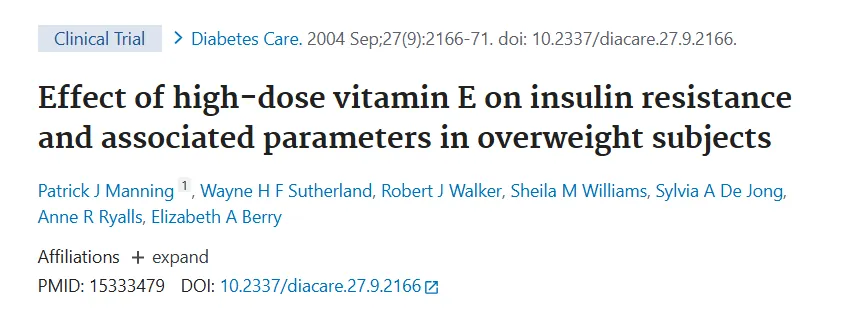
The study
- Effect of high-dose vitamin E on insulin resistance and associated parameters in overweight subjectsDiabetes Care · 2004 · PMID 15333479