Vitamin E and Sperm: The Trial Where Live Births Doubled
The old name for vitamin E was the fertility factor.
Researchers discovered it because rats without it could not carry a pregnancy. The name tocopherol comes from the Greek for "to bear a child".
A hundred years later, the human trials are in.
Trial 1: live births doubled
101 couples going through IVF. The men took 400 mg of vitamin E or a placebo every day for 3 months.
Live-birth rate per embryo transfer:
- Vitamin E: 41.5% (17 of 41)
- Placebo: 20.5% (9 of 44)
That difference was statistically significant.
Trial 2: sperm that can bind the egg
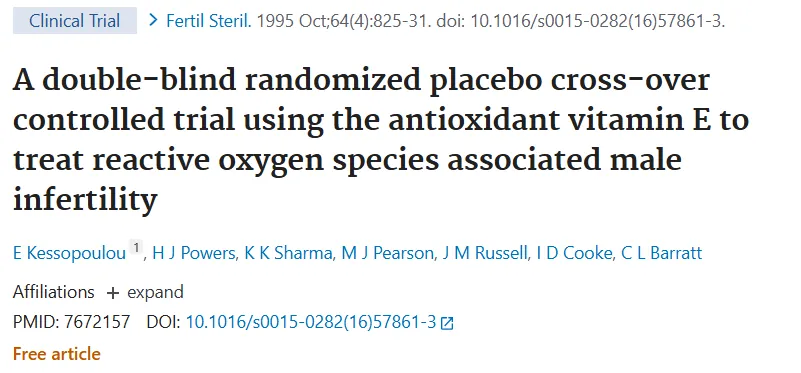
30 men with high oxidative stress in their semen took 600 mg a day for 3 months, in a double-blind crossover trial against placebo.
Vitamin E improved the sperm's ability to bind to the egg, the step that has to happen before fertilization.
Trial 3: vitamin E plus selenium
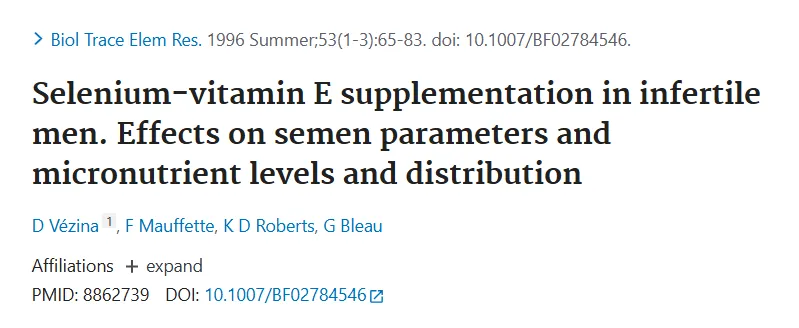
Nine infertile men took vitamin E with selenium for 6 months. Sperm motility, the share of live sperm and the share of normally shaped sperm all increased significantly.
When they stopped, everything went back to baseline. The effect depended on taking it.
The honest part
In the IVF trial the standard sperm counts did not beat placebo. Only the live-birth rate did. And the selenium study was tiny, with no placebo group and no pregnancies.
Vitamin E is not a guarantee. It is a cheap, low-risk input with real human data behind it.
Which vitamin E
All three trials used plain alpha-tocopherol. I use a full-spectrum product with all the tocopherols, for this reason. Make sure yours is not diluted in seed oil.
E-Complete Oral Supplementskin.foodView productQuick answers
Does vitamin E improve sperm quality?
In a placebo-controlled crossover trial, 600 mg a day for 3 months improved sperm binding to the egg. In an IVF trial, 400 mg a day did not improve standard sperm parameters more than placebo but doubled the live-birth rate.
How much vitamin E was used for male fertility?
The two placebo-controlled trials used 400 and 600 mg of vitamin E a day for 3 months.
The studies
- Effect of vitamin E administered to men in infertile couples on sperm and assisted reproduction outcomes: a double-blind randomized studyF S Rep · 2020 · PMID 34223248
- A double-blind randomized placebo cross-over controlled trial using the antioxidant vitamin E to treat reactive oxygen species associated male infertilityFertil Steril · 1995 · PMID 7672157
- Selenium-vitamin E supplementation in infertile men. Effects on semen parameters and micronutrient levels and distributionBiol Trace Elem Res · 1996 · PMID 8862739