Omega 3 to ATP
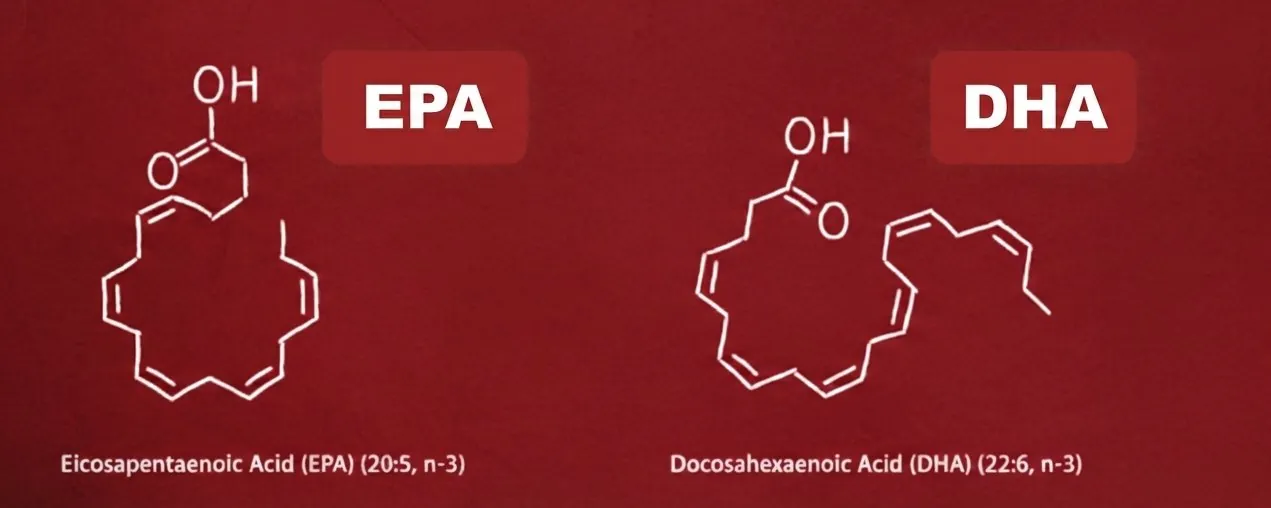
As you can see from the cover picture, Omega 3 fatty acids look nothing like the linear saturated fats, those double bonds twist their structure making them less lipophilic, less stable.
Each double bond increases the chances of oxidating spontanuasly.
List of the popular Omega 3 fatty acids with details about their double bonds.
EPA (20:5)
- Double bond between C5=C6
- Double bond between C8=C9
- Double bond between C11=C12
- Double bond between C14=C15
- Double bond between C17=C18
DHA: (22:6)
- Double bond between C4=C5
- Double bond between C7=C8
- Double bond between C10=C11
- Double bond between C13=C14
- Double bond between C16=C17
- Double bond between C19=C20
ALA: (18:3)
- Double bond between C9=C10
- Double bond between C12=C13
- Double bond between C15=C16
Quick run down of Beta oxidation: each round has 4 steps: FAD,Hydration,NAD,Thiolsae.
The point is to break 2 carbons from the chain to create AcetylCoA (full break down is in my article "saturated fats to ATP")
I'll break down the process of oxidating EPA and you'll notice that the enzyme Isomerase will appear alot, each times it steps in and moves the double bond the fatty acid is very vulnerable to ROS attack.
Another important note, nature is smart, and so is our body, they know that oxidizing omega 3 and even omega 6 is less efficient than saturated fats and can make it vulnerable to ROS attack so these fats are simply not oxdizied for energy an get stored in fat tissues making you fatter.
When they get incorperated in tissues they make the cell less lipophilic, less lipophilic cell loses it's ability to filter toxins and viruses that comes in contact with it so they enter easily, this opens up the chance of getting infected with viruses and diseases.
Now we begin.
Step 1: is activaition of the fatty acids, attaching the Sulfate-AcetylCoA group to C1, the first double bond is C5=C6 so we'll do 1 full round of beta oxidation(FAD,Hydration,NAD,Thiolsae), c1 & c2 will become Acetyl CoA.
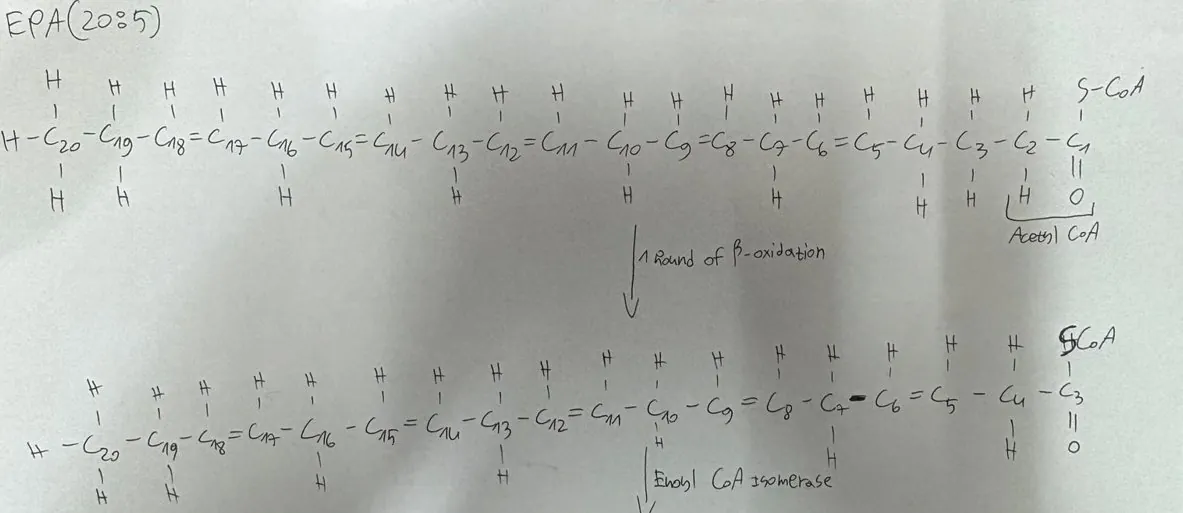
Step 2: Because theer is a double bond at C5=C6, Enoyl-CoA Isomerase will move the double bond one to C5=C4.
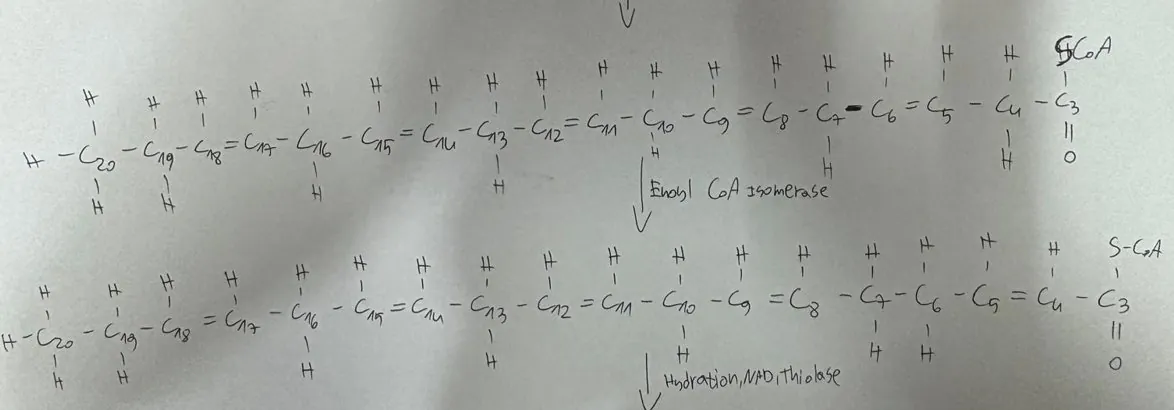
Step 3: FAD step is skipped, we'll do Hydration+NAD+Thiolse, to turn C3&C4 into Acetyl,
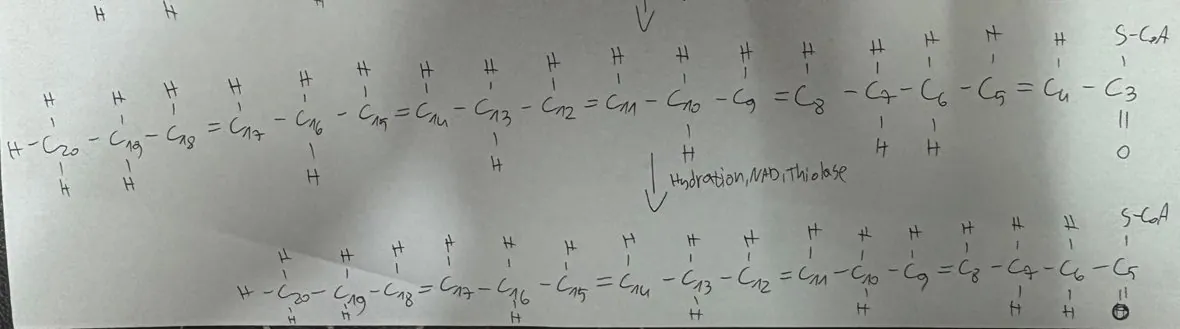
step 4: 1 full step of beta oxidation that turns C5&C6 to Acetyl,Then because we have a double bond at C8=C9, FAD is skipped again and we do Hydration+NAD+Thiolase that turns C7&C8 to Acetyl.
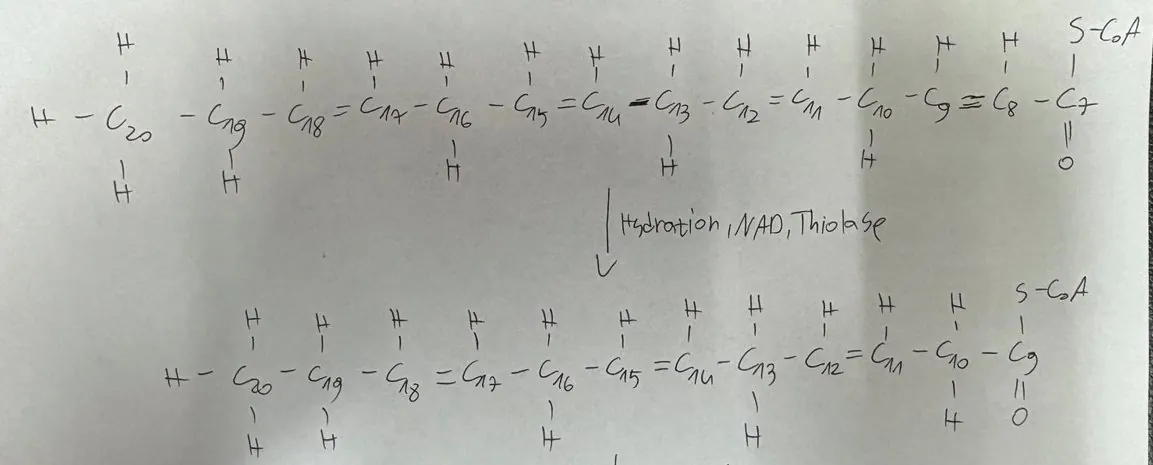
Step 5: Because theer is a double bond at C11=C12, Enoyl-CoA Isomerase will move the double bond one to C11=C10.
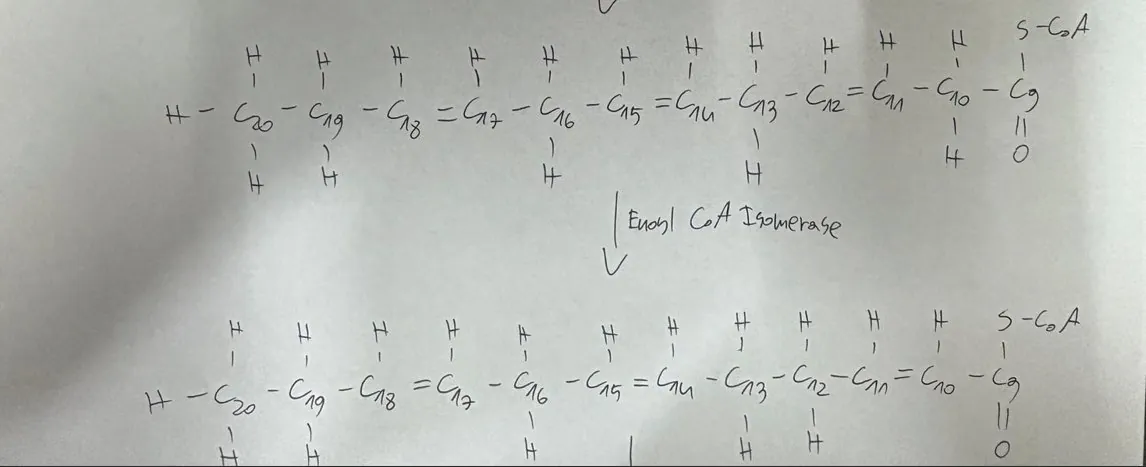
Step 6: FAD is skipped again and we do Hydration+NAD+Thiolase that turns C9&C10 to Acetyl
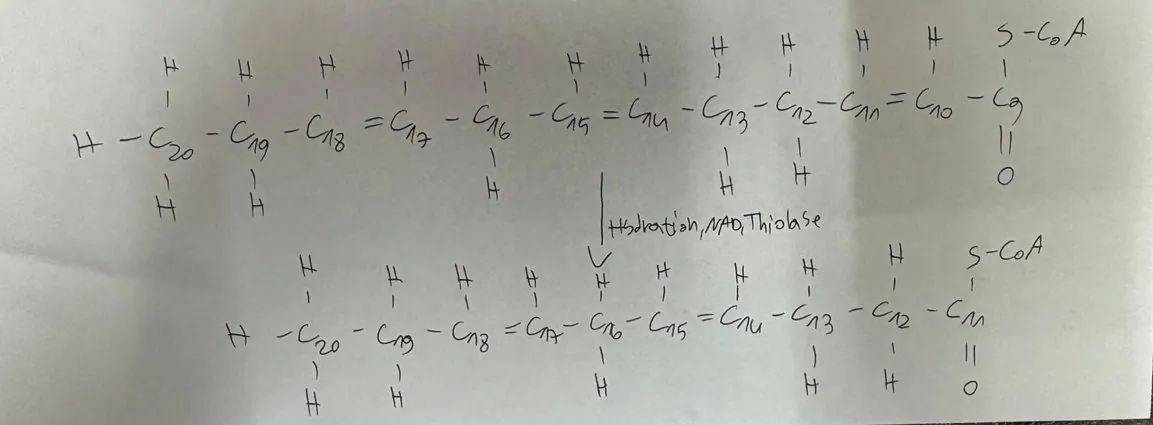
step 7: 1 full step of beta oxidation that turns C11&C12 to Acetyl,Then because we have a double bond at C14=C15, FAD is skipped again and we do Hydration+NAD+Thiolase that turns C13&C14 to Acetyl.
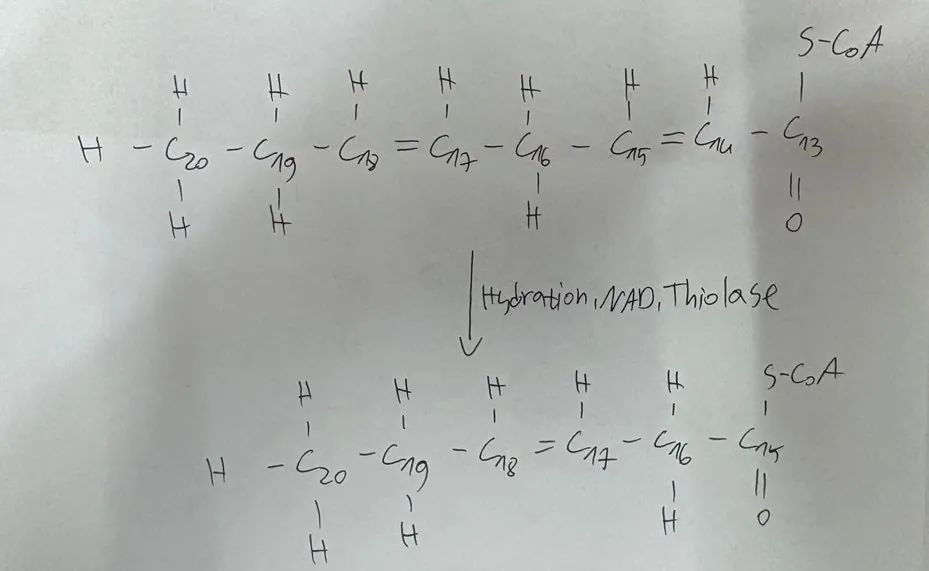
Step 8: Because there is a double bond at C17=C18, Enoyl-CoA Isomerase will move the double bond one to C17=C16.
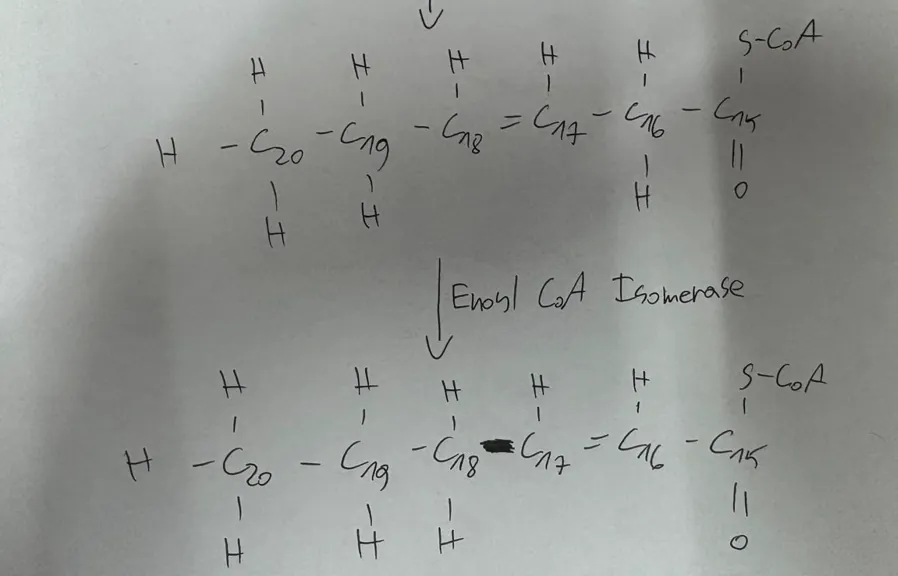
Step 9: FAD is skipped again because of Isomerase, we do Hydration+NAD+Thiolase that turns C15&C16 to Acetyl.
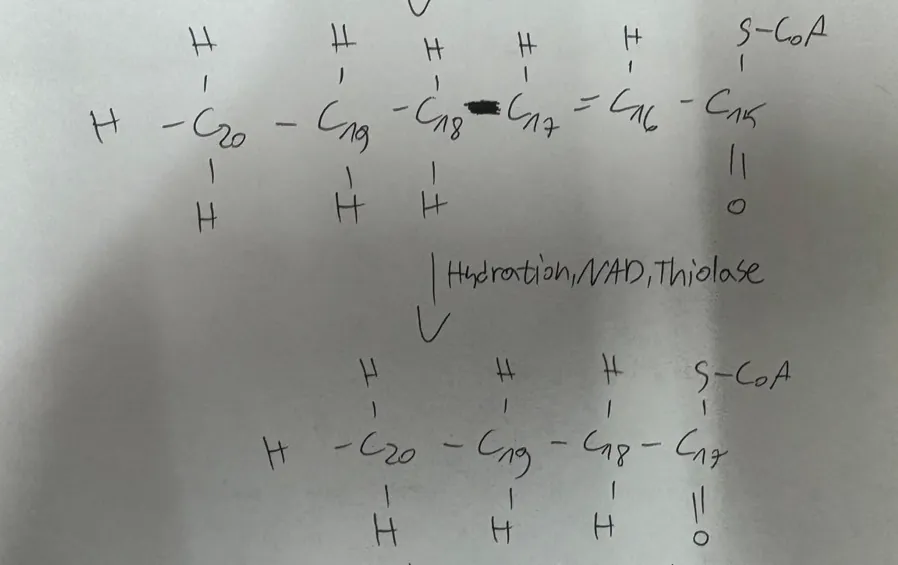
Now we have a 4 carbon fatty acid, so the last step would be 1 round of beta oxidation that would create 2 AcetylCoA molecules.
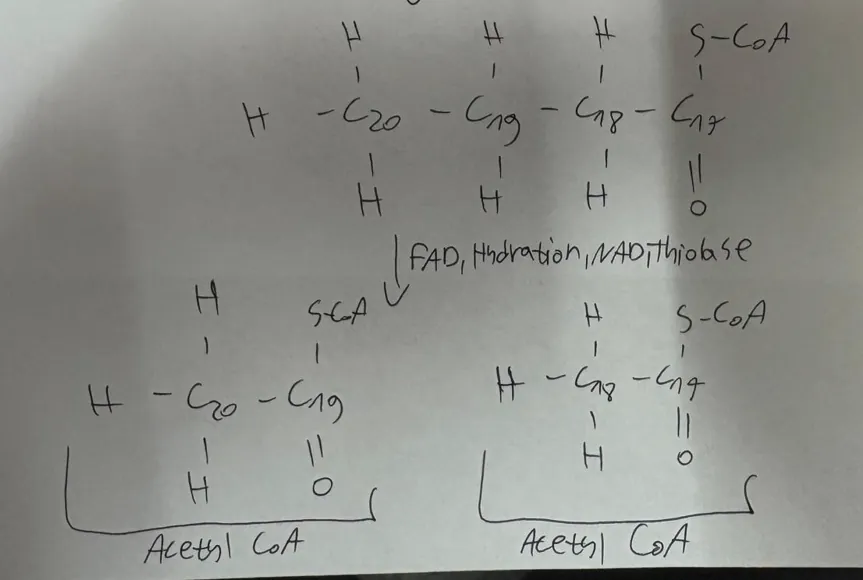
As you probably noticed, this process is alot less efficient then saturated fat oxidation, so the body will try to avoid it and store those fats and not burn them for energy, Isomerase had to step in 3 times making the cell vulnerable to ROS damage.
DHA and ALA are the same as EPA, they contain many double bonds that make it harder to oxidize for ATP,they are less lipopholic and weaken the membranes they get incorperated in.
Hope you find this useful!