Gluconeogenesis
Gluconeogenesis is a fancy name for the metabolic process in which the liver creates glucose from protein.
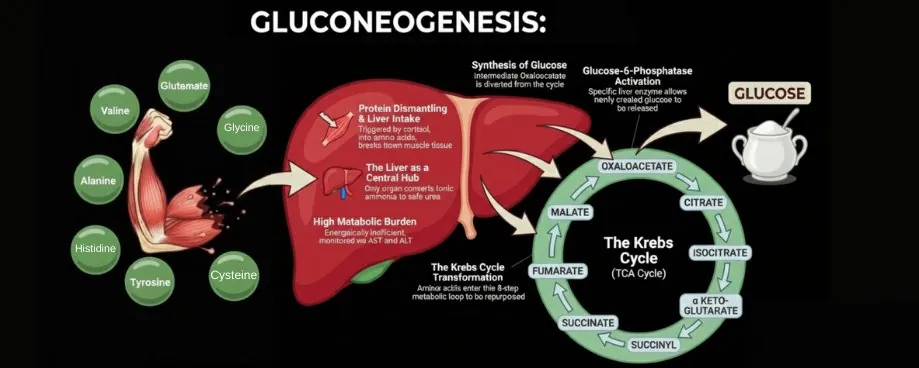
Gluconeogenesis begins When the brain senses that blood glucose or glycogen storages are low so it raises cortisol levels, When cortisol enter the cells it stops muscle protein synthesis and starts do dismantle proteins into amino-acids, then sends them to the liver.
This is the main Catabolic pathway in our body, Extremely energetically Inefficient, activated mainly by Cortisol as part of the HPA-axis. It burdens the liver and prevents it from filtering toxins, estrogen, or fatty acids, and stands as a living proof of the importance of glucose as the main energy source for our cells, demonstrating that our organizm will literally shred any muscle or organ tissue into amino acids to provide glucose to our cells when don't get enough from the diet.
Gluoneogenesis happens in The liver because it's the only organ fully equipped to handle gluconeogenesis. Breaking down amino acids creates ammonia, which is a dangerous toxin. Only the liver can turn this toxin into urea, a safe waste product, through the Urea Cycle, In addition it has high levels of the enzyme Glucose-6-Phosphatase, that allows it to release glucose into the bloodstream, other tissues, like muscles, lack this and must keep the energy for themselves. The liver acts as a central hub that cleans the waste and provides glucose the rest of the body, especially the brain, needs to survive. Gluconeogenesis can be measured by levels of the liver enzymes AST and ALT, The main enzymes of Gluconeogenesis, High levels inducate high gluconeogenesis activity and is a pathological biomarker, Known to be elivated in NAFLD, Cirrhosis, Diabetes and Cancer.
When we eat Glucose it gets broken down and enters the krebs cycle, Gluconeogenesis is simply the exact opposite, the liver turns amino acids into products of the krebs cycle and then to glucose.
I suggest you read this article to understand how glucose oxidation and the krebs cycle works.
The steps of glucose oxidation are:
Glucose -> Glucose-6-Phosphate -> Fructose-6-Phosphate -> Fructose 1,6 Diphosphate -> G3P + DHAP -> Phosphoenolpyruvate(PEP) -> Pyruvate -> AcetylCoA
Then Acetyl enters the krebs cycle with the following molecules:
Acetyl+Oxaloacetate -> Citrate -> Isocitrate ->α Keto -gluterate -> Succinyl -> Succinate -> Fumarate -> Malate -> Oxaloacetate
Almost all amino acids can be coverted into 1 of the 10 molecules listed above, this is key because once the conversion is complete the amino acid is no longer amino acid but a molecule of the krebs cycle and can be converted to any of the krebs cycle molecules.
The common step to all amino acids is to get converted at the end to Oxaloactate, Then the liver will push it "uphill" towards glucose.
Oxaloacetate -> Phosphoenolpyruvate(PEP) -> G3P + DHAP -> Fructose 1,6 Diphosphate -> Fructose-6-Phosphate -> Glucose-6-Phosphate -> Glucose
We can divide the amino acids into 5 group based on the krebs cycle molecule they convert into.
GROUP 1 - Pyruvate
Alanine, Glycine, Serine, Cysteine, Threonine.
Group 2 - Oxaloacetate
Aspartate, Asparagine.
Group 3 - α Keto-gluterate
Glutamate, Glutamine, Proline, Histidine, Arginine.
Group 4 - Succinyl-CoA
Valine, Methionine, Isoleucine.
Group 5 - Fumarate
Phenylalanine , Tyrosine.
The most abundant amino acids in our muscles and tissue are: Alanine, Glutamate and Cysteine, They are the main 3 that get sent into the liver when glucose is needed.
Alanine
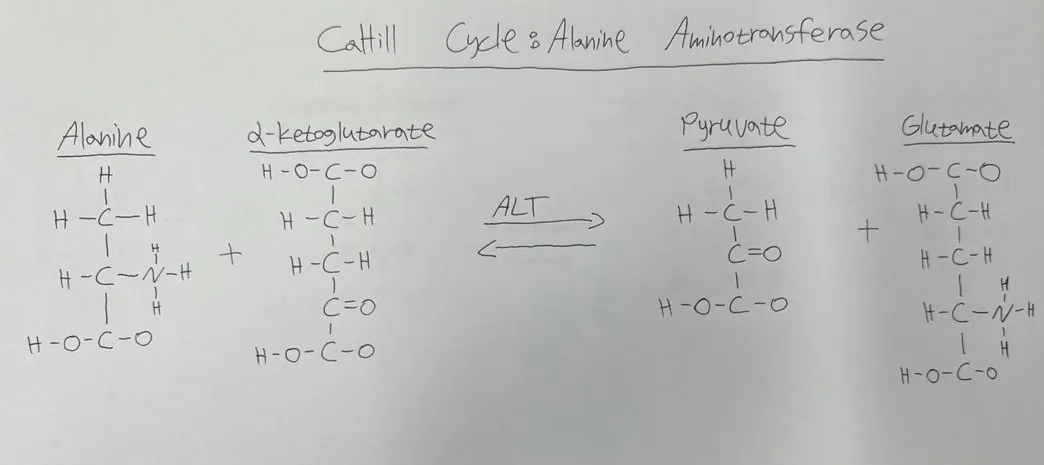
The enzyme ALT removes the amin group and it becomes Pyruvate,
Gives the amin group to α Keto -gluterate which becomes Glutamate.
This shows that everything comes with price, for alanine to become pyruvate, α Keto -gluterate sacrifices itself and becomes Glutamate.
High levels of blood ALT are associated with liver diease and suggest high activity of Gluconeogenesis.
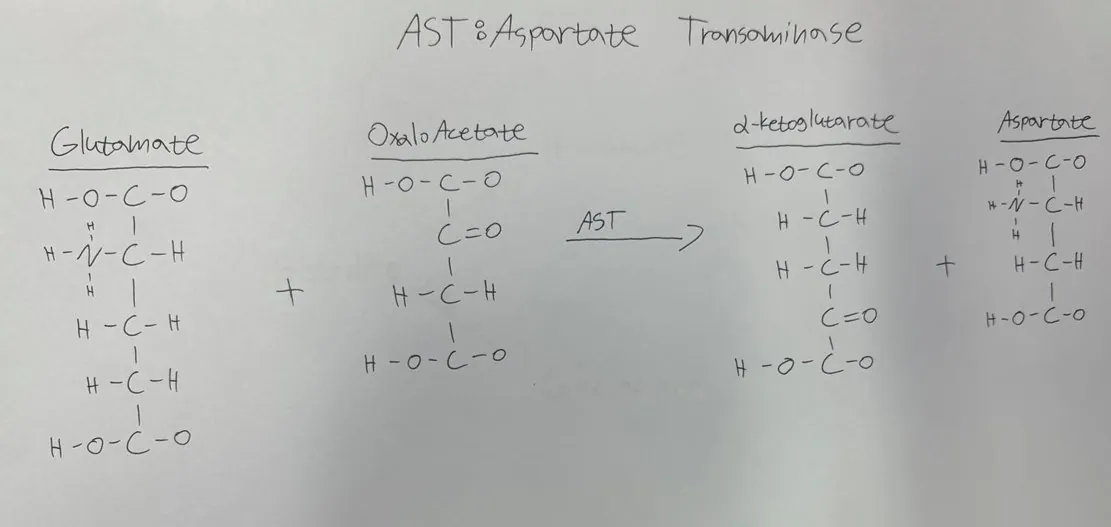
The enzyme AST can convert Glutamate to α Keto -gluterate by taking the amin group and giving it to Oxaloacetate which becomes Aspartate.
When needed AST can do the opposite, Convert Aspartate to Oxaloacetate by taking the amine gorup to α Keto -gluterate and turn it into Glutamate.
High levels of blood AST are associated with liver diease and suggest high activity of Gluconeogenesis.
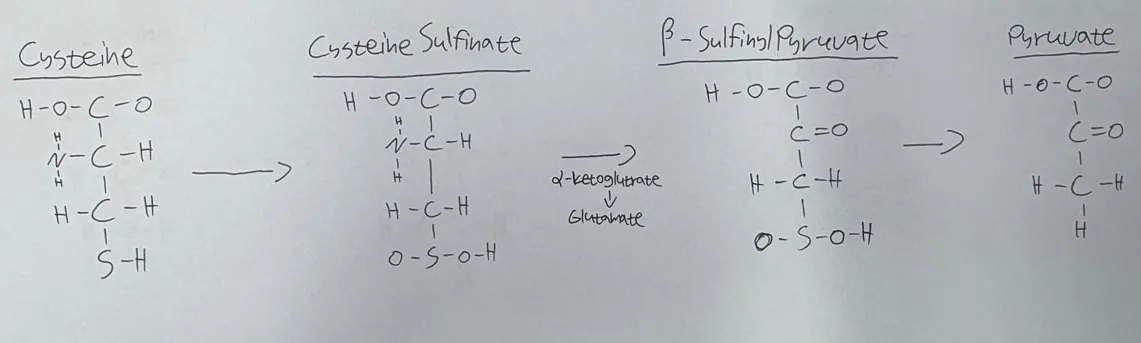
Cysteine can be turned into pyruvate, In the process of giving amine group to α Keto -gluterate which becomes Glutamate.
Cysteine is harmful for metabolism when released to the blood, In the proccess of turning to pyruvate the gas "Hydrogen sulfide" is released and can be as toxic as cyanide to our cells.
High activity of Gluconeogenesis is toxic.
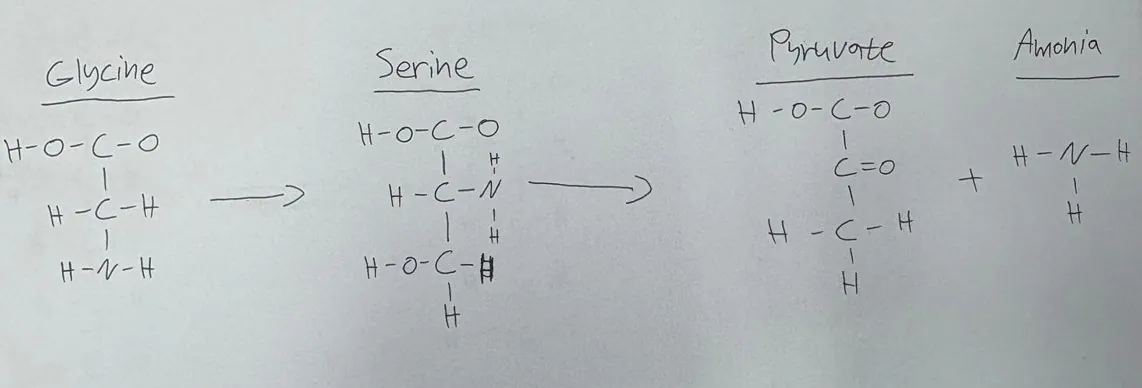
Glycine can turn to serine that turns to Pyruvate + Ammonia.
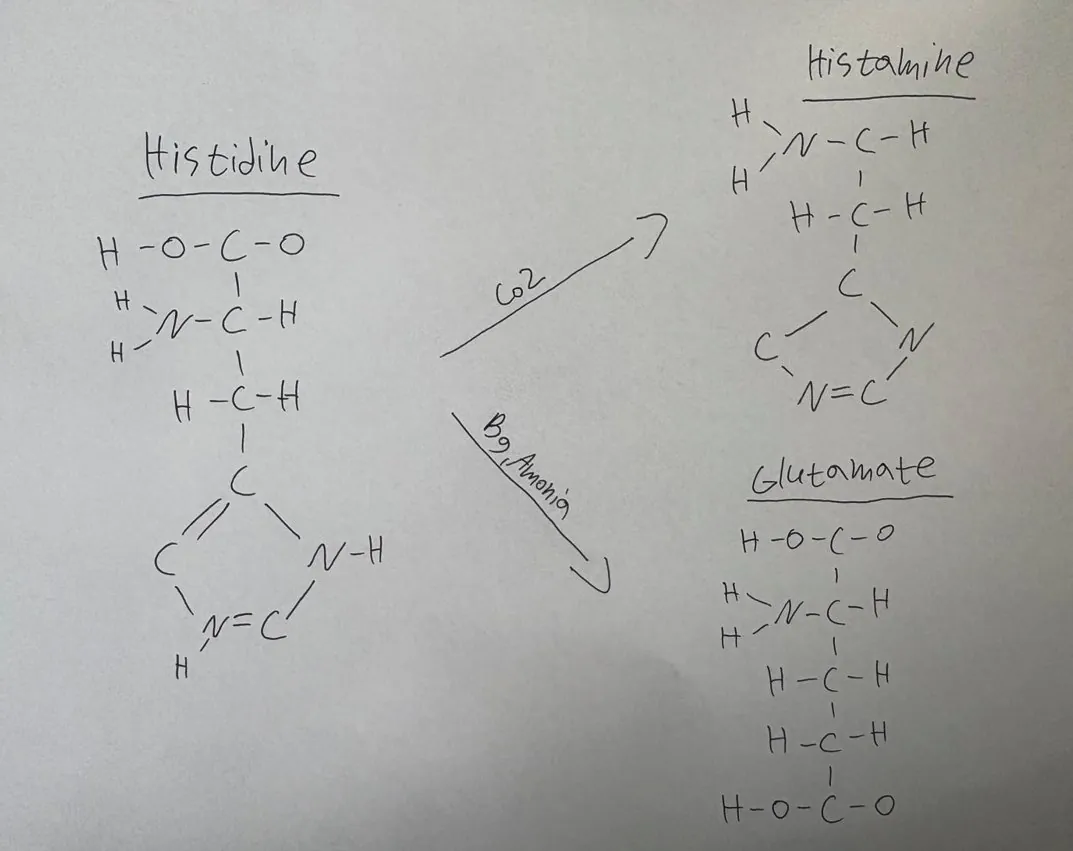
Histidine can be broken down to Glutamate and produce Ammonia, Or to turn to Histamine by releasing Carbon Dioxide.
Histamine is a strong mediator of Inflamation and allergies, If there is excess Gluconeogenesis of Alanina,Glutamate, and Cysteine the liver would rather turn Histidina to Histamine because turning it to Glutamate would create toxic ammonia which he is full of from the Gluconeogenesis, This will result in higher conversion to Histamine, a toxic and Inflammatory hormone.
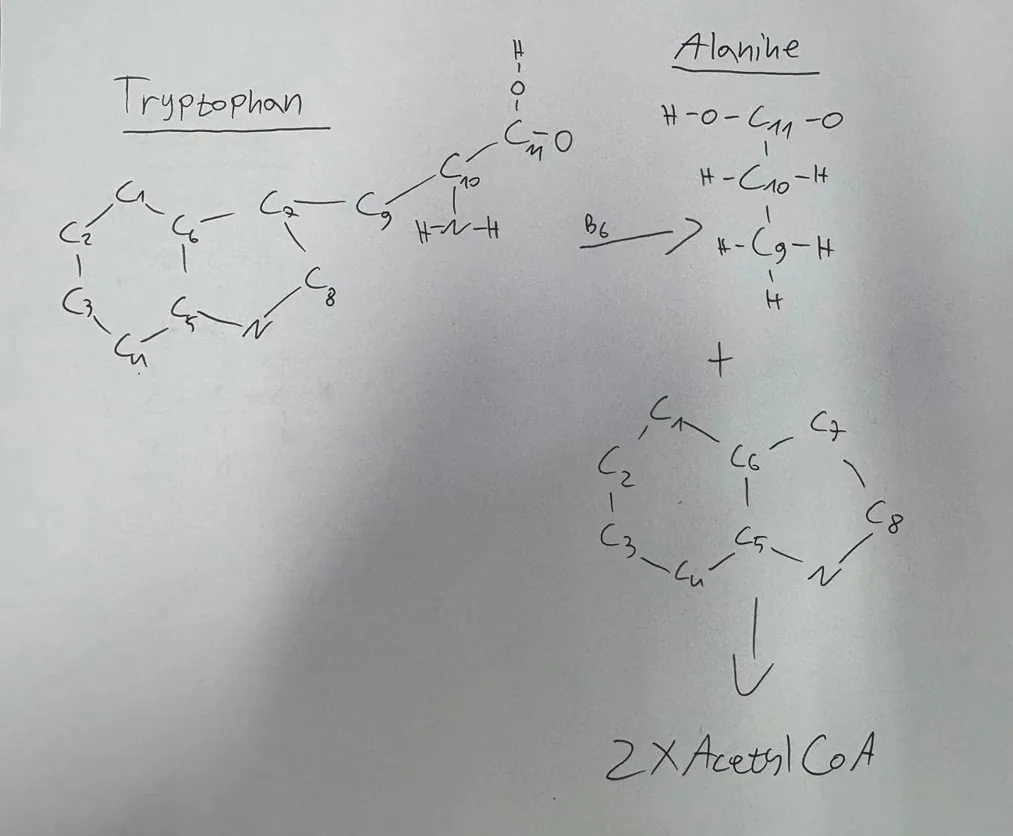
Tryptophan is a bad one, It is the precursor to serotonin, But it can be broken down to Alanina+ 2 x Acetyl, That is only if the liver is not busy with the other amino acids, This is why keeping Gluconeogenesis low is so important.
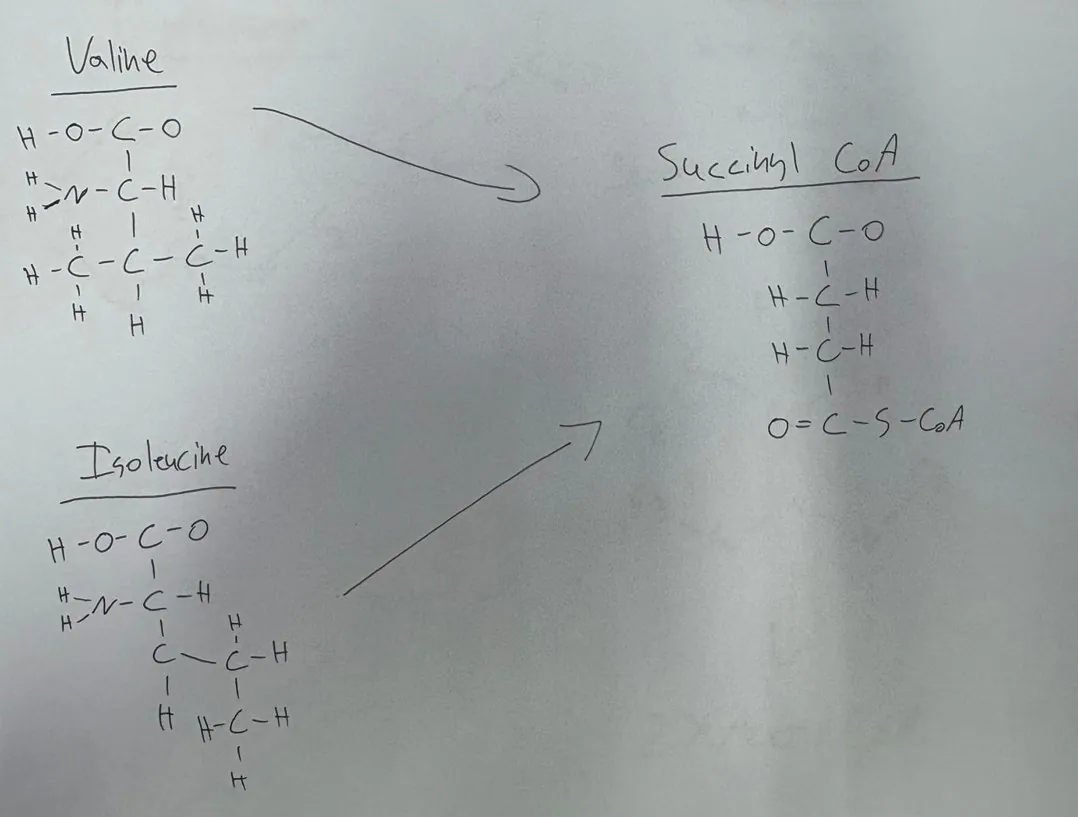
The Branched-Chained Amino Acids, are important for muscle function and keeping Trypotphan, Histidine at bay, They are the last to be converted to glucose but in a low carb diet and high protein intake they would also turn into glucose by converting first to SuccinylCoA.
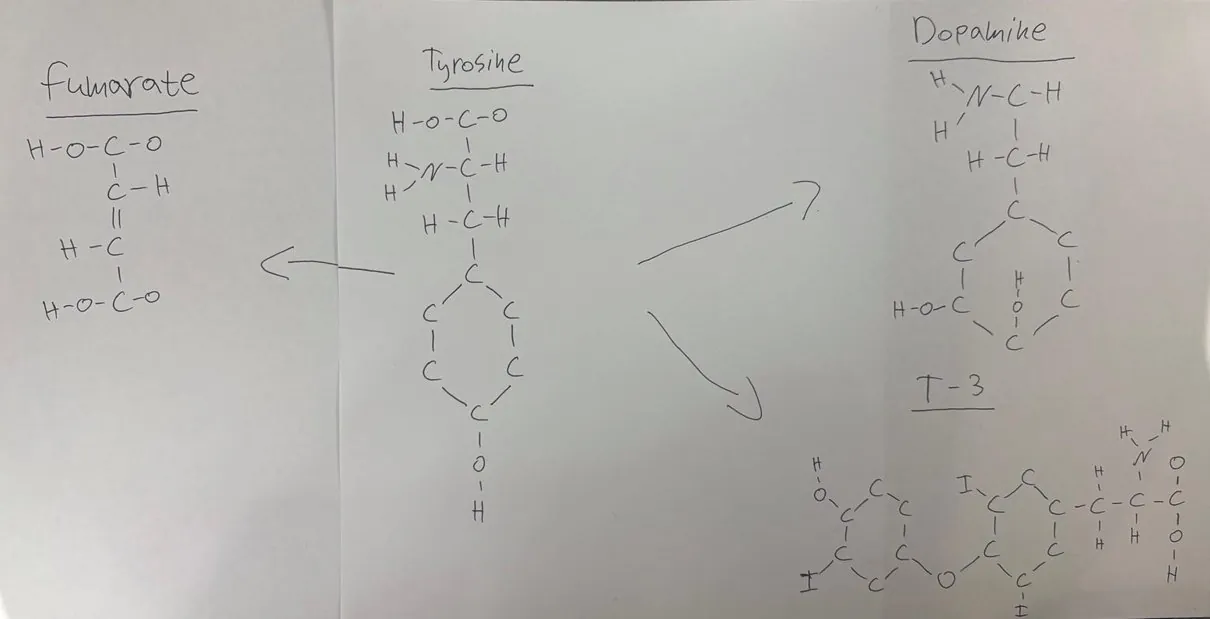
Another sad story would be if Tyrosine, The crucial amino acid that creates The active thyroid hormone T3 and Dopamine would be converted to glucose via Fumarate, Low carb diet would mean just that.
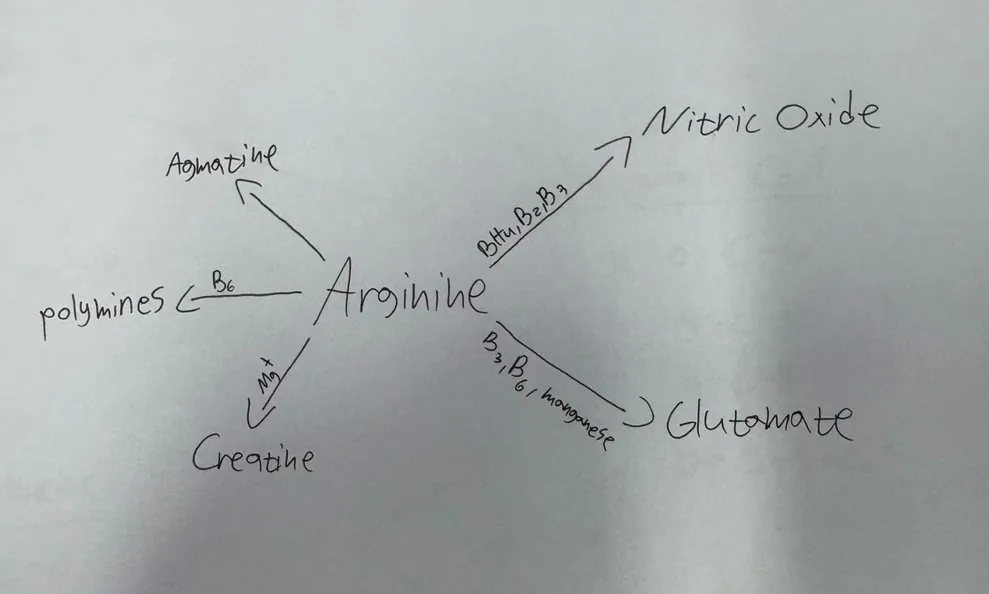
The amino acid arginine can be converted to Glutamine, But if there is too much Glutamine due to high Gluconeogensis, Arginine will convert to Nitric Oxide, A potent inhibitor of the electron transport chain by binding to Cytochrome C oxidase and blocking it from oxidizing electrons.
My goal in this article was to show how protein and sugar are not that far away from each other, protein is super important for our body but only when combined with glucose, Eating high protein meal with no carbs activates Gluconeogenesis, and most of the protein will be converted to glucose and generate ammonia, low carb diets in the long run will result in break down of not only muscle tissue but also brain, heart,liver catabolism, This dangerous and not quite understood.
Hope you found this useful.