Hypothyrodism by Broda Barnes Part 2
13. Thyroid and fertility
"I remember one of my earliest miscarriage patients. She was the wife of a psychiatrist and had been able to carry through to term three babies in the course of seven pregnancies. When I suggested that she might have a thyroid deficiency that could account for her miscarriages, she told me that she had actually been on thyroid several times in the past and when she got to feeling well would stop taking the thyroid. When, together, we went back over her childbearing history, we found that she had had her live babies during the times she was on thyroid and her miscarriages during the times she hadchosen to stop taking thyroid."
"Another patient I saw many years ago, She had a history of irregular menstruation with severe cramps, along with other symptoms compatible with low thyroid function. Her basal temperature was low. I placed her on thyroid but it was too late for this pregnancy and shortly afterward she miscarried again. Thereafter, however, continuing on thyroid therapy regularly, she had four successful pregnancies."
"Animals thyroidectomized at an early age lack reproductive power. Babyrabbits whose thyroids are removed at the age of three weeks never mate."
"Thyroid secretions in adequate amounts appear to be essential for the development of the egg and for proper ovarian secretions. If thyroid function is low, an egg may be discharged from an ovary but it may not be fertilizable or, if fertilized, may not be capable of nesting so that pregnancy is quickly aborted."(p.128)
"One case I remember very well involved, at first, a woman who for seventeen years had tried in vain to become pregnant. There had been many efforts by many physicians to help her. Among the many tests which had been performed, were the standard tests for thyroid function which indicated that hers was a normal thyroid. It was not normal, however, by the basal temperature test. I placed her on thyroid and that did much for her general health but it did not overcome the infertility problem. Fortunately, I finally saw her husband. He came in because of dysentery. Even as he walked through the door, it was obvious that he was markedly hypothyroid. He had the myxedema look, his face swollen and mask- like. He moved slowly, seemed clumsy, spoke with a slow drawl. He suffered from headaches, needed ten hours of sleep a night, had always been susceptible to respiratory infections, and had had five serious attacks of pneu- monia in a twelve-year period. His basal temperature was 95.2 degrees. When he, too, was placed on the thyroid therapy he needed, his health and his whole appearance improved and several months later his wife conceived and in due course, at age thirty- nine, delivered a healthy first baby. She had another boy two years later."(p.129)
Some forty years ago, in an address before the Section of Obstetrics and Gynecology at the annual meeting of the American Medical Association, Dr. Jennings C. Litzenberg, a Minneapolis gynecologist, summarized the experience of many physicians. He noted that 30 percent of previously sterile women with low basal metabolisms conceived on thyroid therapy. He pointed to reports from the Mayo Clinic that about 70 percent of women with menstrual abnormalities improved on thyroid therapy(p.135)
14. Thyroid and High Blood Pressure
"Heart attacks are three to five times commoner in hypertensives than in others; stroke, four times commoner; congestive heart failure, five times commoner"(p.138)
"Although blood pressure may seem mysterious, it isn't. It is simply the force, the push, against the walls of arteries as blood flows through them. Each time the heart beats, pumping out blood, the pressure in the arteries of course increases; each time the heart relaxes between beats, the pressure goes down. When a physician measures blood pressure, he makes two readings and writes them in the form of a fraction, for example, 130/80. The first and larger figure is the systolic pressure (when the heart beats) and the second is the diastolic pressure (when the heart rests). It is entirely normal—and desirable—for pressure to vfluctuate, to decrease during sleep, to increase during physical exertion or emotional excitement. The body's system for regulating blood pressure is a remarkable one, a finely tuned mechanism which, under normal circumstances, can adapt instantly to the shifting needs for blood of all organs and tissues"
"There is a wide range of normal blood pressure. At rest, a systolic pressure in the 100 to 140 range and a diastolic in the 60 to 90 range are considered normal. Nor does any single isolated reading above 140/90 indicate abnormal pressure. But when the elevation is continuous, hypertension has to be diagnosed"
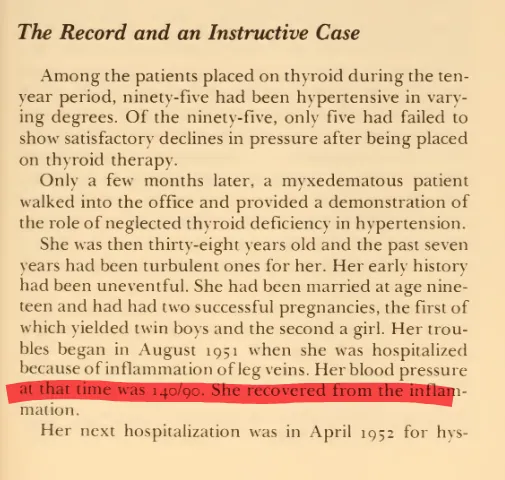
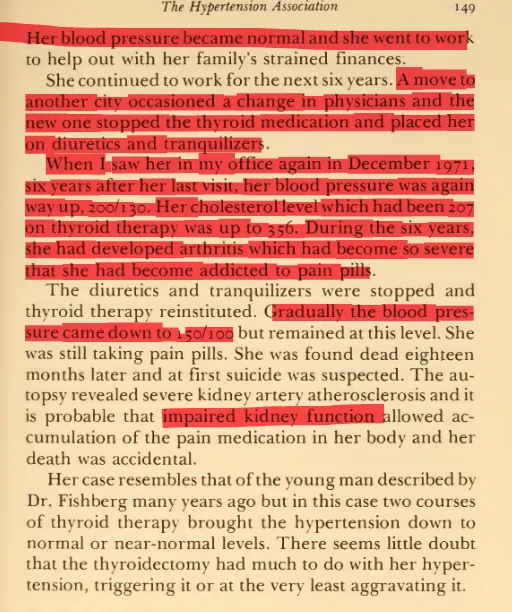
"Dr. A.M. Fishberg, a New York City clinician, pointed to the role of hypothyroidism in ar- tery disease. He cited in The Journal of the American Medi- cal Association the case of a twenty-one-year-old man who had died of pneumonia. He had been free of any seem- ingly serious illness prior to the pneumonia but his blood pressure had been high: 175/135. On autopsy, his thyroid gland was found to be almost completely nonfunctioning; it had been largely replaced by fatty tissue.(p.146)
"I became interested in the possible association between hypothyroidism and hypertension in 1958 when I spent some time studying goiter patients at the Kaiserin Elizabeth Hospital in Vienna. These patients had much higher blood pressures than did my patients back in the United States. They displayed a gradual rise in pressure,Apparently, the more thyroid gland removed, thehigher the pressure went."
"Dr. Pericles Menof that thyroid therapy was efficacious. His practice was to begin treatment with five grains and then reduce the dosage as indicated. It seemed to me that better results might be obtained by starting with small doses and increasing them gradually if necessary. Nevertheless, Menof reported that many of his hypertensive patients improved.(p.150)
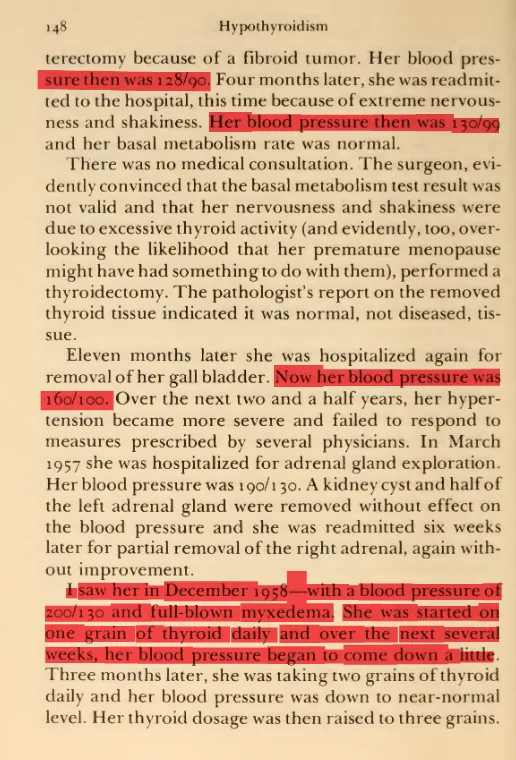
"One twenty-five-year-old man first seen in 1967 had been refused by the military at the age of twenty because of his elevated blood pressure. I found his blood pressure to be quite high, 200/100. Because he was a big man weighing 219 pounds, he was started on two grains of thyroid daily, It took several weeks before his pressure began to come down at all and many months before it came all the way down. But down it did come, without use of any other medication, to reach a highly desirable level of 130/80"
15.Thyroid and Heart attacks
"Saturated Fats and Cholesterol As you well know, they have been blamed. But is the blame justified?"(p.156)
"It's doubtful that saturated fats and cholesterol-rich foods make up any greater part of the diet of many people today than they did of the diet of our forefathers of one and two centuries ago"
"Only a molecule containing two carbon atoms is necessary for the start of the formation of the complex cholesterol molecule that contains four benzene rings and a side chain. The rapid synthesis of cholesterol is, in fact, one of nature's wonders. It appears that by making it possible to start synthesis with simple building blocks nature guarantees that cholesterol will alw^ays be available when needed, and a necessary material it is in many ways. The hen's egg is rich in cholesterol because the material is required if a chick is to develop."
"the adrenal glands contain the highest concentration of cholesterol of any tissues in the body. Cholesterol is the starting material for the synthesis of adrenal hormones needed for the maintenance of mineral and glucose metabolism and to ready the body for quick action in emergency situations
"The greatest enthusiast for vigorous exercise I have ever known was my college professor of physical education, a near-perfect model of a physical specimen, who had a heart attack before the age of fifty.(p.158)
"Each year, over 2,000 autopsies are performed in Graz, covering 75 percent of the total deaths in the city. The autopsy records show the cause of death in each case, and the records go back many years, I have spent at least one month each summer for the past fifteen years reviewing autopsy records in Graz and in that time have examined more than 70,000, Between 1930 and 1970, deaths from heart attacks increased by a phenomenal 1,000 percent."(p.160)
"For a time some investigators felt that the female sex hormones were providing some protection for women. Attempts were made to administer female hormones to men who had survived a first heart attack in hope of preventing further damage. However, a need almost to wear brassieres and a loss of sexual drive did not seem worthwhile to most men. Moreover, when the Veterans Administration began to use female hor-mones to delay cancer of the prostate, it was found that atherosclerosis became a major problem. The female hormone offered no protection."(p.163)
"Drs. White and Lerman investigated twenty-eight men who had survived a heart attack before the age of forty. They found that two abnormalities stood out clearly: serum cholesterol was high and the basal metabolism rate was usually low. Thyroid therapy was tried cautiously and some im- provement was noticed. The cholesterol levels fell; the patients felt better; those with anginal pain, the chest pain associated with coronary artery disease, became pain-free with only two exceptions, "(p.165)
"Dr. K.B. Turner looked into the matter in 1938. They found that if those rabbits susceptible to cholesterol-feeding were given therapeutic doses of thyroid, the blood cholesterol levels were lowered and atherosclerosis did not develop. On the other hand, if they removed the thyroids from rabbits resistant to cholesterol-feeding, they promptly developed high blood levels of cholesterol and atherosclerosis."
"My personal interest in heart attacks was not aroused until 1950 when a friend, a fifty-nine-year-old navy retiree, developed severe chest pain while traveling by car 60 miles from home. How he ever managed to drive home and survive is still a mystery. An electrocardiogram showed that he had suffered a severe heart attack. Three days later, he suffered another attack. He had been in seeming good health all his life, right up to the first heart attack.
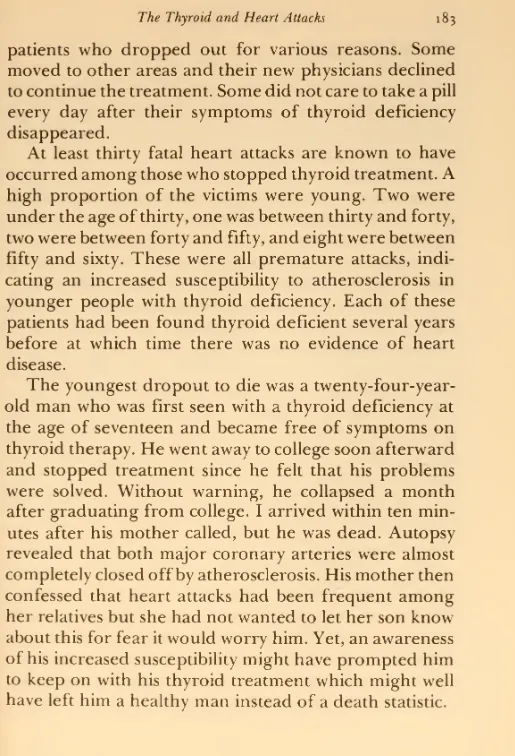
he had had symptoms for several years of hypothyroidism for which he had sought no medical advice. He came through the two heart attacks and after resting for more than a month went back to his normal activities. Two years later, he was started on thyroid therapy and for seven years led an active, vigorous life, even coming out of retirement to take on a challenging executive job. He became negligent about his thyroid medication and had been off thyroid for four months when he died of another heart attack at the age of sixty eight.(p.176)
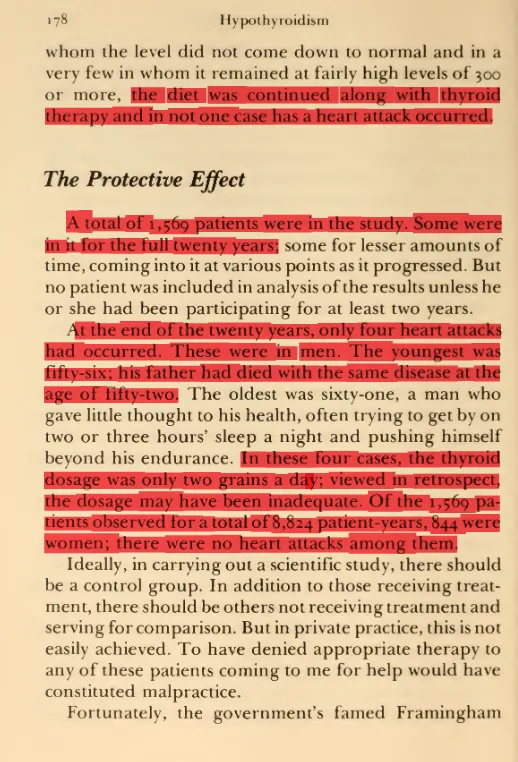
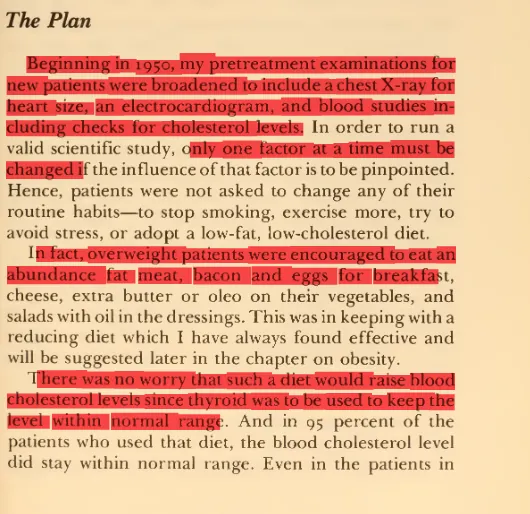
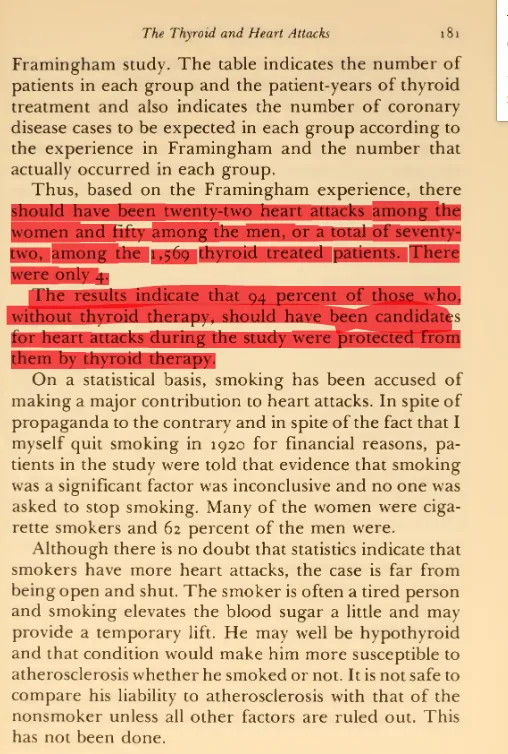
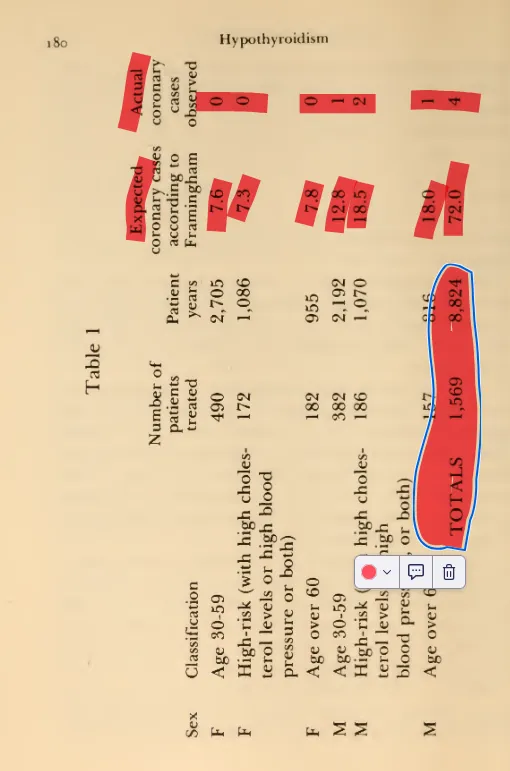
"Evidence of the importance of thyroid therapy comes not only from the results in the 1,569 patients receiving such treatment in the study but also from the results in:
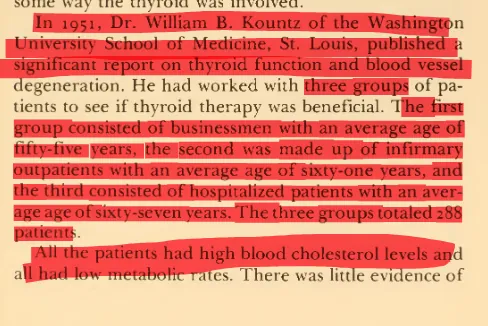
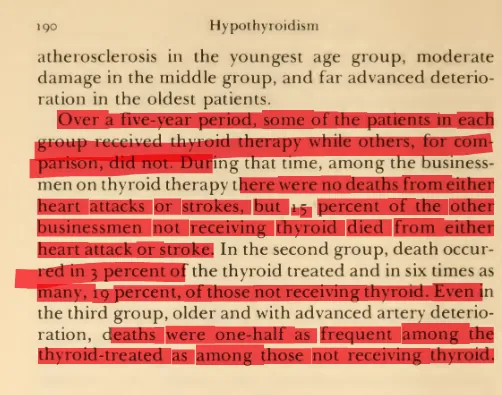
16. Thyroid and Diabetes/Hypoglycemia
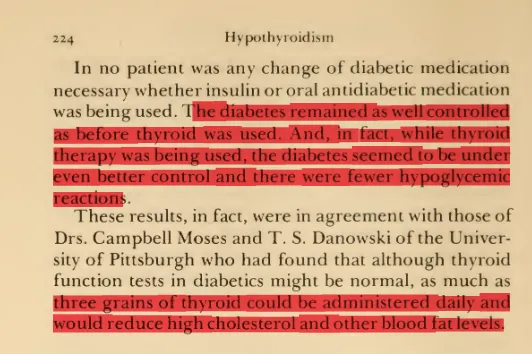
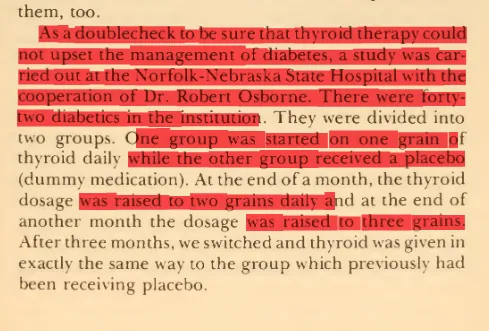
"There were 42 diabetic patients. They were using insulin or tolbutamide or another oral antidiabetic drug. Because of low basal temperatures, they were placed on thyroid therapy. About two months after the proper dosage of thyroid had been determined, they began to have fewer infections, wounds healed promptly, blood fat levels returned to normal, and they experienced feelings of greater well-being and increased energy"(p.214)
"Diabetes, we know today, is an "iceberg" disease. It involves more than sugar in the blood. Indeed, the sugar in the blood is only the tip of the iceberg. the hyper-glycemia, or excess of sugar in the blood, resulting from faulty handling of carbohydrates."
" in my experience, thyroid therapy for people with low thyroid function who have not yet developed diabetes may do much to prevent appearance of the disease"(p.215)
The Sugar Problem
Normally, all the carbohydrate foods we eat—the sugars and starches—are converted in the intestinal tract and in the liver to glucose, a simple sugar also called dextrose. About 60 percent of the protein food we eat is also convertible to glucose. Glucose goes by way of the blood to all body tissues where it is used to produce the energy needed for functioning. Normally, the sugar level in the blood is regulated precisely. Between meals, the level lies between 80 and 100 milligrams of glucose for every 100 milliliters of blood. When a meal is being absorbed, the blood sugar rises but usually does not exceed 160 milligrams.
If it goes above 180 or 200 milligrams, the kidney will excrete the extra sugar. Diabetes comes from a Greek word meaning to run through. And in diabetes glucose does run through the body to be excreted in the urine. In doing so, it increases the demand for water and may produce great thirst along with increased urination. Other symptoms may include loss of weight, sometimes with increased appetite and excessive food intake; weakness;
"more diabetics began to die of coma. Although they lived about a year longer as the result of surviving tuberculosis, the accumulation of ketone bodies from the burning of fats, which they had to use as the major source of their energy, led to acidosis and death. Insulin solved this problem because now the diabetic could use sugar and the ketone bodies were eliminated. But a new monster raised its head hardening of the arteries or atherosclerosis. By 1930, the average diabetic survived only 8.7 years after the disease was diagnosed, and half of diabetic deaths were due to damage to the arteries."
"For the year 1969, the cost of hospital admissions, not including physicians' fees, was more than $1 million for foot lesions in diabetic patients. This was for a single institution. Imagine what the total cost across the country is for this problem which Dr. Eaton found could often be avoided by thyroid therapy. It is hardly any wonder that he concluded his 1954 report with the observation that "Thyroid therapy is particu- larly effective for diabetic patients.(p.222)
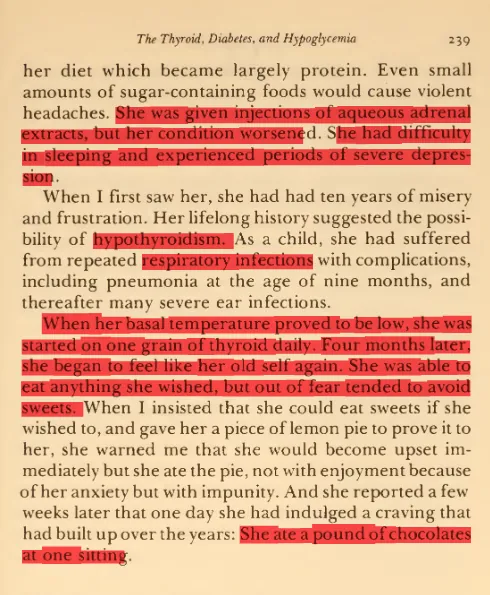
"One of my diabetic patients was sixty-eight years old when she had a heart attack in 1958 at a time when she was not on thyroid. As soon as she had recovered, she was started on thvroid and has taken it ever since. Now at age eighty-four, she is active, takes care of herself, has had no vision impairment and reads her news paper regularly, and has been entirely free from complications of diabetes since she started on thyroid sixteen years ago.(p.225)
"cortisone also causes a discharge of glucose from the liver; in fact, continual administration of excess cortisone can be enough in itself to produce diabetes. Many patients who can handle loo grams of sugar without evidence of prediabetes are classified as pre- diabetic or diabetic when they are given two doses of cortisone, one eight and one half hours and the other two hours before the glucose tolerance test. Under these circumstances, the blood sugar will be elevated above the accepted range and it will stay elevated longer."(p.234)
"In hypothyroidism, digestion in the stomach and intestines is delayed. The concentration of acid and enzymes involved in digestion may be diminished. Motility of the gut is reduced and food is propelled more slowly along the tract. Absorption through the intestinal wall is slower."
"Some diabetics are difficult to control. They may swing from insulin reaction one day to sugar in the urine and the appearance of ketone bodies shortly afterward. The ketone bodies are the result of failure to utilize carbo- hydrates properly which causes the body to draw on its supply of fats to so great an extent that they cannot be handled properly and their incomplete oxidation allows ketones to accumulate in blood and tissues. These are the diabetics who are known as fragile, labile, brittle, volatile, or unstable. It appears that many of them are hypo-thyroid and that treatment for the hypothyroidism often permits better control of the diabetes"(p.237)
17. Thyroid Infections and Cancer
"As we have seen, low thyroid function plays a significant role in increasing susceptibility to infectious disease, and it may very well play a similar role in increasing susceptibility to lung cancer. It could be only coincidence that among thousands of patients I have placed on thyroid therapy, not one has developed lung cancer and there have been only six deaths due to malignancies of any kind while in a similar number of people in the general population about twenty deaths from cancer would have been expected."
"The stage when mucus accumulates in the airways and the accumulation is accompanied by narrowing and inflammation of the airways is called chronic bronchitis.
"Nasal stuffiness or postnasal drip may come to be accepted by the patient as a way of life after no physician seems to be able to do anything about it"
"And it is often possible, too, to overcome a sinus or other infection with antibiotics. But the antibiotics do nothing to prevent recurrences and each infection damages the lungs a little more and the effects are cumulative."(p.250)
18. Thyroid in Obesity, aging and balding
"The thyroid has much to do with obesity—but not in the way many people have long thought. Loading in thyroid when thyroid function is normal is hardly the answer to obesity. The results of such treatment can be even worse than the effects of obesity. If thyroid function is low, correcting it with thyroid therapy will help but again this is not the whole answer"(p.256)
"A high sugar level in the blood causes a release of insulin into the bloodstream which must be countered by more glucose."(p.267)
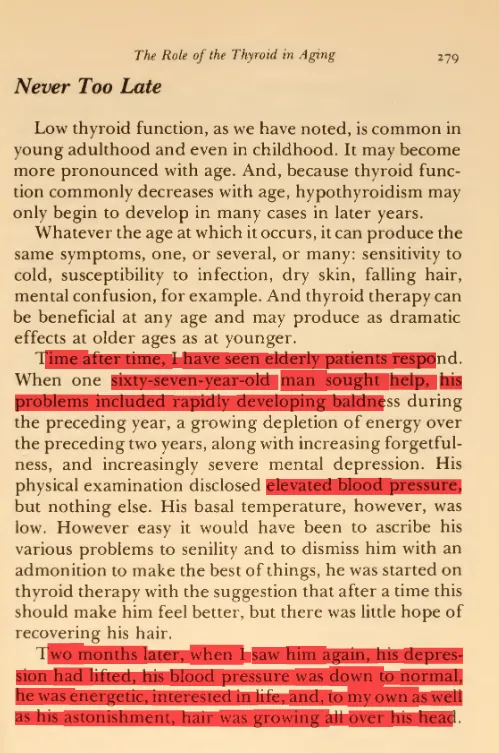
"Drs. J. P. Duruisseau and E. Laurendeau of the Hospital of Notre-Dame de la Merci in Montreal, published another on a study of thyroid function in elderly, chronically ill patients. The functioning of the thyroid, they found, had decreased in most of the patients. Moreover, treatment with thyroid extract resulted in noticeable clinical improvement in some of them. A decrease in thyroid function with age, they concluded, may be a cause of thyroid insufficiency and it may aggravate other conditions(p.277)
Dosages:
By the age of six, one-half grain may be used in the beginning. A teen-ager or adult may safely be started on one grain daily. For a particularly large man or woman, two grains may be used—but no more than that at the beginning. The starting dosage should be maintained for about two months. After that, if necessary, the dosage may be increased."
" If the blood cholesterol was high to begin with and has fallen to some extent but not to normal, the dosage may be increased if the basal temperature is still low"
"The basal temperature can serve as an excellent guide not only to the need for thyroid therapy but also to achieving the proper thyroid dosage. The normal range of basal termperature is between 97.8 and 98.2 degrees Fahrenheit. When symptoms of thyroid deficiency are present, the basal temperature may be one, two, or even three degrees below normal. With thyroid therapy, the temperature will start to rise. During treatment, it should not exceed the upper limit of normal 98.2 unless a cold, sore throat, or other infection is present. The thyroid gland will not decrease its normal function unless the basal temperature is main- tained for some time above the upper limit of normal."(p.286)