Krebs Cycle
Press Acetyl-CoA to run one turn of the cycle.
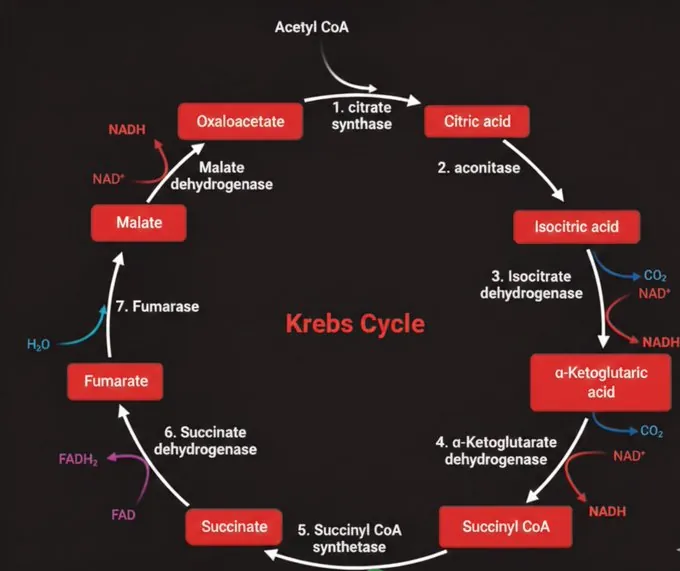
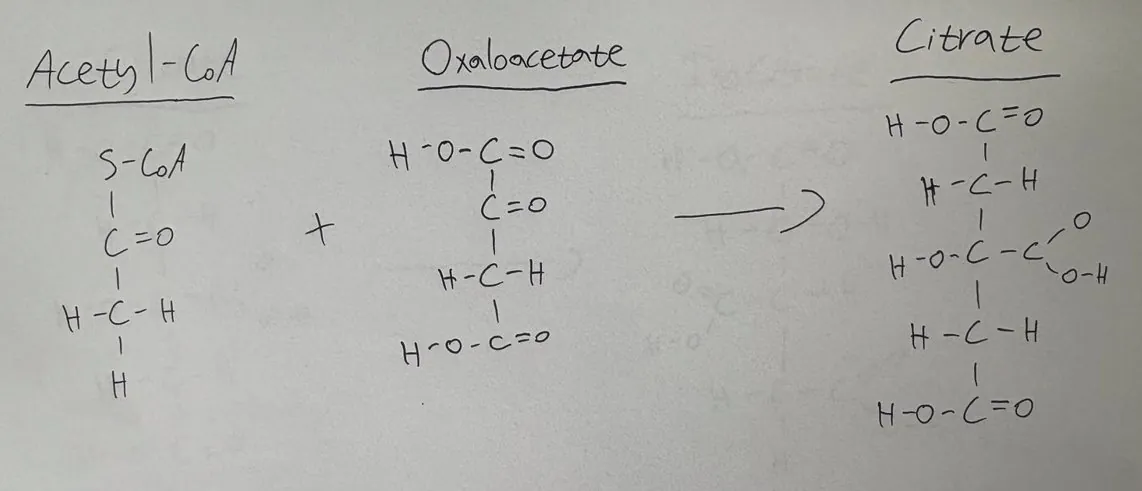
- 1Citrate synthase
Acetyl-CoA + Oxaloacetate → Citrate
CoA out
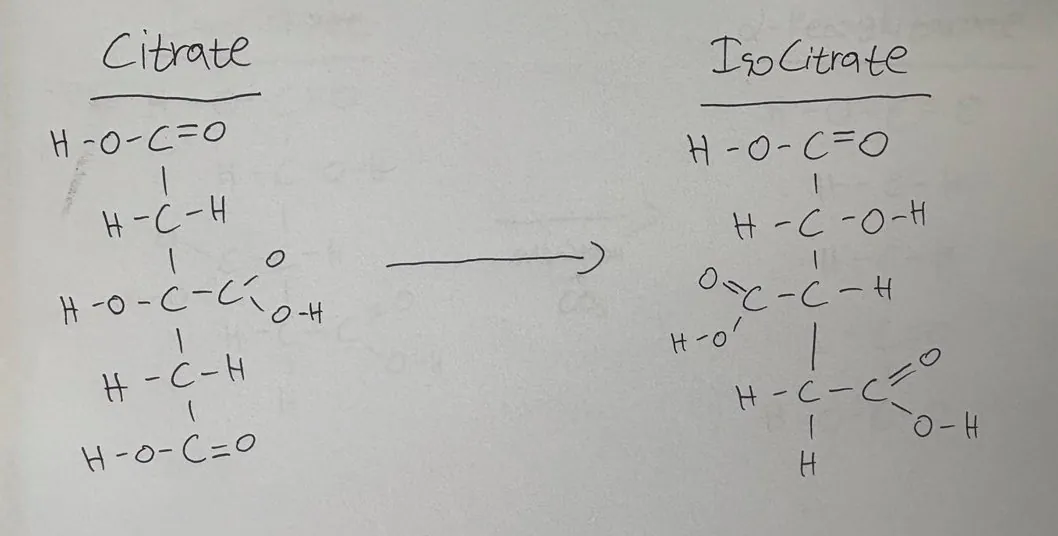
- 2Aconitase
Citrate → Isocitrate
no product
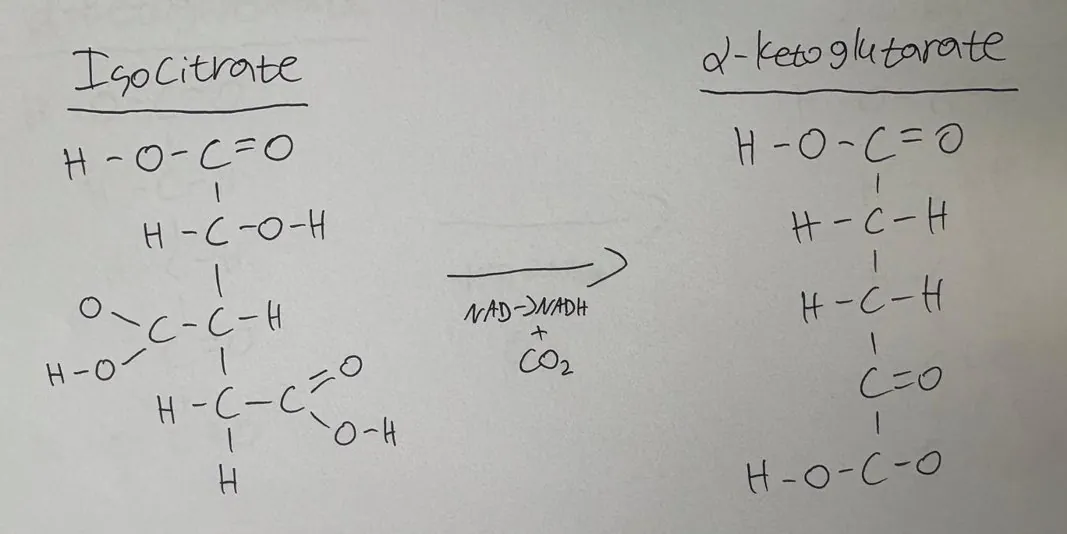
- 3Isocitrate dehydrogenase
Isocitrate → α-Ketoglutarate
NADHCO₂
- 4α-Ketoglutarate dehydrogenase
α-Ketoglutarate → Succinyl-CoA
NADHCO₂
- 5Succinyl-CoA synthetase
Succinyl-CoA → Succinate
ATPCoA out
- 6Succinate dehydrogenase (Complex II)
Succinate → Fumarate
FADH₂
- 7Fumarase
Fumarate → Malate
H₂O in
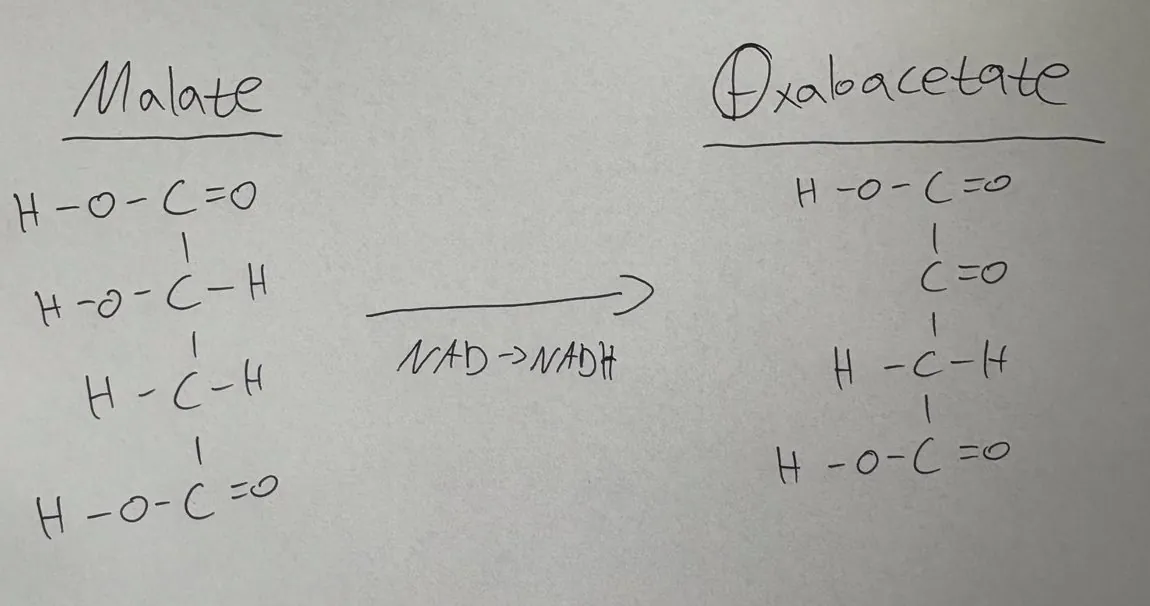
- 8Malate dehydrogenase
Malate → Oxaloacetate
NADH
Counters show what the cycle itself makes and uses. Each NADH flies as a messenger and hands its 2 electrons to Complex I, each FADH₂ to Complex II, and leaves as NAD⁺ / FAD; the chain pumps protons that drive ATP synthase.
The Krebs Cycle
The Krebs cycle is a cyclic process occurring in the mitochondria that in each round receives an acetyl molecule and passes it through 8 steps. These steps gradually strip away the hydrogens and release carbon dioxide, The Krebs Cycle it is the primary source for electrons to the Electron Transport Chain.
1.Acetyl CoA connects with oxaloacetate to form citrate a six carbon molecule.
2.Citrate is turned into isocitrate by aconitase.
3.Isocitrate is oxidized and decarboxylated to alpha ketoglutarate forming NADH, and one carbon is released as CO₂.
4. A-ketoglutarate is oxidized and decarboxylated to succinyl producing another NADH and CO₂. succinyl a four carbon skeleton is linked again to CoA.
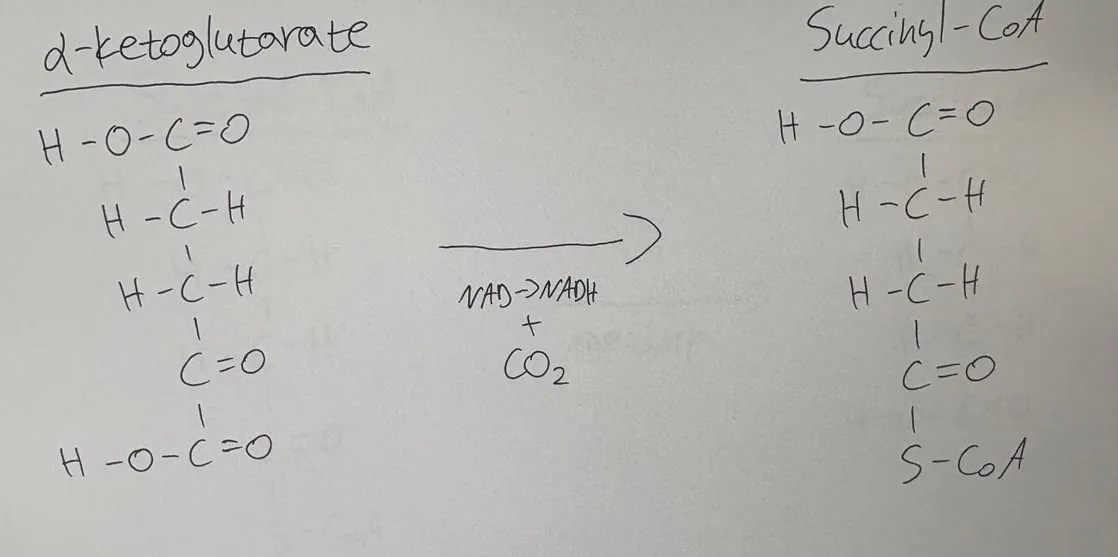
5. Succinyl CoA is converted to succinate. The high energy bond is broken and its energy is used generating ATP , CoA is released.
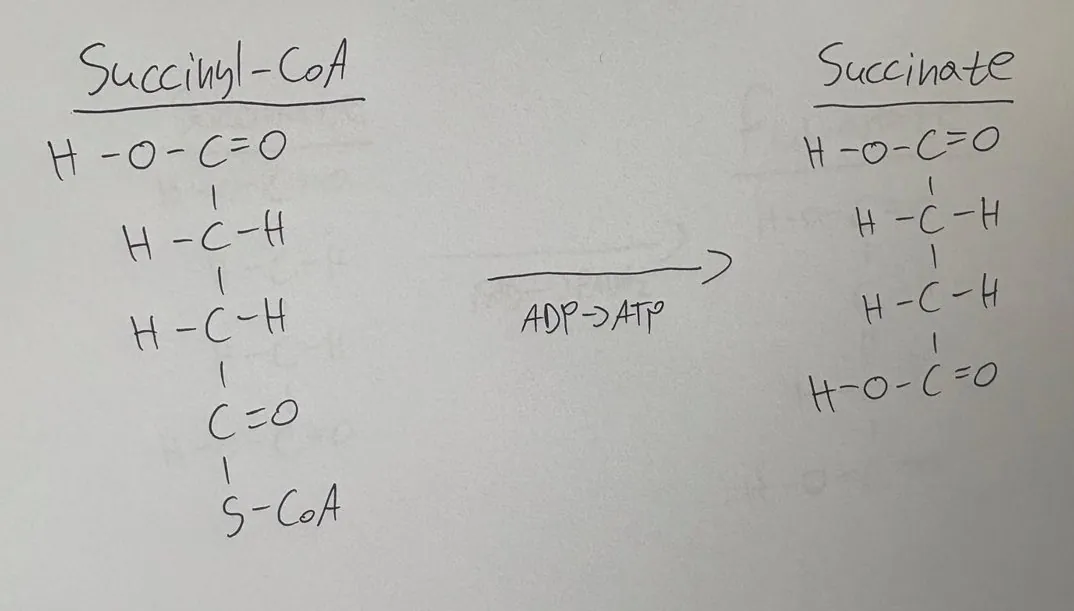
6.Succinate is oxidized to fumarate. Electrons are removed from succinate and transferred to FAD, forming FADH₂. This step is directly linked to the electron transport chain.
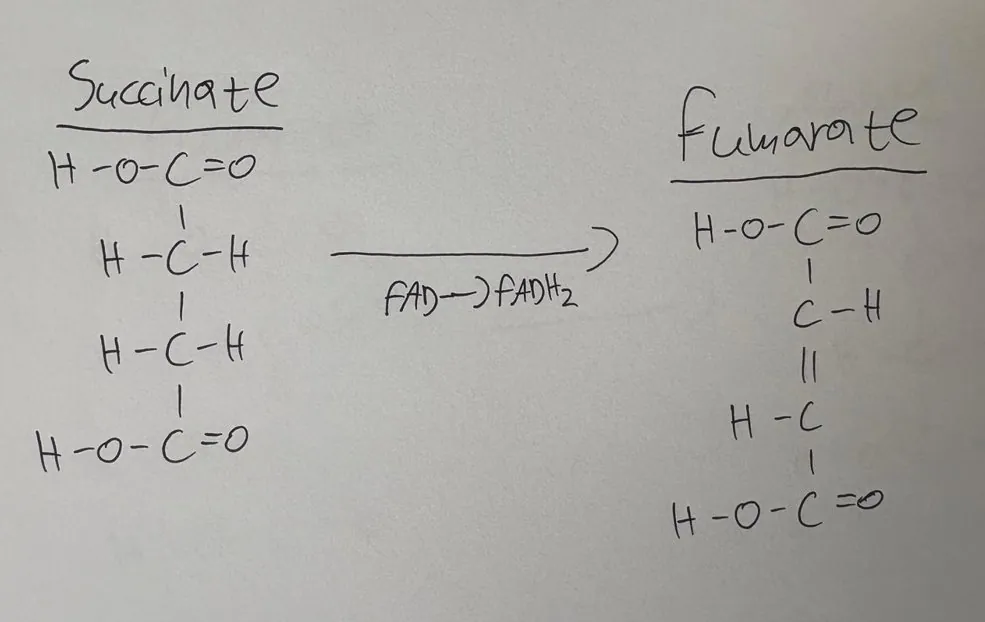
7.Fumarate is hydrated to malate. No redox reaction occurs in this step.
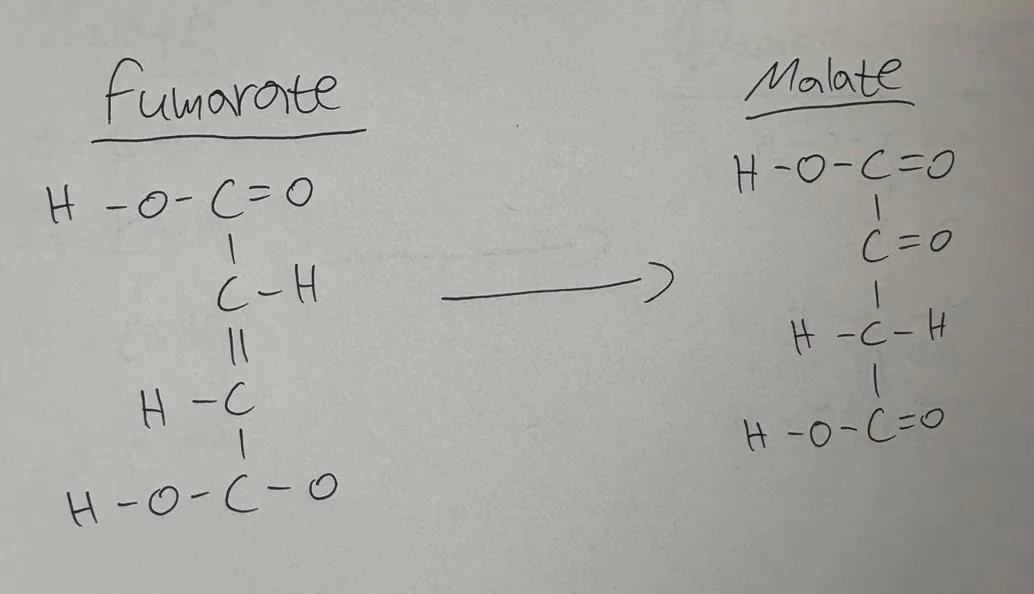
8.Malate is oxidized to oxaloacetate, electrons are transferred to NAD⁺ forming NADH, and the original four carbon oxaloacetate is regenerated, allowing the cycle to continue.
In the krebs cycle Each acetyl CoA create
2 CO₂ +3 NADH +FADH₂ + ATP.
From Glucose to Pyruvate we generated: 2 ATP + 2 NADH Molecules.
Pyruvate to AcetylCoA we generated: 2 NADH + 2 CO2
In total
10 NADH --> 25 ATP + 2 FADH --> 3 ATP + 4 ATP = 32 ATP
And 6 CO2
To see how NADH and FADH gets converted to ATP continue to this article.