Sugar Before, During and After your workout

If you care about your physical performance, read this.
When you exercise your muscles need a lot of energy, which they get by converting their glycogen to glucose.
For your glycogen stores to be full you need to consume carbs, if NOT the energy to maintain exercise comes from breaking down the amino acids in your muscles to glucose.
Fatigue during exercise is caused by
High plasma Lactate,free fatty acids, glycerol and serotonin.
Low plasma glucose, Low glycogen stores.
This fatigue is due to lack in glucose oxidation and rise in lactate production.
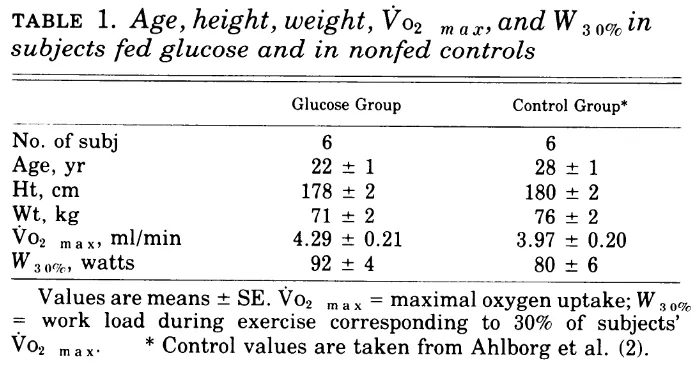
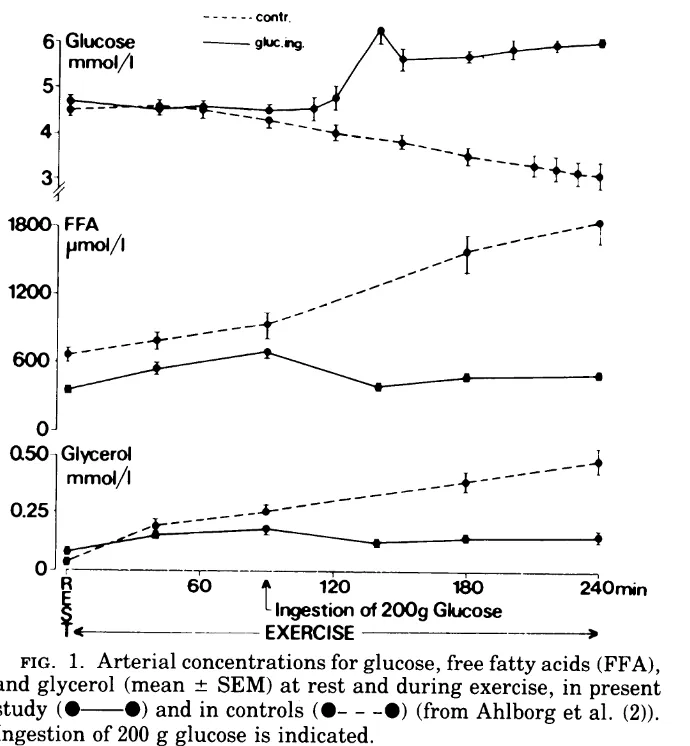
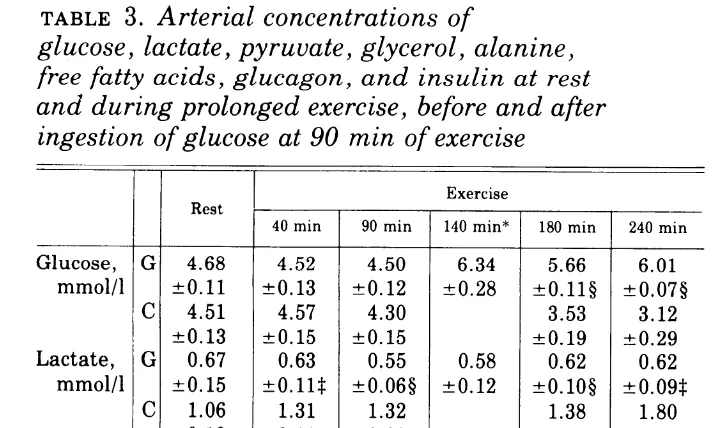
in 1976 combined group of researchers from Yale university and a Hospital in sweden gave 200g of glucose to subjects during their workout, This helped to increase plamsa glucose +35% and 60-70% drop in plasma FFA.
The glucose group had 10% in VO2 MAX and 15% increase in work output, Lactate levels of the control groups we're double
PMID: 993155
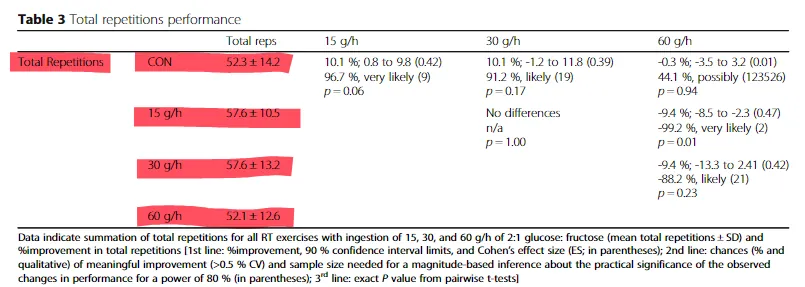
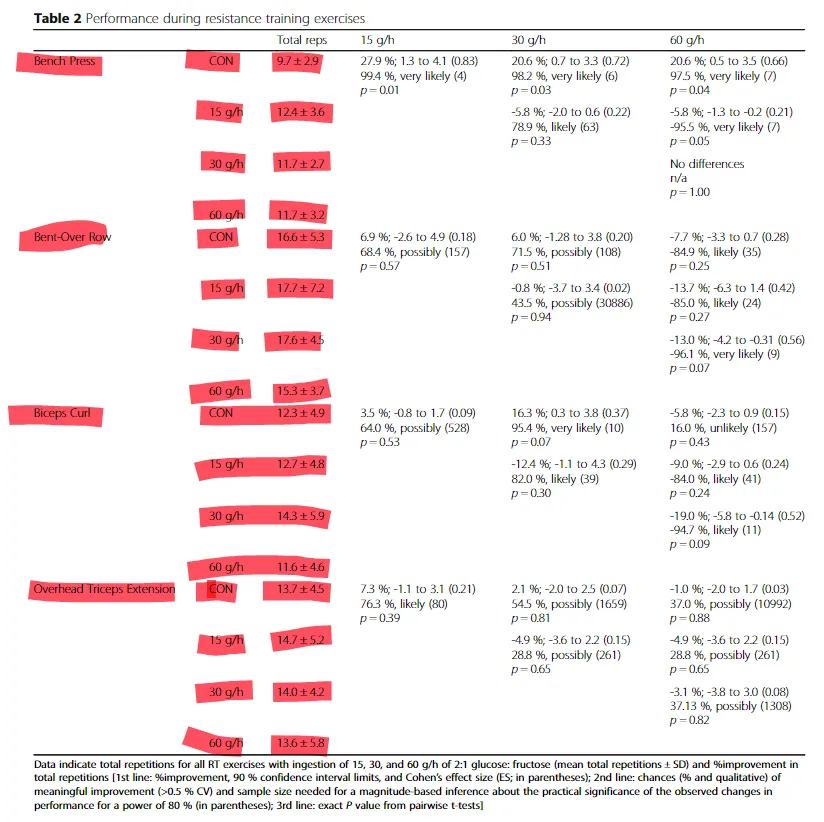
To determine if Intra-workout sugar is beneficial, double blinded, randomized, and crossover designed study took participants to complete a strength workout 4 times getting different amount of sugar each time: 0g, 15g, 30g ,60g we're without them knowing what they get.
workout included: Bench press, Bent-Over Row, Biceps Curl, Overhead Triceps Extension and Sprints.
The results are clear, sugar intake added reps and improved EVERY exercise.
[PMID: 27843418]
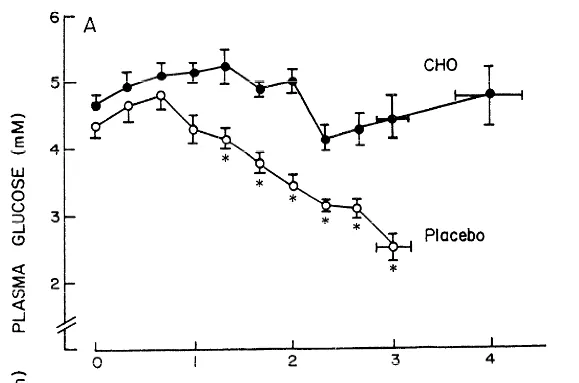
Another group from Washington university in 1983 gave cyclists glucose drink 20m after they began cycling, "The exercise time to fatigue for the 10 subjects averaged 134 min without and 157 min with carbohydrate feeding (P < 0.01)." that's 17% increase simply by consuming glucose.
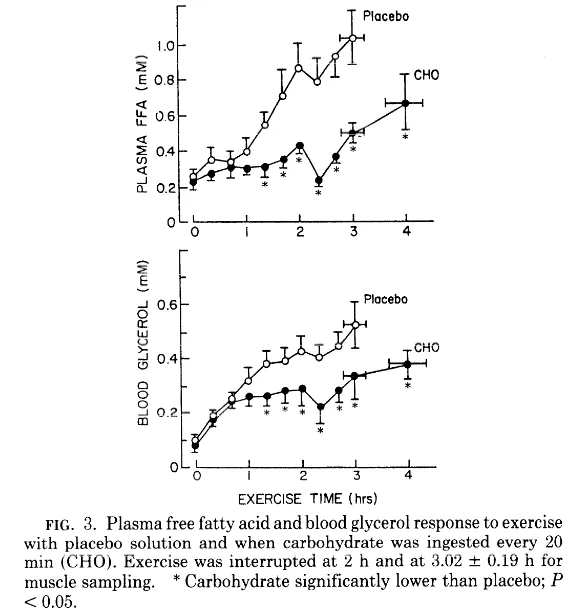
In this study FFA also dropped compared to placebo.
Blood glucose of the placebo dropped to a Hypoglycemia state which is very dangerous, while the glucose group stayed in the optimal range.
[PMID: 6350247]
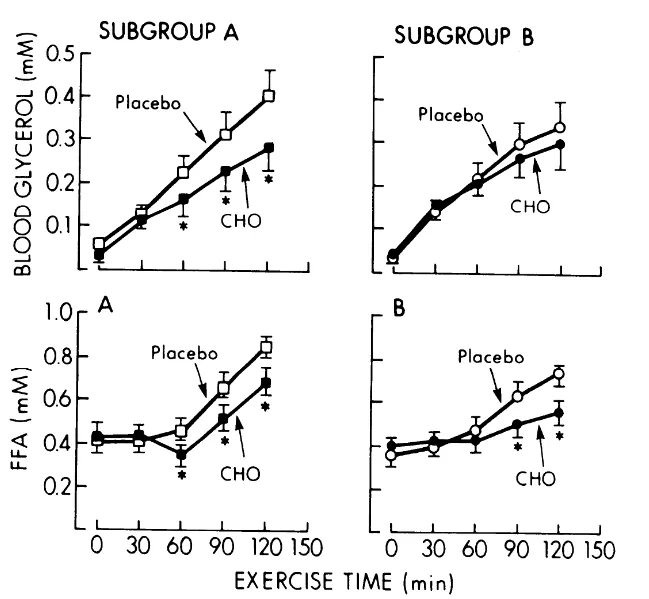
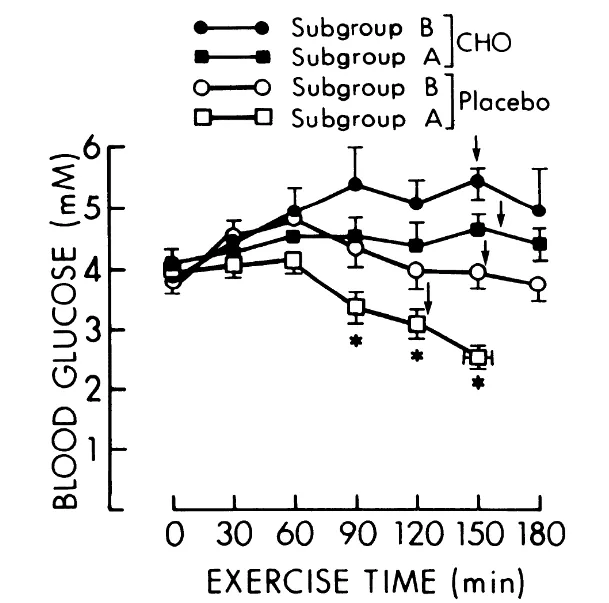
Hypoglycemia during workout is dangerous, happens when carb intake is too low, low glucose levels signal the body that energy is low and performance will be hurt.
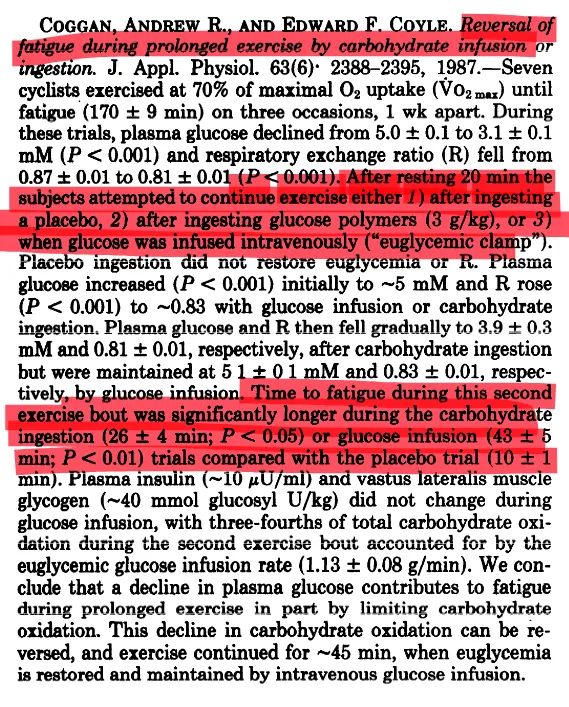
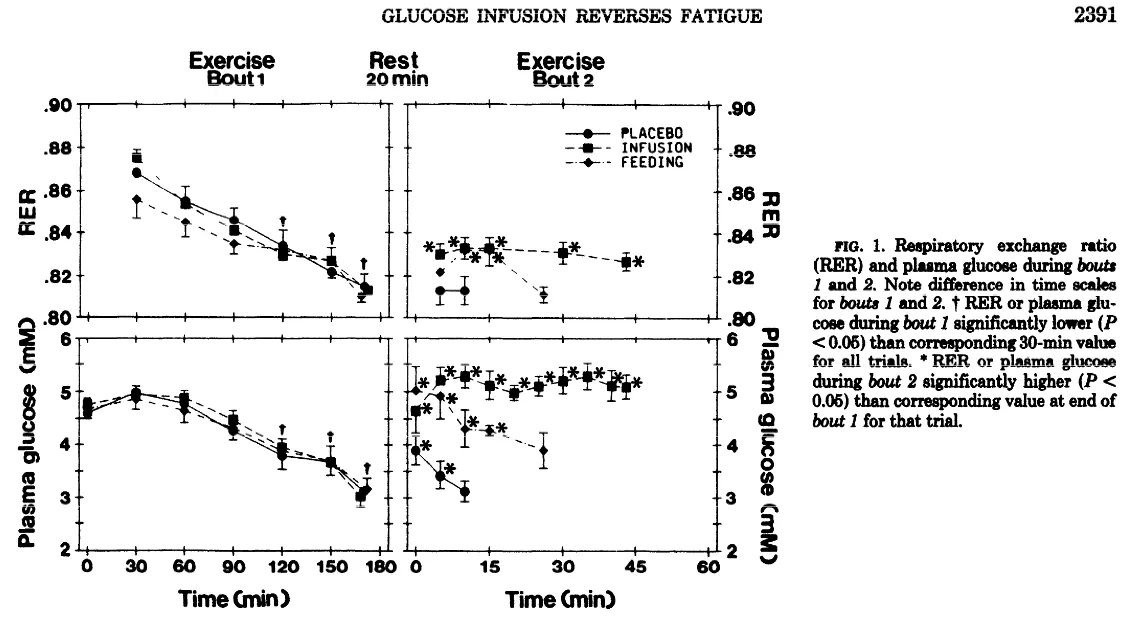
Group for the University of Texas in 1985 showed "Reversal of fatigue during prolonged exercise by carbohydrate infusion or ingestion"
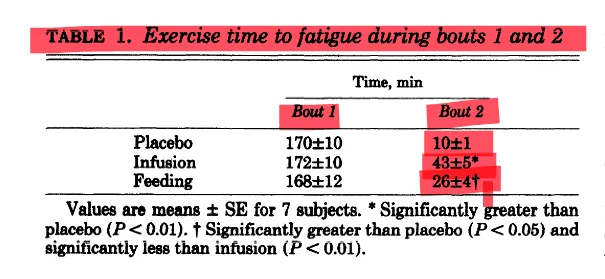
During trials, plasma glucose declined from 5.0 to 3.1(Below 3 it's clinical hypoglycemia, below 2.7 it's dangerous), then they rested for 20m, one group given placebo, second group ingested glucose , third group got infused glucose, the placebo group could continue for 10 more minutes, the second went on for 26 minutes, 3rd group for 43 minutes.
Complete reversal of fatigue simply by getting glucose.
PMID: 3325488
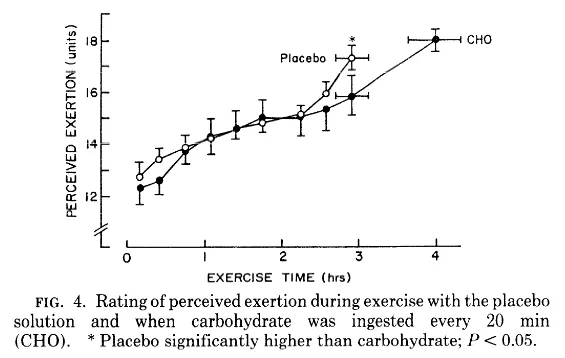
Perceived exertion is a major factor in fatigue, many athletes work hard for decades to suppress it, This time a group of endurance athletes we're studied, The first test was to cycle with placebo aspartame drink, then a week later with glucose drink, both drinks given 20m after cycling.
The results
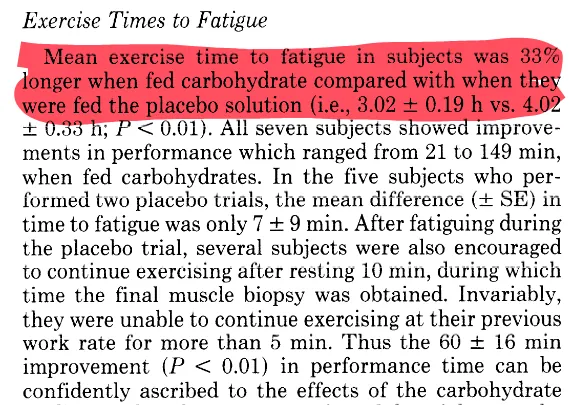
Not only that but in the carb group, FFA and Glycerol levels we're lower, Glucose levels we're optimal, in placebo group glucose levels reached hypoglycemia.
[PMID: 3525502]
Another group from Texas university did something interesting, 3 groups in a randomized double blind conditions:
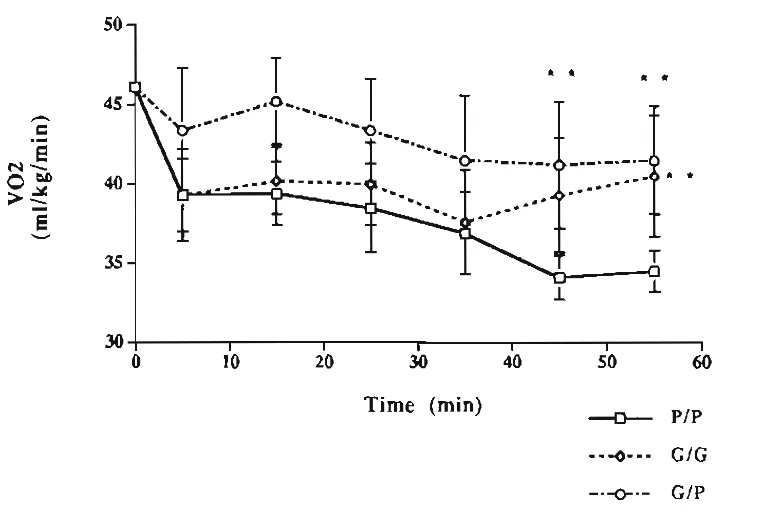
1) pre-exercise glucose polymer (G)/placebo during exercise
2) Glucos pre-exercise and during exercise (GIG).
3) placebo pre-exercise and during exercise (PIP).
Subjects ingested 300 ml of a sweetened placebo or a similarly flavored 10%C solution, immediately prior to and every 15 min during exercise.
The results: Higher VO2 Max & power output of both glucose groups compared to placebo.
[PMID:8550255]
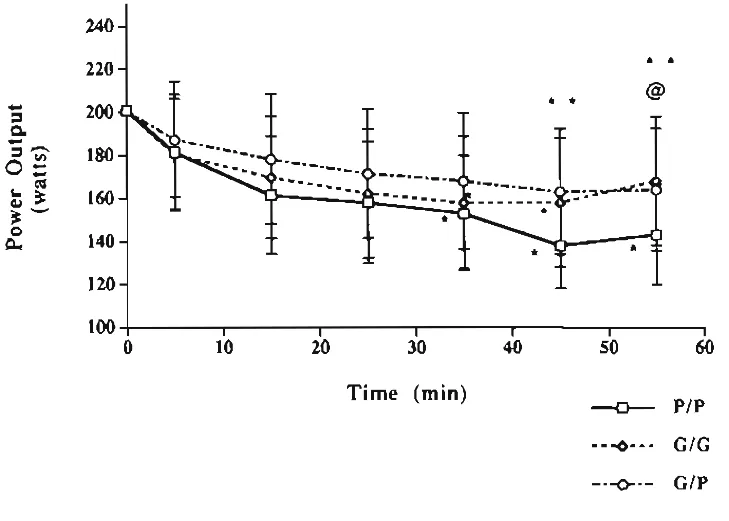
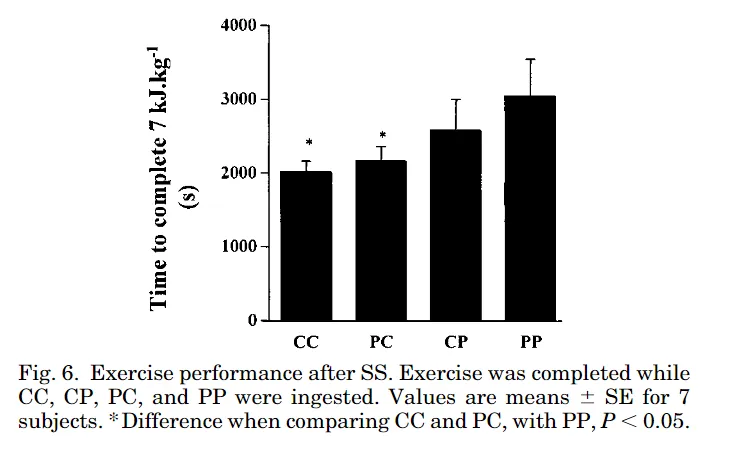
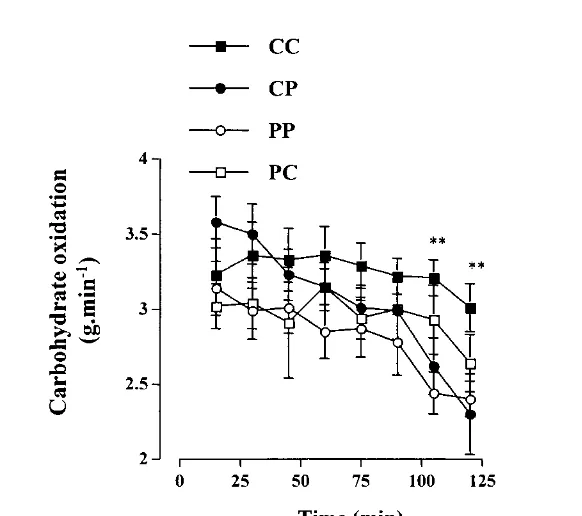
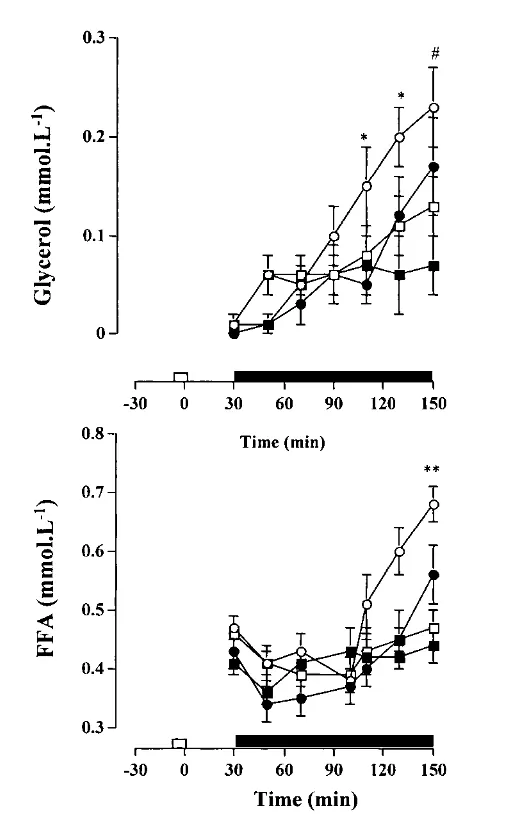
To study the difference between taking carbs before, before and during, or no carbs a study designed four separate occasions, subjects received either a placebo or carbs beverage.
1. No carb before or during training (PP)
2. a placebo-electrolyte beverage 30 min before and 2 g/kg carbs in a beverage (PC);
3. A 2 g/kg carbs in a beverage 30 min before and a placebo-electrolyte beverage throughout training (CP)
4. A 2 g/kg carbs 30 min before and 2 g/kg carbs throughout training(CC)
The carbs group reached the energy output goal faster
[PMID: 27636206]
Had lower FFA and Glycerol levels and higher carb oxidation.
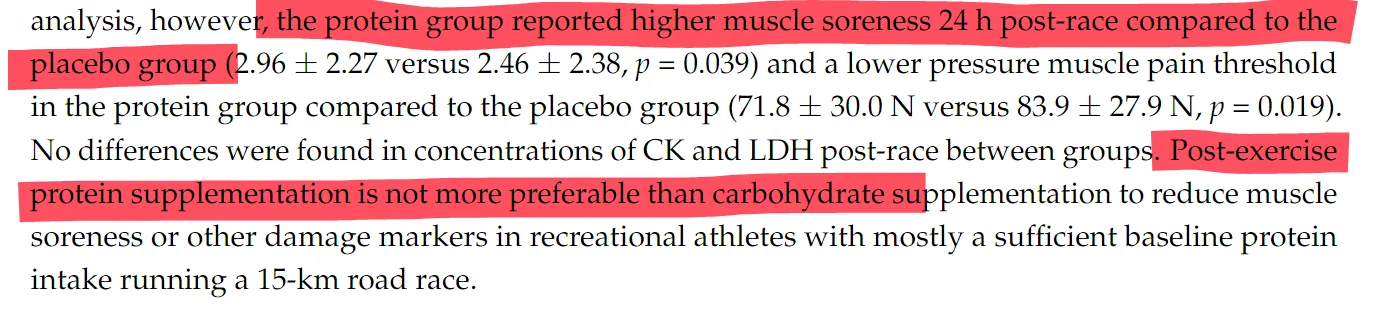
Do determine whether protein or carbs consumption would benefit more in recovery, researchers studied 323 runners after a race.
Half consumed a shake with 20g of protein, 10g carbs, 0.6g fat.
Second half got a shake with 30g carbs,0g protein, 0.6g fat.
[PMID: 33807745]
My strategy
all these studies show that carbs are crucial for optimal performance, consuming enough carbs is crucial.
I personally aim for 500-600g of carbs daily, When I train I aim for 600g.
PRE-WORKOUT: 200g of carbs, 2-4h before I train, and 30 minutes before some simply sugars(10-30g).
INTRA-WORKOUT: 50-100g carbs, sugary water/coke/OJ
POST-WORKOUT- At least 100g of simple sugar within an hour, then another high carb meal.
If you don't consume carbs before,during and after your workout, your recovery and performance will suffer.