How to Lower Serotonin: The Complete Guide to the "Happy Hormone" That Isn't
In this article
- Where serotonin comes from
- How serotonin became the happy hormone
- What serotonin actually does
- Depression is a metabolic problem
- What SSRIs can do
- What raises serotonin
- Dopamine vs serotonin
- How to lower serotonin
- Histamine: serotonin's partner
- What Ray Peat wrote about serotonin
- The signs I watch
- The honest part
Serotonin is sold as the happy hormone. I see it as the main brake on metabolism and on the mind.
Nothing has made me feel more alive, stronger and sharper than lowering my own serotonin. This article puts together everything I have written about it: what it is, what the studies show, what raises it, and what I do to bring it down.
One thing first. This view goes against mainstream medicine. If you take an antidepressant, do not stop or change it because of an article. Stopping suddenly can be dangerous. Talk to your doctor.
Where serotonin comes from
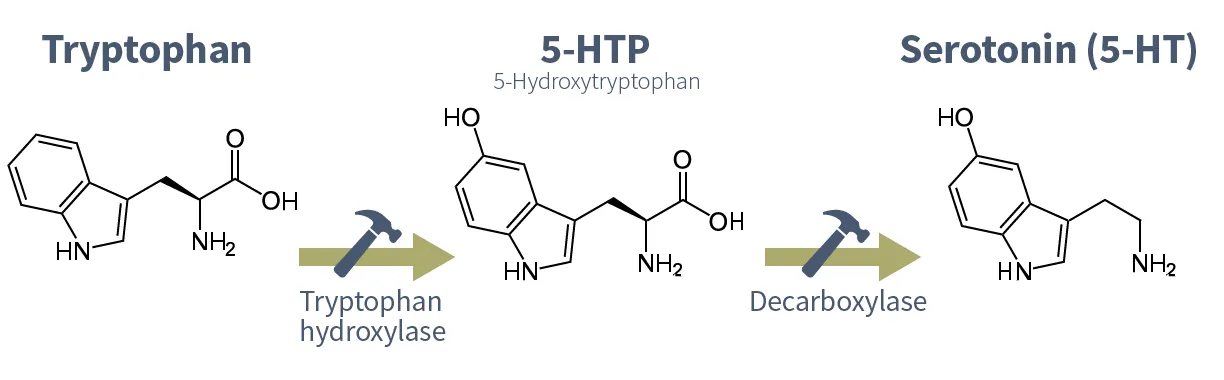
Serotonin is made from tryptophan, an amino acid in protein. An enzyme called tryptophan hydroxylase (TPH) turns tryptophan into 5-HTP, and a second enzyme turns that into serotonin.
About 95% of it is made in the gut, by enterochromaffin cells in the intestinal wall. From there it enters the blood, where platelets pick it up and carry it.
Two things remove it. A transporter called SERT pulls serotonin into cells, and the enzyme monoamine oxidase (MAO) breaks it down. Much of this clean-up happens in the lungs, and the leftovers leave in the urine.
Serotonin in the blood normally cannot cross into the brain. Tryptophan can. So the brain makes its own serotonin from the tryptophan that reaches it, and uses it as a neurotransmitter.
SSRI drugs block SERT. Serotonin is not cleared, so it stays active longer. That is the whole mechanism.
How serotonin became the happy hormone
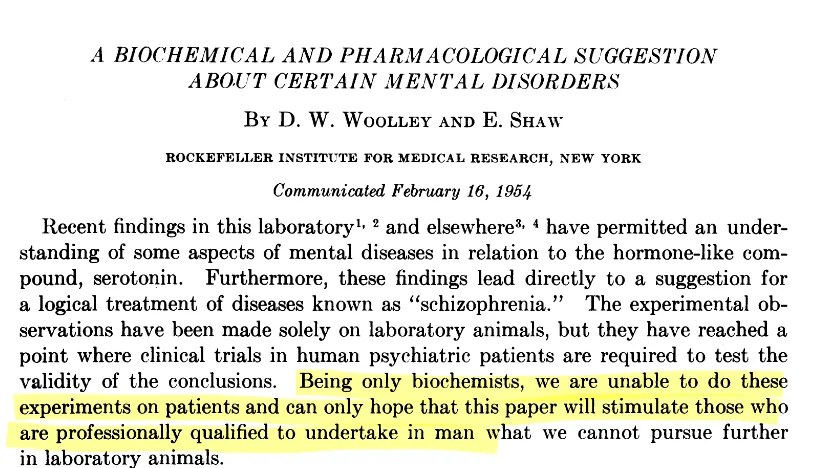
In 1954 two researchers, Woolley and Shaw, published the first formal suggestion that serotonin is involved in mental illness. They reasoned from LSD, which interferes with serotonin and changes the mind.
The first SSRI, zimelidine, was launched in Europe in 1982 and withdrawn the next year because of cases of Guillain-Barré syndrome. Fluoxetine (Prozac) was approved in the US in 1987.
With it came the story that depression is a chemical imbalance, a serotonin deficiency that the drug corrects, the way insulin corrects diabetes. It was a very effective story. Later analyses found that the gap between these drugs and placebo is smaller than it was presented, especially in mild and moderate depression.
My view is simple. Convincing people they are low in serotonin, so they will take a drug that raises it, was marketing. The biology points the other way.
What serotonin actually does
I think of serotonin as a survival signal. It helps an organism get through bad times by numbing pain and cutting energy use. When food is scarce and the environment is hostile, that is useful. As a permanent state, it is a disaster.
High serotonin makes animals withdrawn and aggressive. Empathy rises with the metabolic rate. By slowing metabolism and raising stress, serotonin turns thoughtful, peaceful creatures into the opposite.
It lowers energy production in the brain
Israeli researchers injected serotonin into rats and measured a dramatic fall in brain ATP, with a rise in lactate. The pattern looked like a brain that is not getting enough blood.
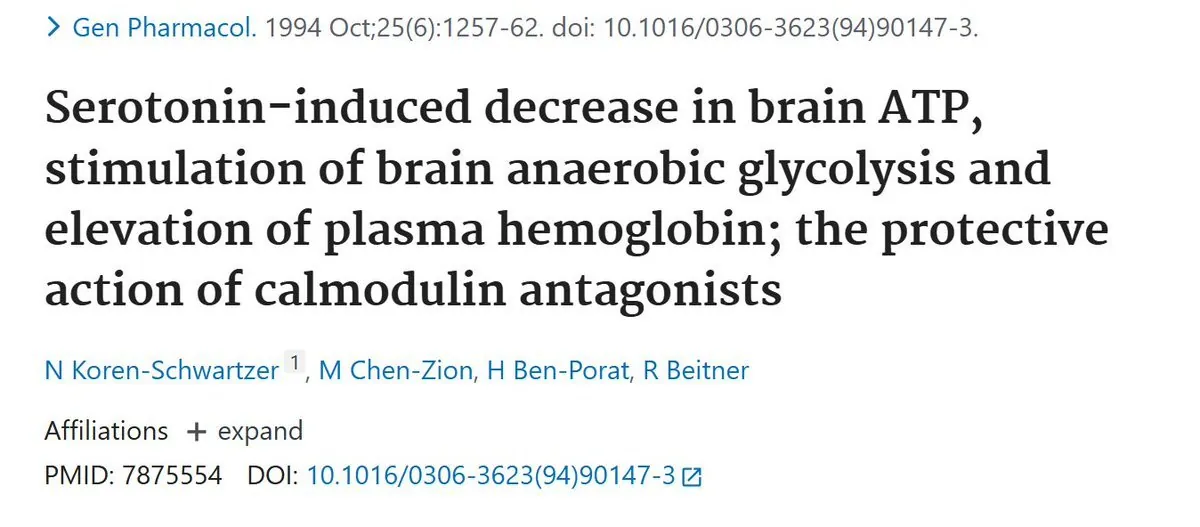
That is how I explain brain fog. Serotonin from an inflamed gut slows energy production in the brain.
It raises cortisol
- In human adrenal tissue, serotonin stimulated cortisol secretion in a dose-dependent way.
- In people, a dose of tryptophan raised cortisol in 10 of 12 tests, and ACTH roughly doubled.
- In 64 healthy volunteers, six days of the SSRI escitalopram raised waking cortisol in women.
Once again the happy hormone proves to be anything but.
It raises prolactin
In rats, fluoxetine combined with the serotonin precursor 5-HTP produced a highly significant rise in prolactin. A serotonin blocker prevented it. Neither substance did it alone.
Prolactin is what I call the anti-life hormone. It opposes thyroid and testosterone, and high prolactin fits a lot of what people report on SSRIs: low libido, erectile problems, numbness.
It inflames the gut
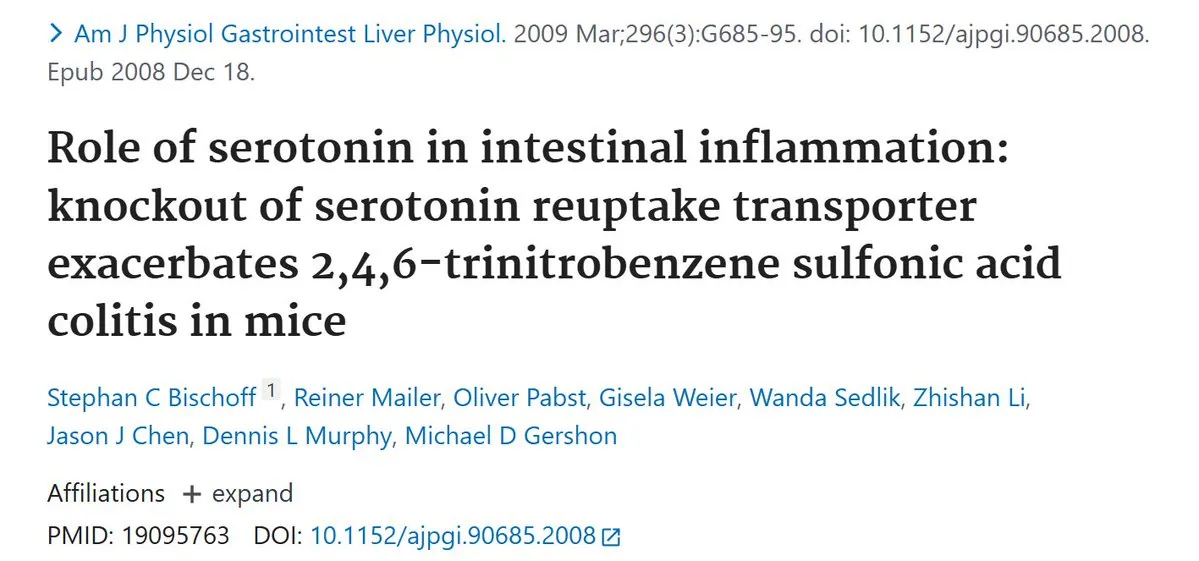
Mice that cannot clear serotonin get far worse colitis. Serotonin is tied to diarrhea and IBS. It is also a signal for bacteria: in one study serotonin switched on quorum sensing in a Gram-negative pathogen and made it more virulent.
The gut side of this story has its own article: How to fix leaky gut.
It takes bone and adds fat
Serotonin made in the gut holds back bone formation. Blocking its synthesis there is being studied as a bone-building treatment for osteoporosis and as a way to reduce obesity by switching on heat production in brown fat.
It works against the thyroid
In a lab study, the amino acids cysteine, methionine and tryptophan completely inhibited thyroid peroxidase, the enzyme that makes thyroid hormone. A digest of gelatin did not. Gelatin has no tryptophan.
It is involved in chronic pain
In a double-blind crossover trial, the serotonin blocker ketanserin gave significant, sustained pain relief in patients with reflex sympathetic dystrophy, where placebo did not. And as far back as 1967, a serotonin antagonist increased the lifespan of mice with hereditary muscular dystrophy.
Depression is a metabolic problem
If depression were a serotonin deficiency, things that have nothing to do with raising serotonin should not help it. They do.
- Thyroid. A review found that thyroid hormones are effective add-ons for patients who do not respond to antidepressants. If depression is not metabolic, why does a metabolic hormone help?
- Vitamin B1. In a placebo-controlled trial of 51 inpatients with major depression, all on an SSRI, adding thiamine improved symptoms faster. The difference was clear at six weeks and no longer significant at twelve.
- Dopamine. A review describes deficits of the dopamine system in major depression, with anhedonia, the inability to feel pleasure, as a core feature.
- Cortisol. Depressed people have elevated cortisol. I covered that study in Cortisol is elevated in depression.
It is always: you are depressed, take an SSRI. It is never: you are depressed, let us look at your cortisol, your thyroid, your sunlight and your gut.
What SSRIs can do
The US label of these drugs carries a boxed warning: an increased risk, compared with placebo, of suicidal thinking and behavior in children, adolescents and young adults.
The side effects people report most are sexual: low libido, erectile problems, genital numbness, orgasm without pleasure. In some people these continue after stopping the drug, which is called post-SSRI sexual dysfunction. Digestive effects are also common: nausea, diarrhea, constipation.
One small study points at the cause. Seven men who developed sexual dysfunction on serotonin reuptake inhibitors took the serotonin blocker cyproheptadine before sex. Five of the seven improved. All of them were sedated the next day, which is the known price of that drug.
I will say it again because it matters. Some people do well on these drugs, and coming off them has to be done slowly with a doctor. Psychedelics combined with an SSRI are a bad idea, because the drug blocks the clearing of serotonin.
What raises serotonin
This is how I understand it, from the research and from my own experience.
- An irritated gut. Endotoxin makes enterochromaffin cells release serotonin. Soluble fiber and resistant starch feed the bacteria that produce endotoxin.
- Tryptophan without balance. Muscle meat is rich in tryptophan. So is your own muscle when cortisol breaks it down.
- Free fatty acids. Tryptophan travels bound to albumin. Free fatty acids push it off, and more of it reaches the brain. Low-carb diets, fasting and stress all raise free fatty acids.
- Low salt. The transporter that removes serotonin depends on sodium and potassium. Avoiding salt may raise serotonin about as well as a drug does.
- Estrogen. It promotes the enzyme that makes serotonin and slows the one that breaks it down.
- Polyunsaturated fats. They increase the release of serotonin from platelets.
- Low carbon dioxide. Over-breathing makes cells alkaline, and that makes them release serotonin and histamine.
- Darkness. After sunset, cortisol and serotonin start to rise.
- Low thyroid function.
- Long runs. The impact stimulates the gut to release serotonin.
- Ashwagandha. I threw up both times I tried it. It is serotonergic, and high serotonin causes anhedonia. That is why people on it say they do not care anymore.
- Isolation. In my view isolation raises cortisol and serotonin, and it sits behind a lot of mental illness.
Dopamine vs serotonin
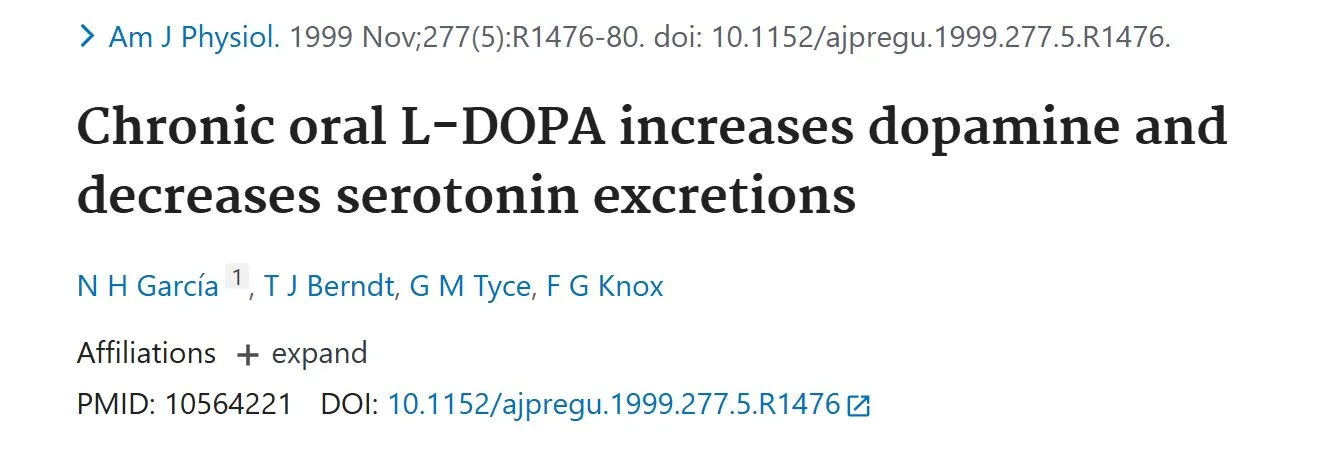
Dopamine and serotonin pull in opposite directions. In rats, L-DOPA, the direct precursor of dopamine, raised dopamine and lowered serotonin output.
Dopamine improves mood, playfulness and libido, and lowers prolactin. Serotonin does the reverse. So one way to lower serotonin is to raise dopamine.
- Sunlight. Light on the eyes is needed for dopamine production in the retina.
- Tyrosine. The raw material. I think it is a cheaper and safer first thing to try than a drug.
- A healthy gut. Inflammatory cytokines block the transport of tyrosine into cells.
- Bromantane. It increases the genes for the two enzymes that make dopamine. The details are in Bromantane and dopamine.
The full dopamine strategy is in Reset your brain's reward system.
How to lower serotonin
These are the things I use, roughly in order of importance. Several of them come from Ray Peat's writing, and I have tested them on myself.
1. Salt and potassium
Ray Peat wrote that more sodium in the blood means less serotonin in the brain, and that salt restriction increases its production and release. In rats, sodium deprivation changed pituitary and blood prolactin, and prolactin follows serotonin. I salt everything, and I get potassium from fruit and juice.
2. Sugar
Sugar lowers free fatty acids. With fewer free fatty acids, less tryptophan gets into the brain. Sugar also keeps cortisol down, so your own muscle is not broken down into tryptophan. Fruit, juice, honey, table sugar.
3. Saturated fat instead of PUFA
In Ray Peat's account, saturated fats end stress reactions, while polyunsaturated fats amplify them and release serotonin from platelets. Coconut oil and butter, no seed oils, no fish oil.
4. Carbon dioxide
CO2 keeps mast cells and platelets stable so they do not dump serotonin and histamine. You make it by burning carbohydrate well. Only carbs produce CO2 before they even enter the Krebs cycle.
5. Calcium and magnesium
Calcium helps turn tryptophan into niacinamide and NAD instead of serotonin. I take 3 to 5 g a day, which is above the official upper limit, so treat that as what I do and not as a recommendation. Magnesium is the natural calcium blocker inside the cell and protects against what serotonin does there.
6. Gelatin and glycine
Gelatin has no tryptophan. Eating it with meat lowers the share of tryptophan in the meal. Glycine also calms the inflammatory cells that release serotonin. I take 20 g of beef gelatin twice a day.
7. A clean gut
Most serotonin is made in the gut, so this is where the biggest lever is. No fermentable fiber, a daily carrot, mushrooms, activated charcoal now and then, enough carbs for the gut lining. If the barrier is damaged, BPC-157 is what I reach for. The whole plan is in How to fix leaky gut.
BPC-157 Capsulesrealpeptides.coView product8. Aspirin
In my view aspirin lowers serotonin along with estrogen, cortisol and prostaglandins. I take it almost daily, dissolved in hot water with baking soda, with vitamin K2. Standard medical advice warns about stomach bleeding, so if you have ulcers, a bleeding problem or take blood thinners, ask your doctor.
9. Vitamins A, D, E and K
Serotonin activates the cells that dissolve bone and makes blood vessels leaky. These vitamins work against both effects. Vitamin E is the one I would not skip, in a full-spectrum form.
E-Complete Oral Supplementskin.foodView product10. B vitamins
Niacinamide lowers free fatty acids, which keeps tryptophan bound to albumin and out of the brain. B1 keeps glucose burning cleanly.
11. Sunlight and vitamin D
Light raises dopamine and metabolic rate. Darkness does the opposite.
12. Thyroid and the protective hormones
A higher metabolic rate clears serotonin faster. Androgens in men and progesterone in women are the natural opponents of serotonin, cortisol and estrogen.
13. Prescription serotonin blockers
Cyproheptadine is an old antihistamine that also blocks serotonin. My hands get noticeably warmer within 20 minutes of taking it. I use 0.5 to 1 mg at night, not every day. Ondansetron is another one that helped me. Both are prescription drugs with real side effects, sedation above all. That is a conversation for your doctor, not something to order online.
Histamine: serotonin's partner
Mast cells store histamine and serotonin together and release them together. The serotonin-histamine cycle is vicious.
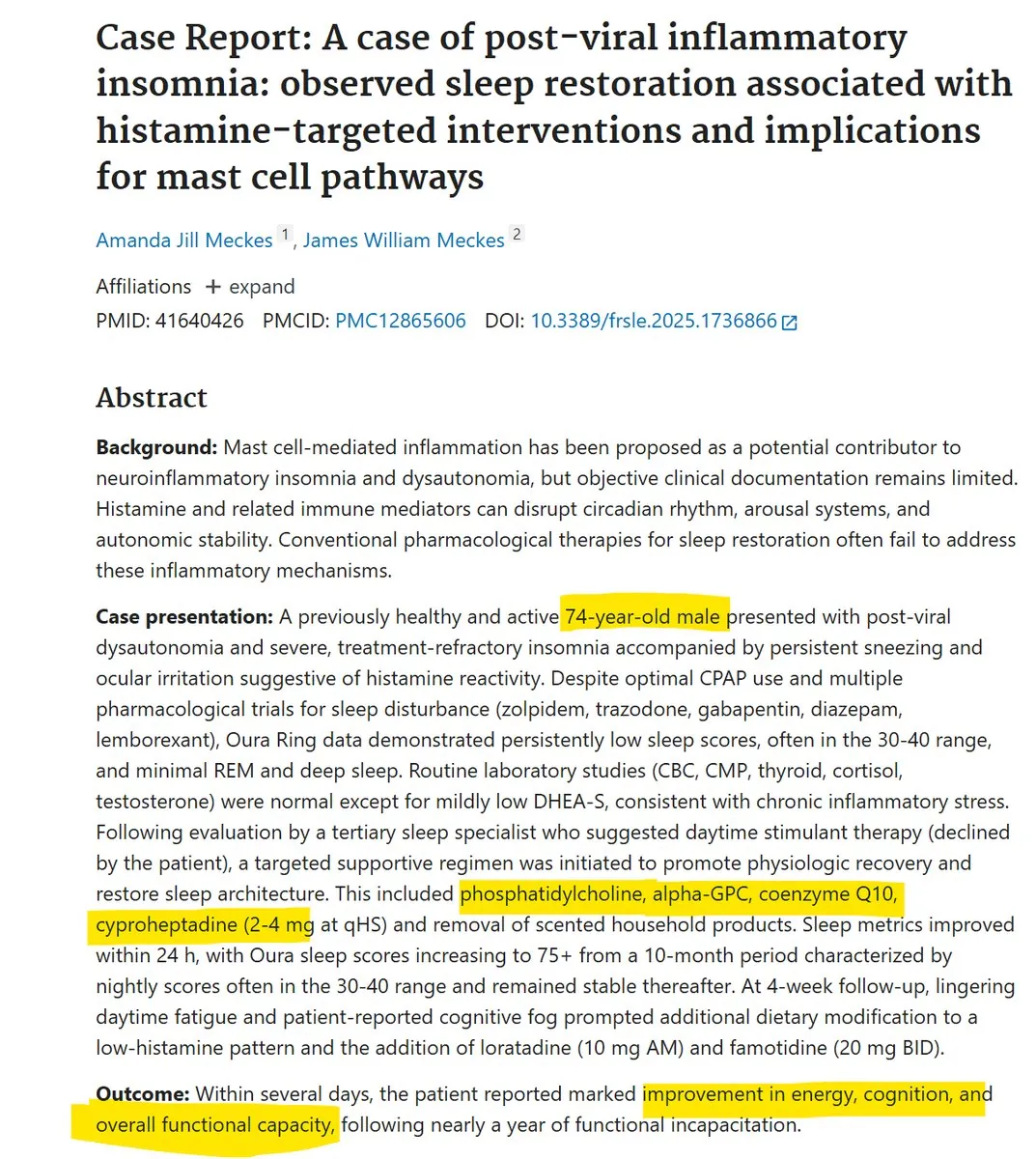
A case report describes a 74-year-old with severe insomnia after a viral illness. Sleeping pills had failed. A regimen that included a low dose of cyproheptadine at bedtime, along with CoQ10 and choline sources, restored sleep within days. It is one patient and several things were changed at once, but it fits. Histamine is the sleep antagonist.
What Ray Peat wrote about serotonin
Much of how I think about this comes from Ray Peat. He described serotonin as part of the biology of hibernation and learned helplessness, linked it to low thyroid function and gut irritation, and recommended a raw carrot and gelatin long before either was fashionable.
I collected what he wrote, with the studies he cited, here: Ray Peat on serotonin.
The signs I watch
- Warm hands and feet
- A calm mind at night
- Appetite and libido
- No bloating
- Wanting to be around people
People ask me how I am so chill. The answer is sugar, salt, sunlight and a gut that is not on fire.
The honest part
Mainstream psychiatry does not agree with this article. Many people report real benefit from antidepressants, and for some they are life-saving. The serotonin theory of depression has been questioned inside medicine too, but that is not the same as proving that serotonin is harmful.
A lot of the evidence I link is from rats, mice and cell experiments. The human studies are small. The effects of salt, sugar, calcium and sunlight on serotonin are my reading of the physiology and of Ray Peat's work, not the result of large trials.
Do not stop a prescribed drug on your own. Do not combine serotonin-active drugs and supplements. Serotonin syndrome is real and can kill.
Own your health.
Quick answers
Is serotonin really the happy hormone?
That is the popular description. In my reading of the research, serotonin acts as a stress and energy-saving signal: in animal studies it lowers brain ATP, and in human tissue it raises cortisol.
How can I lower serotonin naturally?
The steps I use are enough salt and potassium, sugar instead of fat as fuel, saturated fat instead of seed oils, calcium and magnesium, gelatin with meat, a healthy gut, sunlight and good thyroid function.
Where is serotonin made?
About 95% of the body's serotonin is made in the gut by enterochromaffin cells, from the amino acid tryptophan. The brain makes its own from tryptophan that crosses the blood-brain barrier.
Does salt lower serotonin?
The transporter that removes serotonin depends on sodium and potassium, and salt restriction is reported to increase serotonin production. That is why I do not restrict salt.
Should I stop my SSRI?
Not on your own. Stopping an antidepressant suddenly can be dangerous. Any change has to be made with your doctor.
The studies
- A BIOCHEMICAL AND PHARMACOLOGICAL SUGGESTION ABOUT CERTAIN MENTAL DISORDERSProc Natl Acad Sci U S A · 1954 · PMID 16589461
- Serotonin-induced decrease in brain ATP, stimulation of brain anaerobic glycolysis and elevation of plasma hemoglobin; the protective action of calmodulin antagonistsGen Pharmacol · 1994 · PMID 7875554
- Serotonin-induced stimulation of cortisol secretion from human adrenocortical tissue is mediated through activation of a serotonin4 receptor subtypeNeuroscience · 1992 · PMID 1374544
- Adrenocorticotropin release by tryptophan in manJ Clin Endocrinol Metab · 1980 · PMID 6243668
- The effects of six-day SSRI administration on diurnal cortisol secretion in healthy volunteersPsychopharmacology (Berl) · 2018 · PMID 30283981
- Further evidence that serotonin is a neurotransmitter involved in the control of prolactin secretionEndocrinology · 1977 · PMID 401022
- Effects of sodium deprivation on pituitary and plasma prolactin, growth hormone, and thyrotropin levels in the ratNeuroendocrinology · 1973 · PMID 4691181
- Role of serotonin in intestinal inflammation: knockout of serotonin reuptake transporter exacerbates 2,4,6-trinitrobenzene sulfonic acid colitis in miceAm J Physiol Gastrointest Liver Physiol · 2009 · PMID 19095763
- Serotonin, inflammation, and IBS: fitting the jigsaw together?J Pediatr Gastroenterol Nutr · 2007 · PMID 18185071
- Serotonin Activates Bacterial Quorum Sensing and Enhances the Virulence of Pseudomonas aeruginosa in the HostEBioMedicine · 2016 · PMID 27333040
- Lrp5 controls bone formation by inhibiting serotonin synthesis in the duodenumCell · 2008 · PMID 19041748
- Pharmacological inhibition of gut-derived serotonin synthesis is a potential bone anabolic treatment for osteoporosisNat Med · 2010 · PMID 20139991
- Inhibiting peripheral serotonin synthesis reduces obesity and metabolic dysfunction by promoting brown adipose tissue thermogenesisNat Med · 2015 · PMID 25485911
- Thyroid peroxidase activity is inhibited by amino acidsBraz J Med Biol Res · 2000 · PMID 10719389
- Ketanserin in reflex sympathetic dystrophy. A double-blind placebo controlled cross-over trialPain · 1989 · PMID 2780070
- Serotonin antagonist increases longevity in mice with hereditary muscular dystrophyProc Soc Exp Biol Med · 1967 · PMID 6079944
- Thyroid hormones and the treatment of depression: an examination of basic hormonal actions in the mature mammalian brainSynapse · 1997 · PMID 9268063
- Adjuvant thiamine improved standard treatment in patients with major depressive disorder: results from a randomized, double-blind, and placebo-controlled clinical trialEur Arch Psychiatry Clin Neurosci · 2016 · PMID 26984349
- Dopamine System Dysregulation in Major Depressive DisordersInt J Neuropsychopharmacol · 2017 · PMID 29106542
- Cyproheptadine treatment of sexual dysfunction induced by serotonin reuptake inhibitorsClin Neuropharmacol · 1995 · PMID 8665544
- Chronic oral L-DOPA increases dopamine and decreases serotonin excretionsAm J Physiol · 1999 · PMID 10564221
- Proinflammatory Cytokines and Oxidative Stress Decrease the Transport of Dopamine Precursor Tyrosine in Human FibroblastsNeuropsychobiology · 2017 · PMID 29339668
- Case Report: A case of post-viral inflammatory insomnia: observed sleep restoration associated with histamine-targeted interventions and implications for mast cell pathwaysFront Sleep · 2025 · PMID 41640426
- Serotonin in the gut: Blessing or a curseBiochimie · 2019 · PMID 29909048
- Gut-derived serotonin and its emerging roles in immune function, inflammation, metabolism and the gut-brain axisCurr Opin Endocrinol Diabetes Obes · 2022 · PMID 35197425