Dopamine Reset: How to Raise Your Baseline and Get Your Drive Back
In this article
- What Dopamine Actually Does (Drive, Learning, Creativity, and Effort)
- How Your Brain Builds Dopamine (Chemistry, Tyrosine, and Cofactors)
- Inside the Brain: 4 Pathways, the Synapse, and D1 vs D2 Receptors
- The Hidden Brakes Killing Your Dopamine: Endotoxin, Serotonin, and Prolactin
- Daily Habits That Raise (Or Destroy) Your Dopamine Baseline
- Targeted Compounds and Supplements That Support Dopamine
- 7 Practical Steps to Reset Your Dopamine Baseline Starting Tomorrow
- Blood Tests That Show If Your Dopamine System Is Suppressed
- Peer-reviewed studies cited
Blocking your brain's dopamine D2 receptors for just 7 days makes healthy humans lose motivation, feel flat, and stop caring about rewards. [PMID: 39984436][8]
One single night without sleep physically downregulates those same D2 receptors in your ventral striatum. [PMID: 22573693][16]
And injecting a tiny trace of gut endotoxin shuts down your brain's ventral striatum reward center inside two hours. [PMID: 20719303][9]
Most people think they are lazy, undisciplined, or broken. Usually, they are just running on a crushed dopamine baseline.
Internet "dopamine detox" advice tells you to stare at a blank wall for 24 hours and pray your drive comes back. That completely misses how the biology works.
Low dopamine is not a willpower flaw. It is a metabolic, gut-brain, and receptor problem.
In this guide we start from zero and go all the way down to the enzymes, brain pathways, receptors, gut-brain brakes, 34 peer-reviewed studies with real graphs, targeted compounds, and the exact steps you can start tomorrow morning.
What Dopamine Actually Does (Drive, Learning, Creativity, and Effort)
Forget the pop-science myth that dopamine is the "pleasure molecule."
Pleasure comes mainly from opioids and endocannabinoids when you already have the reward in your hand. Dopamine is the engine of wanting, focus, learning, creativity, and effort.
High dopamine makes hard work feel worth doing. Low dopamine makes answering one email feel like climbing a mountain.
Your brain does not just care about how high dopamine spikes. It cares about your tonic baseline (the steady background hum of dopamine firing all day) and the density of your D2/D3 receptors receiving that signal.
Every time you hammer your brain with cheap, effortless spikes (short-form video feeds, porn, late-night scrolling, heavy stimulants), your neurons protect themselves by pulling D2 receptors inside the cell.
Fewer receptors on the surface means normal life stops registering. Reading, training hard, building a business, or talking to a friend feels dull and gray.
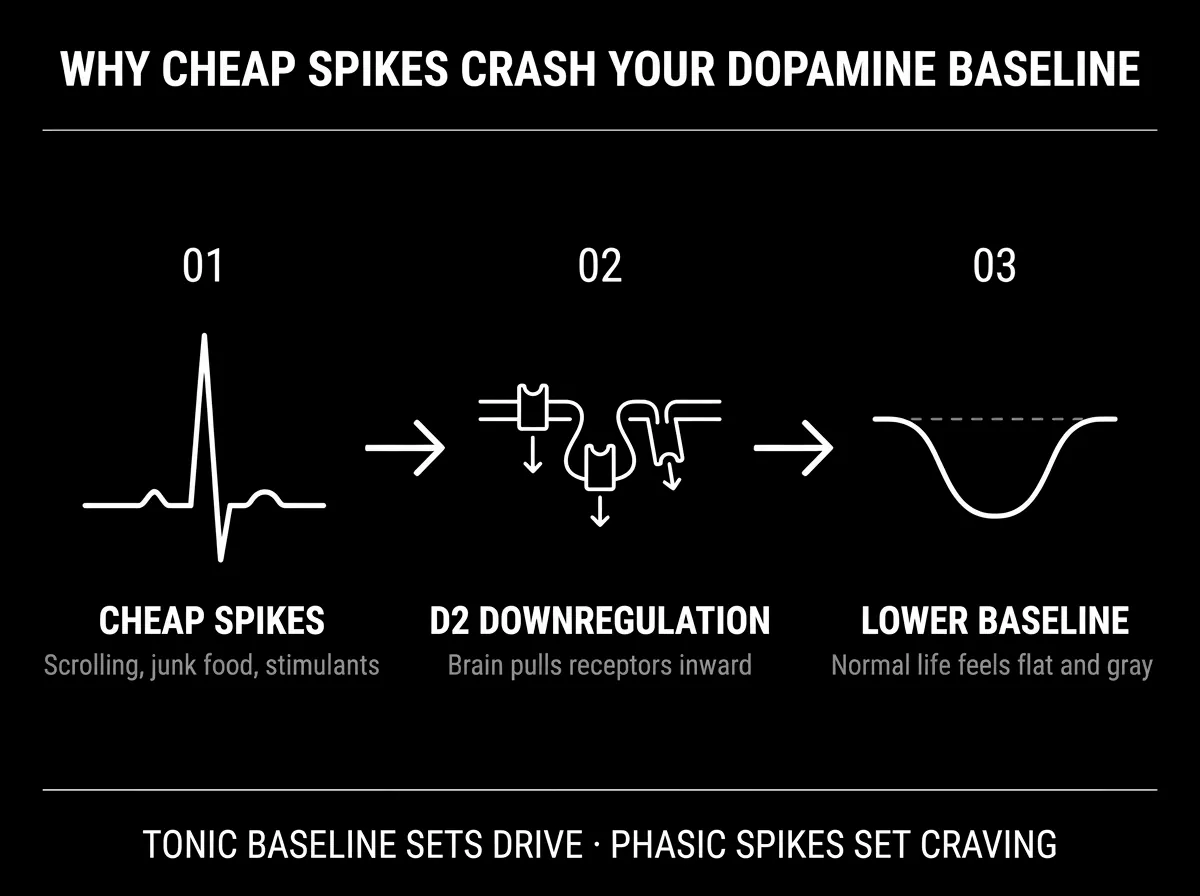
Dopamine decides whether hard work feels worth it
In a landmark Science study, Westbrook and colleagues scanned human brains with PET imaging and tested whether people would choose harder mental work for higher pay. [1]
People with higher baseline dopamine synthesis capacity in the caudate naturally chose the harder tasks. Boosting dopamine shifted the brain's math so the benefits of work weighed heavier than the effort cost.
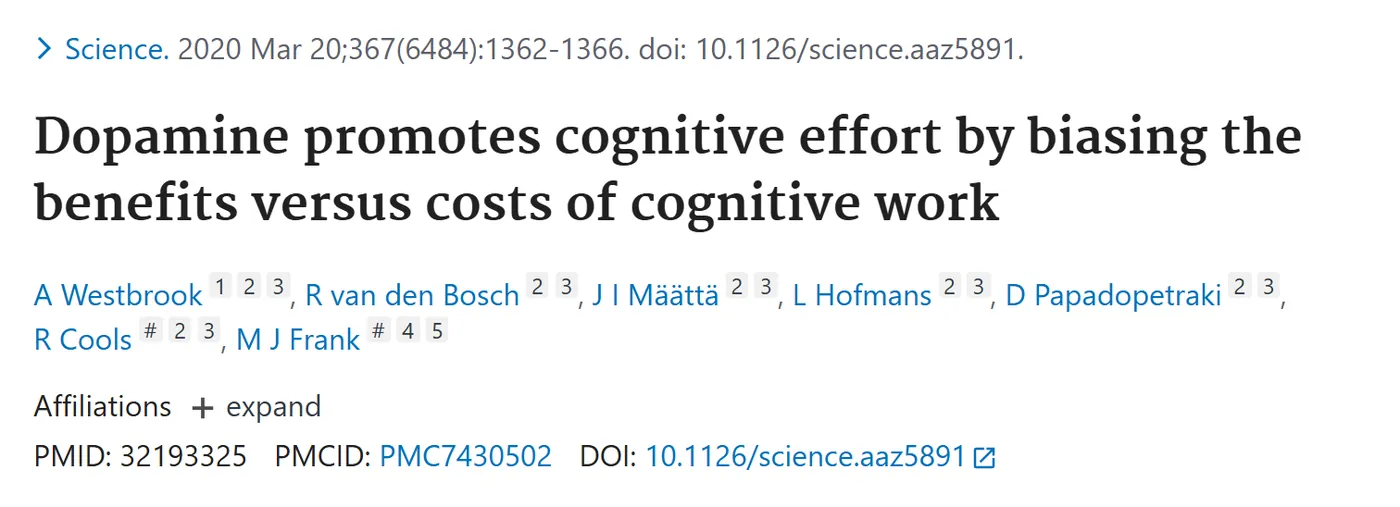
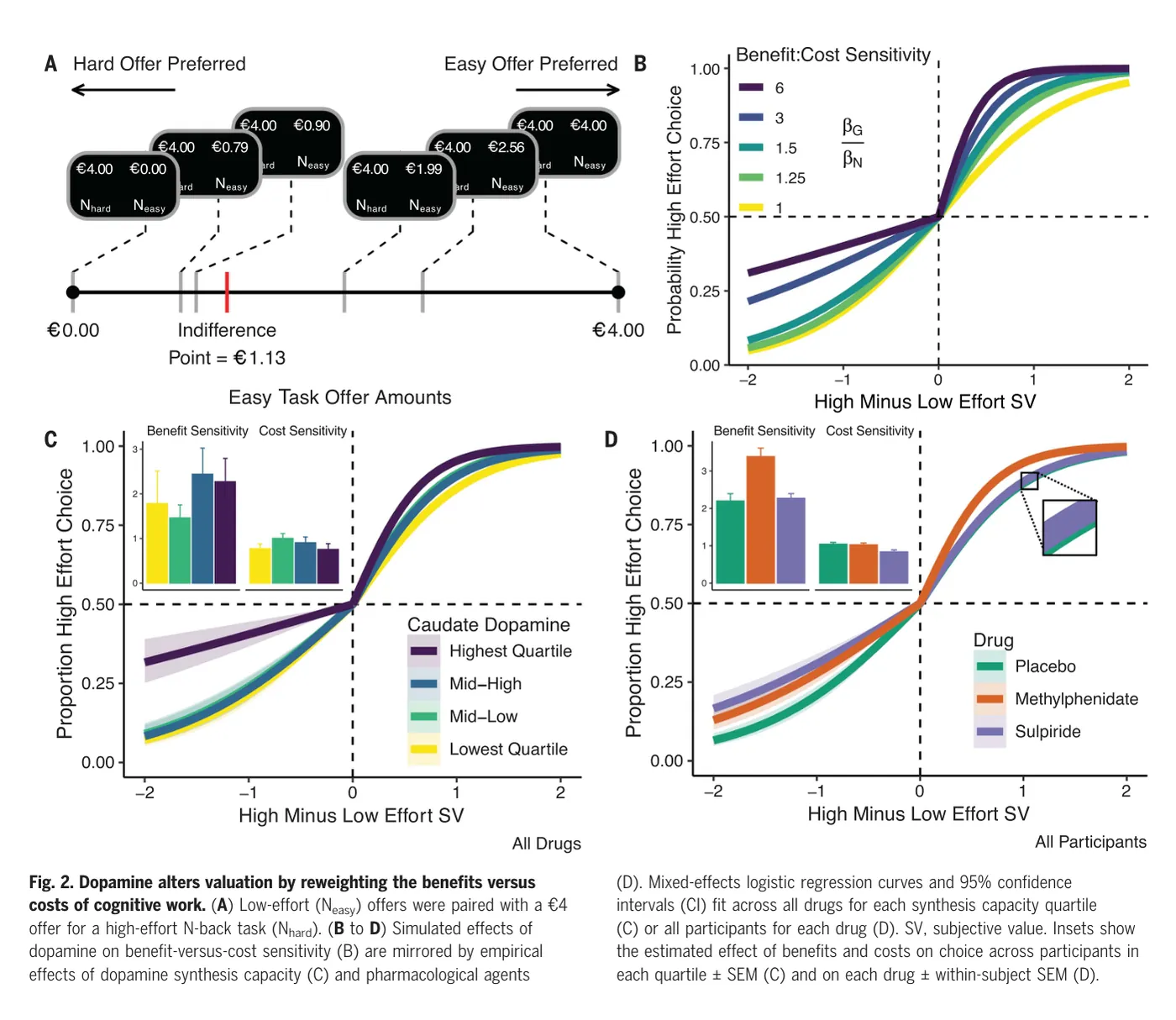
Westbrook et al., Science 2020 (Fig. 2). Higher striatal dopamine synthesis capacity and dopaminergic support bias human choices toward high-effort, high-reward cognitive work. PubMed (PMID 32193325)
Higher dopamine makes healthy humans learn faster and remember longer
Dopamine is not just about motivation. It physically wires new knowledge into memory.
In a randomized double-blind human trial (Annals of Neurology), Knecht et al. gave healthy adults L-DOPA versus placebo during five days of vocabulary training. [2]
The dopaminergic group learned significantly faster every single day, retained more words a week later, and still outperformed placebo one full month later.
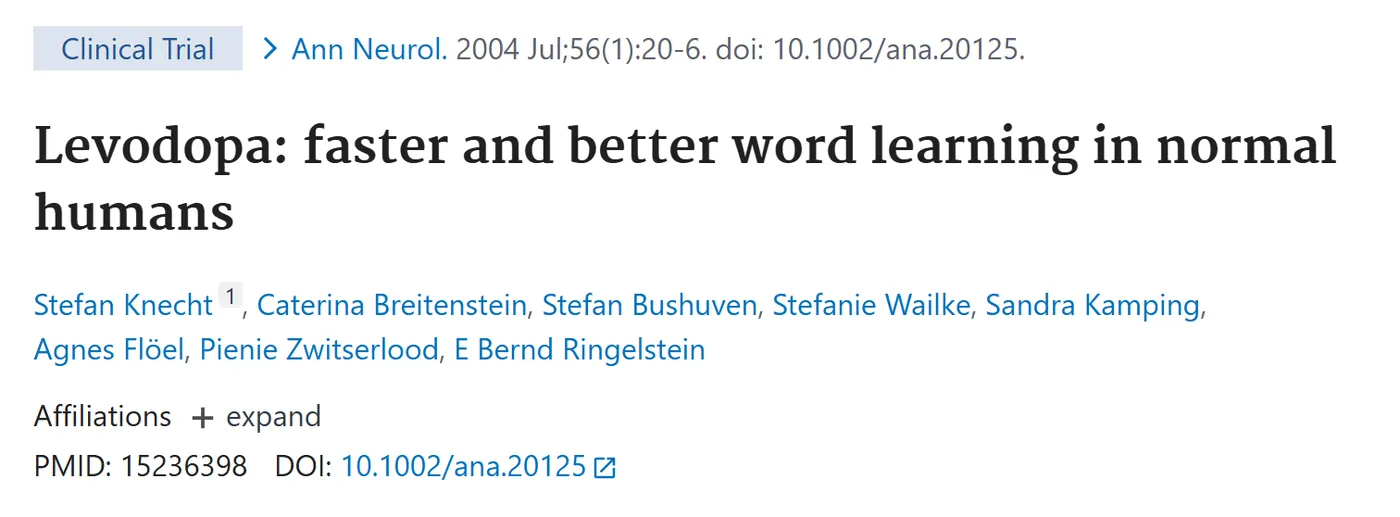
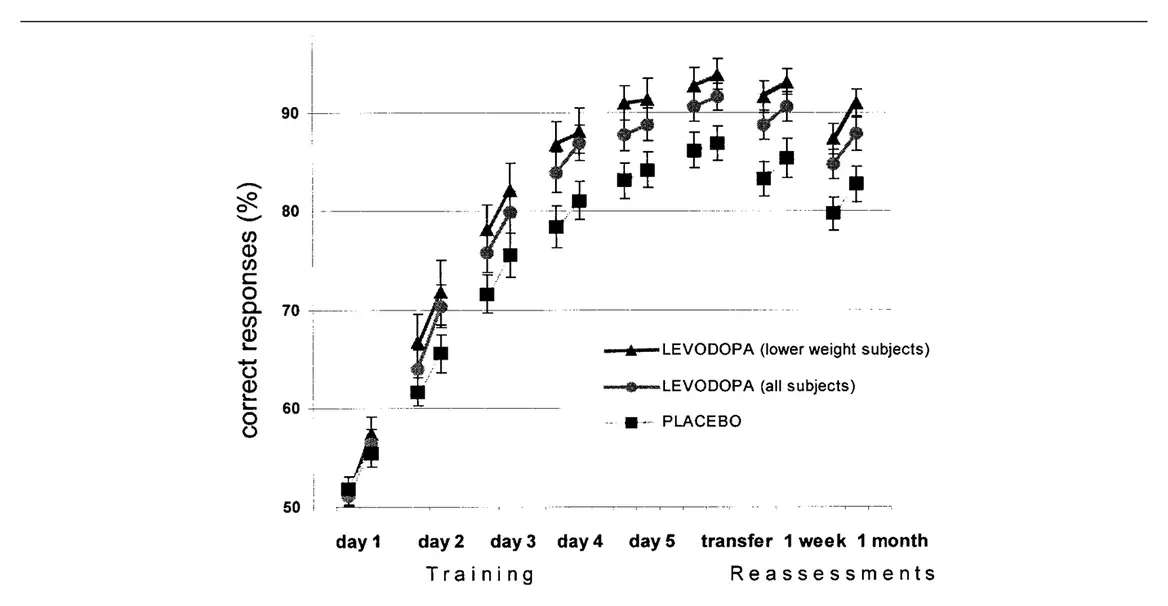
Knecht et al., Ann Neurol 2004. Healthy adults given L-DOPA learn faster across all 5 training days and maintain higher accuracy 1 week and 1 month later. PubMed (PMID 15236398)
Dopamine fuels original, creative thinking
High dopamine expands associative thinking and divergent problem-solving, while low dopamine locks you into rigid, stale loops.
Faust-Socher et al. (Annals of Neurology) tested verbal and visual creative fluency and originality in patients receiving dopaminergic therapy versus matched controls. [3]
Dopaminergic signaling significantly boosted both verbal and visual creative output without hurting accuracy. High dopamine = sharper mind and stronger creative drive.
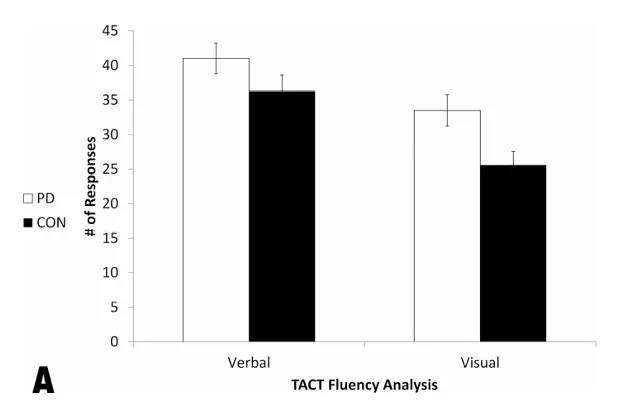
Faust-Socher et al., Ann Neurol 2014. Higher dopaminergic tone significantly increases both verbal and visual creative fluency. PubMed (PMID 24816898)
Dopamine fires on surprise, not on what you already expect
Wolfram Schultz mapped single midbrain dopamine neurons and discovered reward prediction error (RPE). [4]
When a reward is better than expected, dopamine neurons burst. When the reward is completely predicted, the burst disappears. When an expected reward fails to show up, firing actually drops below baseline.
That single chart explains why infinite scroll feeds drain you dry. Variable rewards keep firing prediction errors every 3 seconds until your baseline is exhausted.
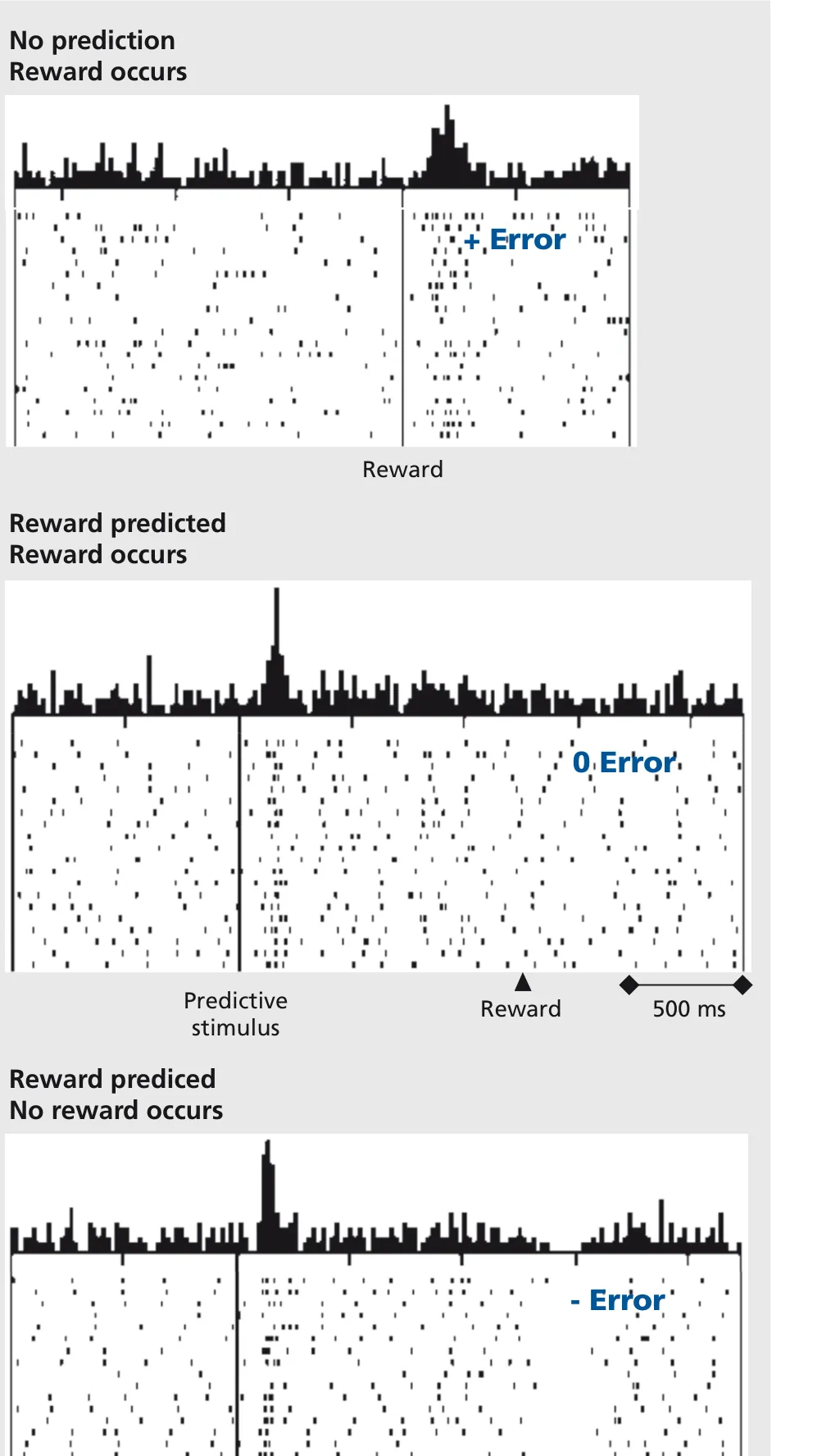
Schultz, Dialogues Clin Neurosci 2016 (Fig. 2). Top: unexpected reward triggers a dopamine burst. Middle: predicted reward produces no burst. Bottom: omitted reward causes a sharp dip below baseline. PubMed (PMID 27069377)
Low dopamine receptors directly track with low motivation and ADHD inattention
Nora Volkow's team scanned adults with ADHD using PET imaging and measured D2/D3 receptors and dopamine transporters (DAT) in the nucleus accumbens and midbrain. [5]
Adults with lower reward-pathway dopamine markers scored significantly lower on trait motivation, and lower motivation tracked directly with worse clinical inattention across every scale.
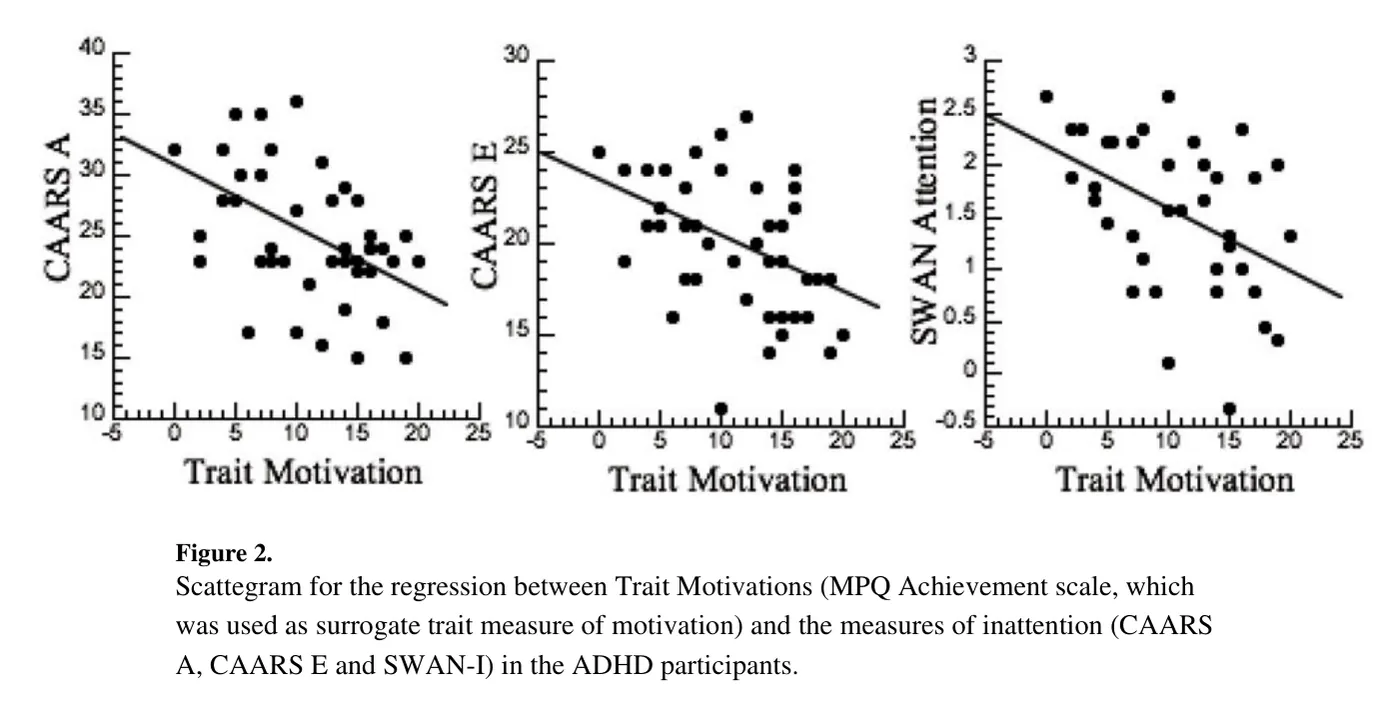
Volkow et al., Mol Psychiatry 2011 (Fig. 2). Lower trait motivation tied to the dopamine reward pathway tracks directly with worse inattention scores. PubMed (PMID 20856250)
How Your Brain Builds Dopamine (Chemistry, Tyrosine, and Cofactors)
Your brain cannot make dopamine out of thin air. Every molecule of dopamine comes from dietary protein, specific micronutrients, and cellular ATP.
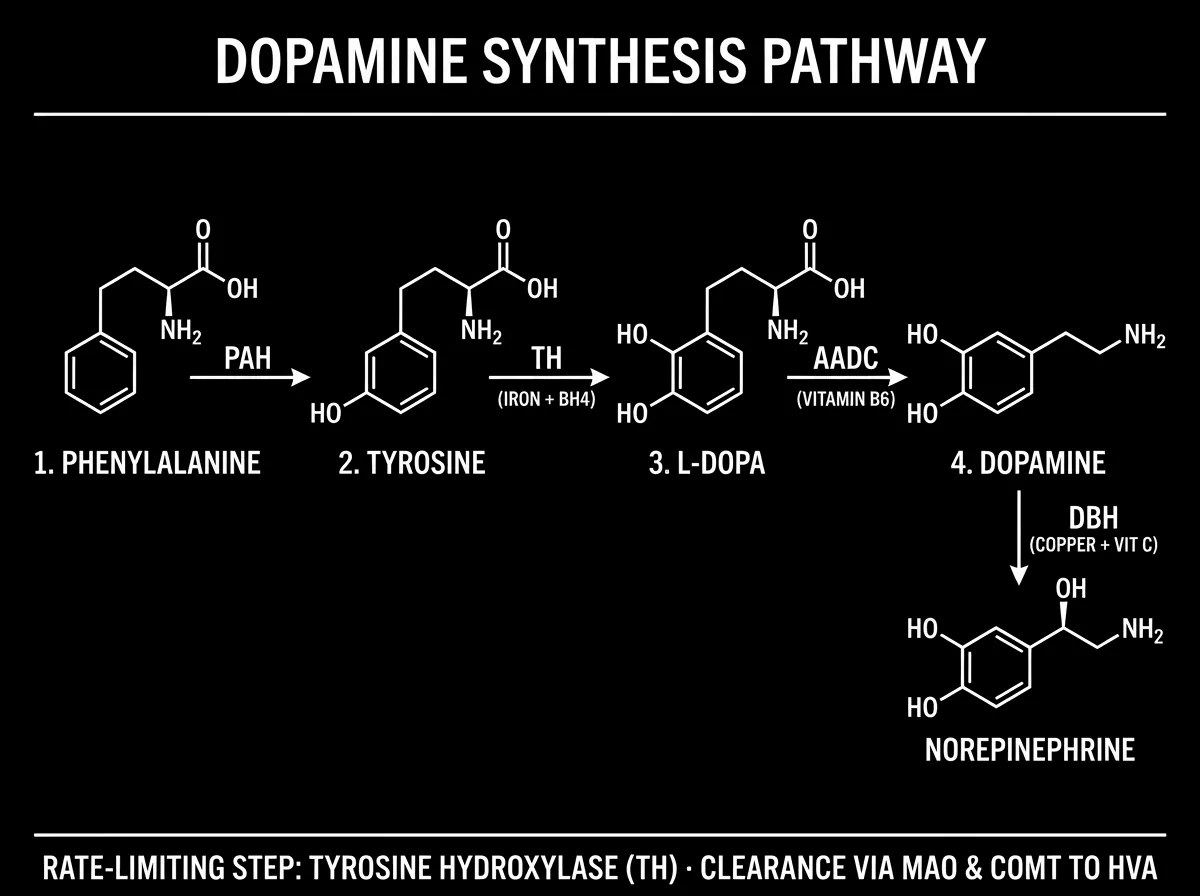
Here is the exact 4-step assembly line inside your neurons:
- Step 1: L-Phenylalanine (from protein) converts into L-Tyrosine via phenylalanine hydroxylase (PAH).
- Step 2 (The Bottleneck): L-Tyrosine converts into L-DOPA via Tyrosine Hydroxylase (TH). This enzyme requires iron, oxygen, and BH4 (tetrahydrobiopterin).
- Step 3: L-DOPA converts into Dopamine via AADC (aromatic L-amino acid decarboxylase). This step strictly requires active Vitamin B6 (P5P).
- Step 4: Inside certain neurons, dopamine converts further into Norepinephrine via DBH, which requires copper and Vitamin C.
- Clearance: Once used, dopamine is broken down by MAO and COMT into HVA (homovanillic acid).
If you are deficient in iron, B6, copper, oxygen, or glucose-derived ATP, your brain hits a manufacturing ceiling no matter how many motivational videos you watch.
Rotate the interactive 3D model below to inspect each step of the molecular cascade in space, from phenylalanine all the way to norepinephrine:
From dietary protein to dopamine, atom by atom
4 molecules3 enzymes1 rate-limiting bottleneck
Step 1 of 4 · Dietary starting material
Phenylalanine C₉H₁₁NO₂
An essential amino acid from protein-rich food. Its flat six-carbon benzene ring has zero hydroxyl (-OH) groups yet. The dashed ring highlights the exact hydrogen atom that liver PAH will replace with an -OH group.
- Formula
- C₉H₁₁NO₂
- Molar Mass
- 165.19 g/mol
- Source
- Dietary protein
- Next Enzyme
- PAH (liver, BH4 + Fe²⁺)
Step 2 of 4 · After PAH adds 1st -OH
L-Tyrosine C₉H₁₁NO₃
Phenylalanine hydroxylase (PAH) adds one hydroxyl (-OH) group at ring position 4. Tyrosine also enters directly from food and crosses the blood-brain barrier via the LAT1 amino acid transporter (where it competes with tryptophan and BCAAs).
- Formula
- C₉H₁₁NO₃
- Molar Mass
- 181.19 g/mol
- Enzyme
- PAH (needs BH4 + iron)
- BBB Entry
- LAT1 transporter
Step 3 of 4 · After TH adds 2nd -OH (The Bottleneck)
L-DOPA C₉H₁₁NO₄
Tyrosine hydroxylase (TH) adds a second -OH at position 3, creating the 3,4-dihydroxy catechol ring. This is the rate-limiting step of the entire dopamine system: dopamine itself feeds back to lock TH's regulatory tail into the active site until Ser40 phosphorylation releases it.
- Formula
- C₉H₁₁NO₄
- Molar Mass
- 197.19 g/mol
- Enzyme
- TH (needs BH4, Fe²⁺, O₂)
- Kinetics
- Rate-limiting bottleneck
Step 4 of 4 · After AADC clips off CO₂
Dopamine C₈H₁₁NO₂
Aromatic L-amino acid decarboxylase (AADC, requiring vitamin B6 as P5P) cleaves the carboxyl group (-COOH), releasing CO₂. The result is dopamine: smaller, polar, positively charged at blood pH 7.4, and ready to be packed into VMAT2 synaptic vesicles.
- Formula
- C₈H₁₁NO₂
- Molar Mass
- 153.18 g/mol
- Enzyme
- AADC / DDC (needs Vit B6)
- Kinetics
- Fast; L-DOPA rarely accumulates
Inflammation literally blocks Tyrosine from entering your cells
You can eat plenty of protein and still starve your dopamine neurons if chronic inflammation is raging in the background.
Vumma et al. (Neuropsychobiology 2017) exposed human cells to inflammatory cytokines and measured how much L-Tyrosine could actually cross the cell membrane. [6]
IL-1beta alone cut Tyrosine transport by 47%, and IL-1beta + TNF-alpha cut Tyrosine uptake by 49% (p <= 0.0001). Chronic inflammation starves the dopamine assembly line at the front door.
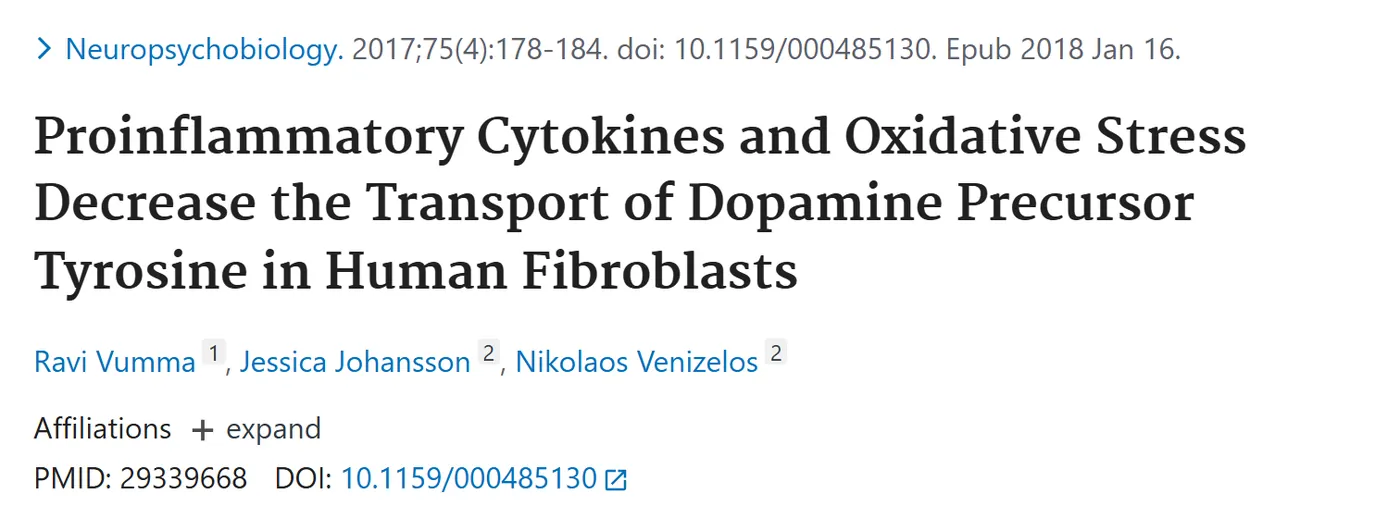
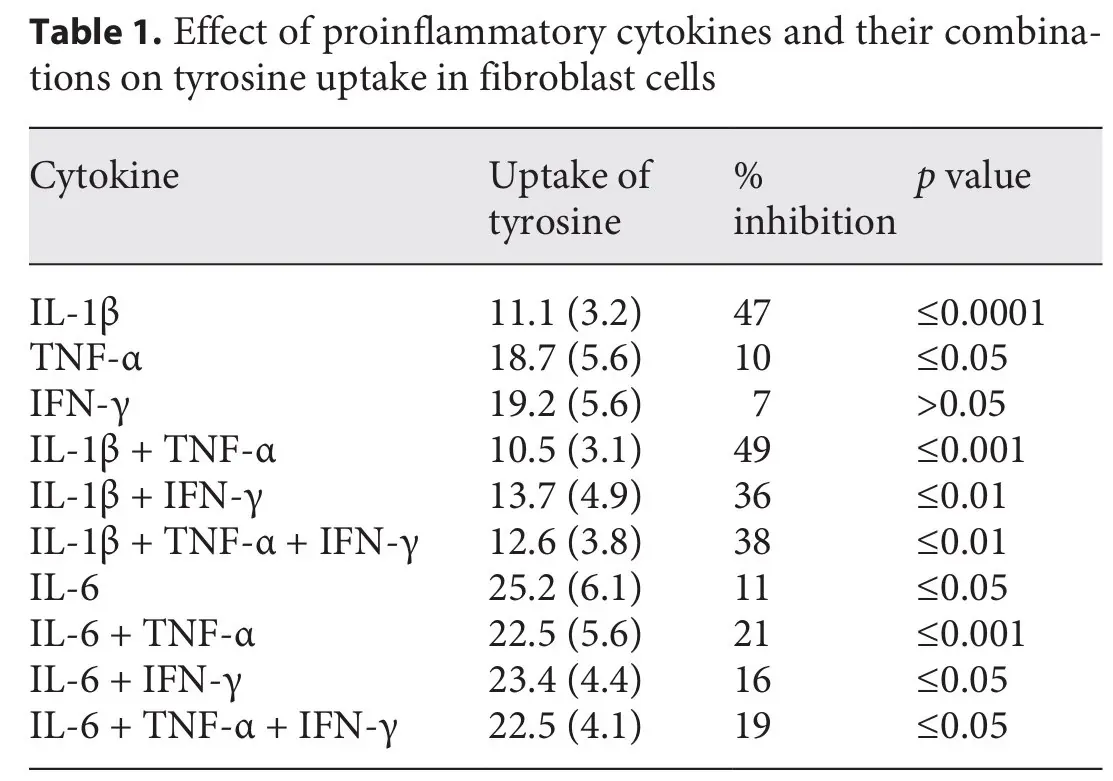
Vumma et al., Neuropsychobiology 2017 (Table 1). Proinflammatory cytokines slash cellular uptake of the dopamine precursor Tyrosine by up to 49%. PubMed (PMID 29339668)
Supplying Tyrosine rescues mood, focus, and drive under heavy stress
When stress burns through your brain's catecholamine reserves, giving back raw L-Tyrosine keeps the assembly line running.
In a classic U.S. Army Research Institute human trial (Brain Research Bulletin), Banderet and Lieberman gave soldiers L-Tyrosine versus placebo under intense cold and altitude stress. [7]
Tyrosine significantly slashed fatigue, sleepiness, headache, and distress while protecting vigilance and reaction time. Eat tyrosine-rich animal protein daily (eggs, beef, aged cheese, seafood) and use supplemental L-Tyrosine when mental load is high.
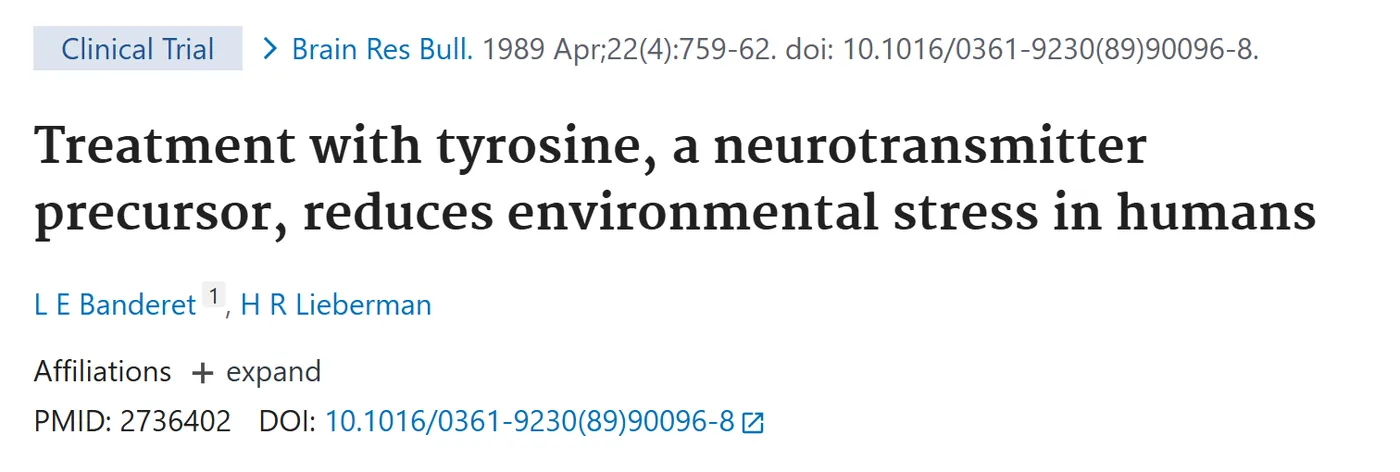
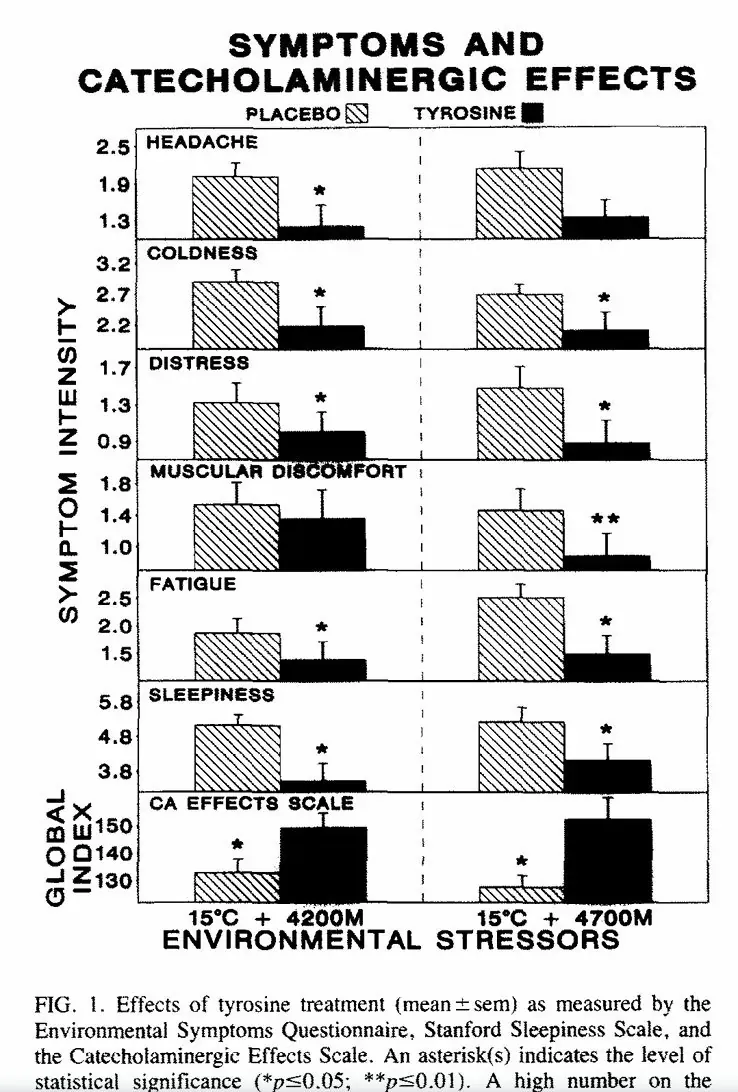
Banderet and Lieberman, Brain Res Bull 1989. Oral L-Tyrosine reduces headache, distress, fatigue, and sleepiness in humans exposed to acute environmental stress. PubMed (PMID 2736402)
Inside the Brain: 4 Pathways, the Synapse, and D1 vs D2 Receptors
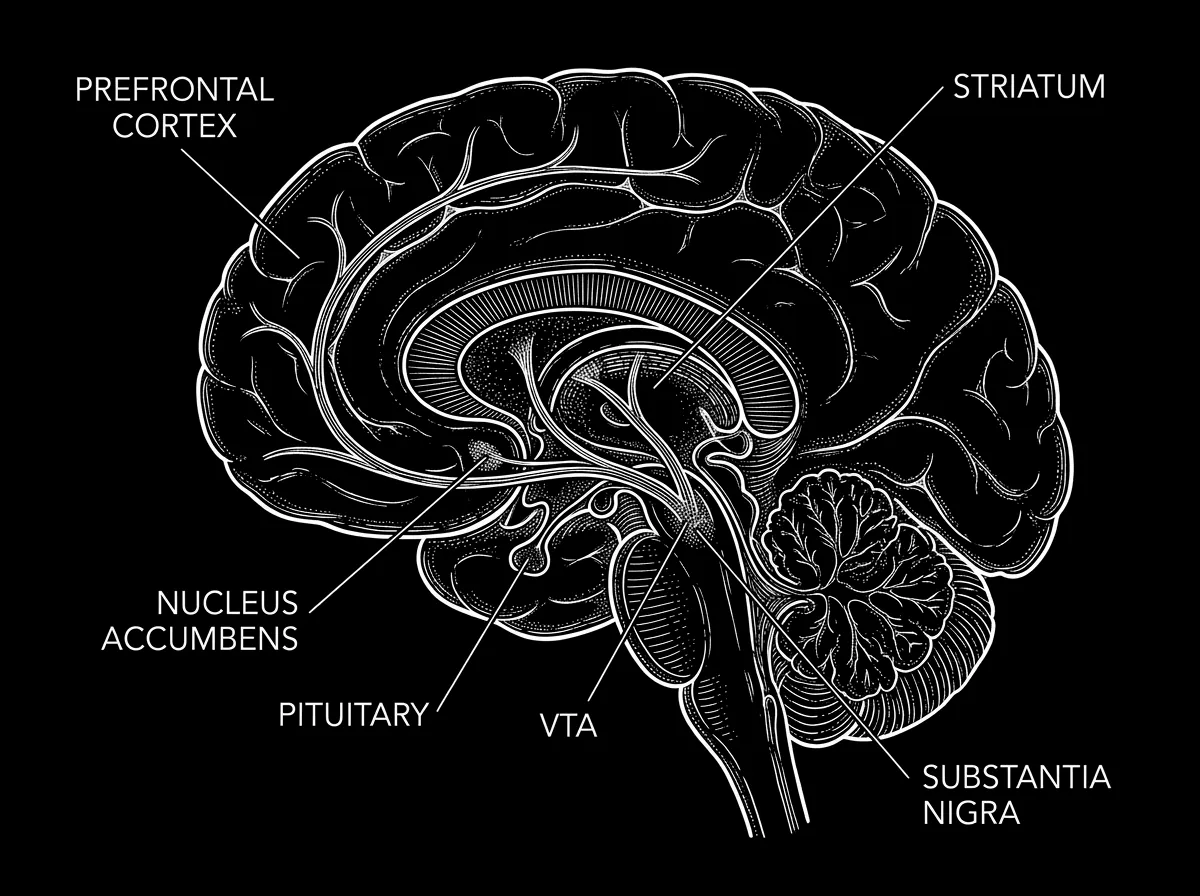
Dopamine does not float randomly through your skull. It travels along 4 distinct anatomical highways, and each one controls a different part of your life:
- Mesolimbic pathway (VTA to Nucleus Accumbens): Drive, wanting, reward learning, and the urge to pursue goals.
- Mesocortical pathway (VTA to Prefrontal Cortex): Working memory, focus, planning, and resisting distraction.
- Nigrostriatal pathway (Substantia Nigra to Striatum): Smooth physical movement, vigor, and building automatic habits.
- Tuberoinfundibular pathway (Hypothalamus to Pituitary): Keeps prolactin suppressed. High dopamine = low prolactin. Low dopamine = high prolactin.
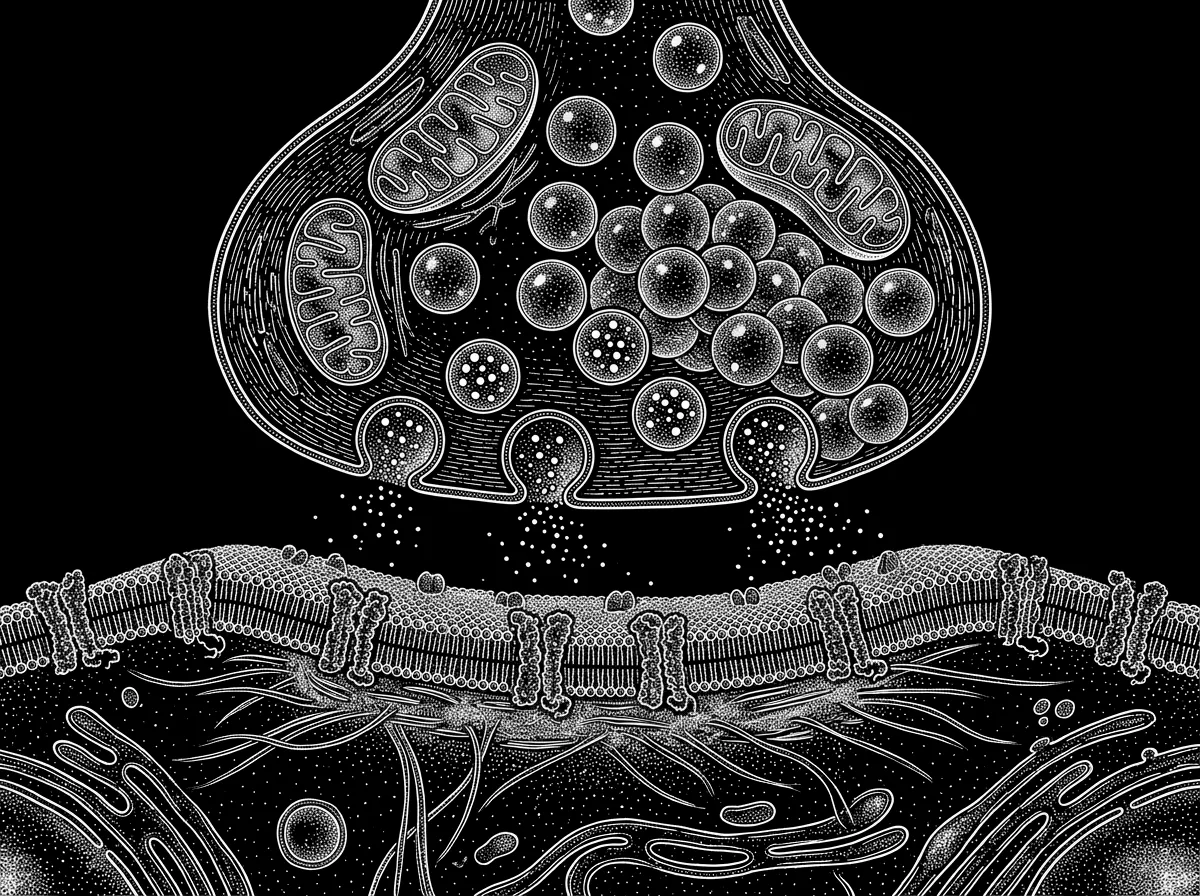
What happens inside a single dopamine synapse
Zoom into the microscopic gap between two neurons. Dopamine is synthesized in the presynaptic terminal, packed into tiny bubbles (vesicles) by VMAT2, and released into the synaptic cleft when an electrical impulse arrives.
It crosses the gap and binds postsynaptic D1 or D2 receptors. Almost immediately, the DAT (dopamine transporter) vacuums leftover dopamine back into the first neuron for recycling, while MAO and COMT break down the excess.
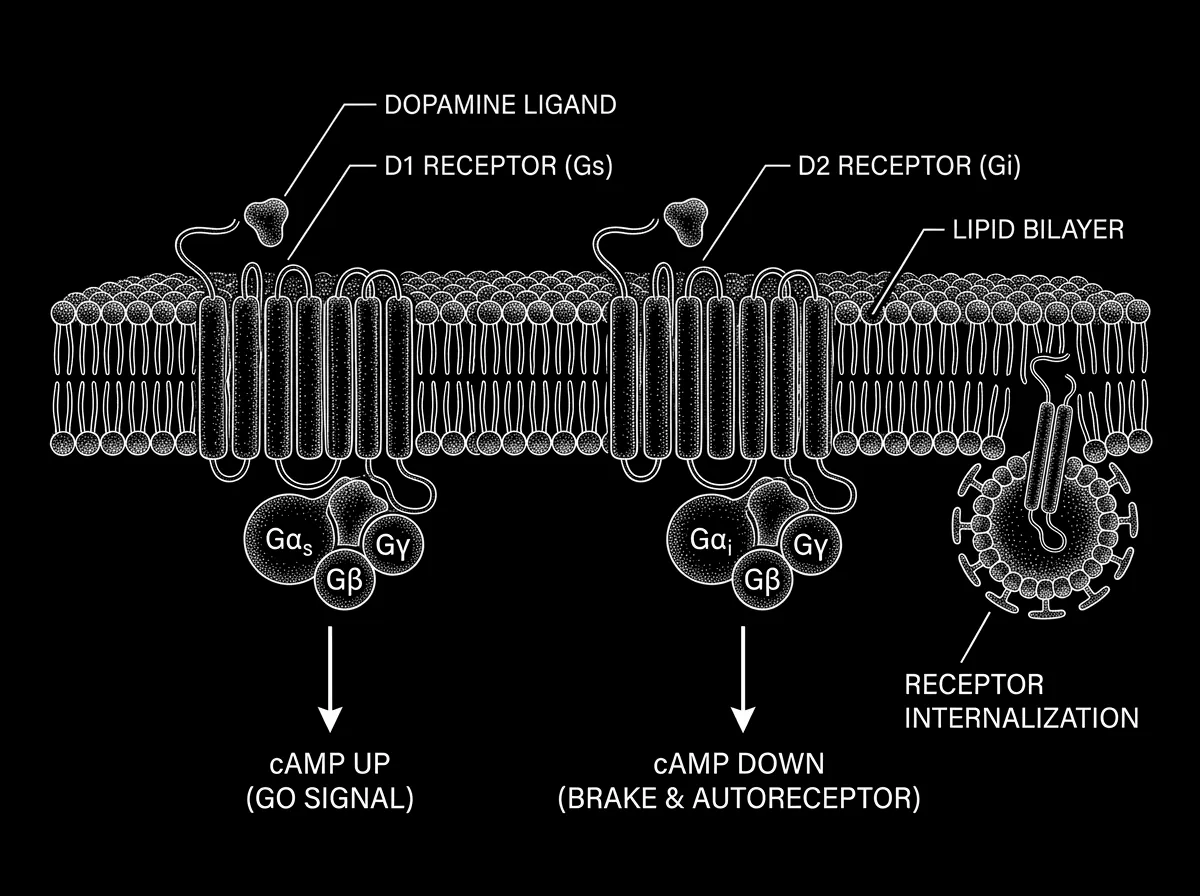
D1 vs D2 receptors: The Gas Pedal and the Sensitivity Dial
Not all dopamine receptors do the same job. The two main families act like opposing gears:
- D1 receptors (Gs-coupled): Raise intracellular cAMP. This is the Go signal that initiates action, reinforces learning, and sharpens prefrontal focus.
- D2 receptors (Gi-coupled): Lower cAMP and act as both the sensitivity dial and the presynaptic autoreceptor that meters out steady firing.
When you flood the synapse with artificial spikes day after day, arrestin proteins tag your D2 receptors and clathrin-coated pits pull them inside the neuron. That physical internalization is what a "fried dopamine system" actually looks like under a microscope.
Human proof: Blocking D2/D3 receptors creates instant apathy
In a 2025 Nature Communications randomized double-blind crossover trial, Osugo and colleagues gave healthy humans a selective D2/D3 antagonist (amisulpride) for just 7 days. [8]
Compared to placebo, blocking D2/D3 blunted caudate reward activation on fMRI and directly caused avolition, blunted emotion, and loss of motivated behavior. Healthy brain, normal life, blocked D2 receptors = zero drive.
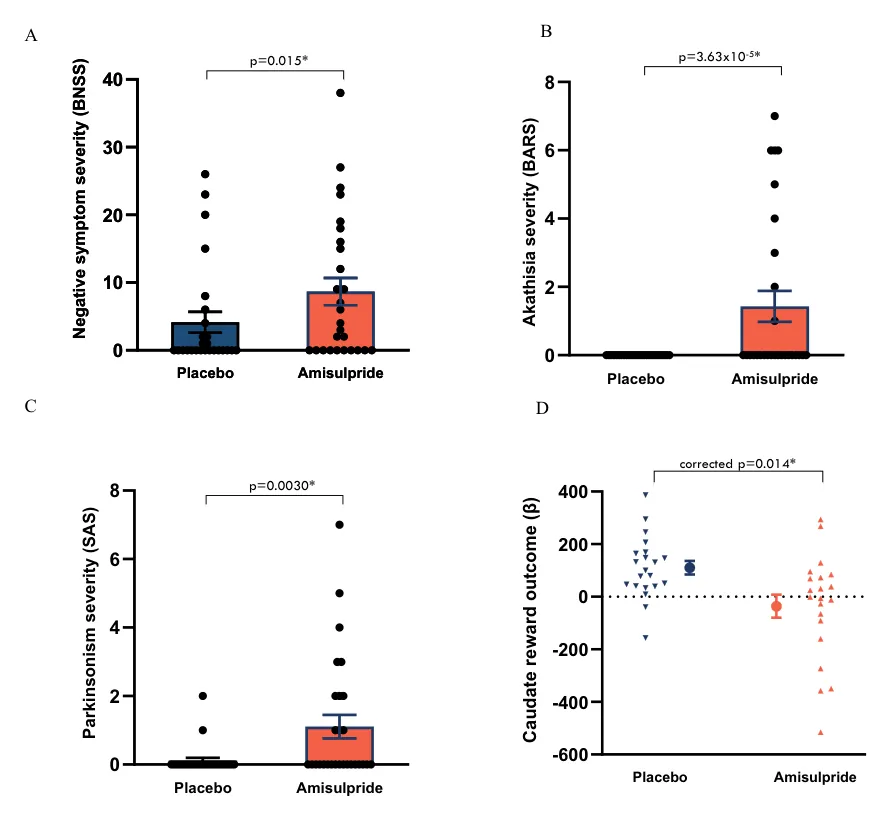
Osugo et al., Nature Communications 2025 (Fig. 2, Panels A to D). Seven days of D2/D3 antagonism in healthy humans increases negative symptoms and blunts caudate reward outcome. PubMed (PMID 39984436)
The Hidden Brakes Killing Your Dopamine: Endotoxin, Serotonin, and Prolactin
This is the chapter almost every mainstream dopamine article completely misses.
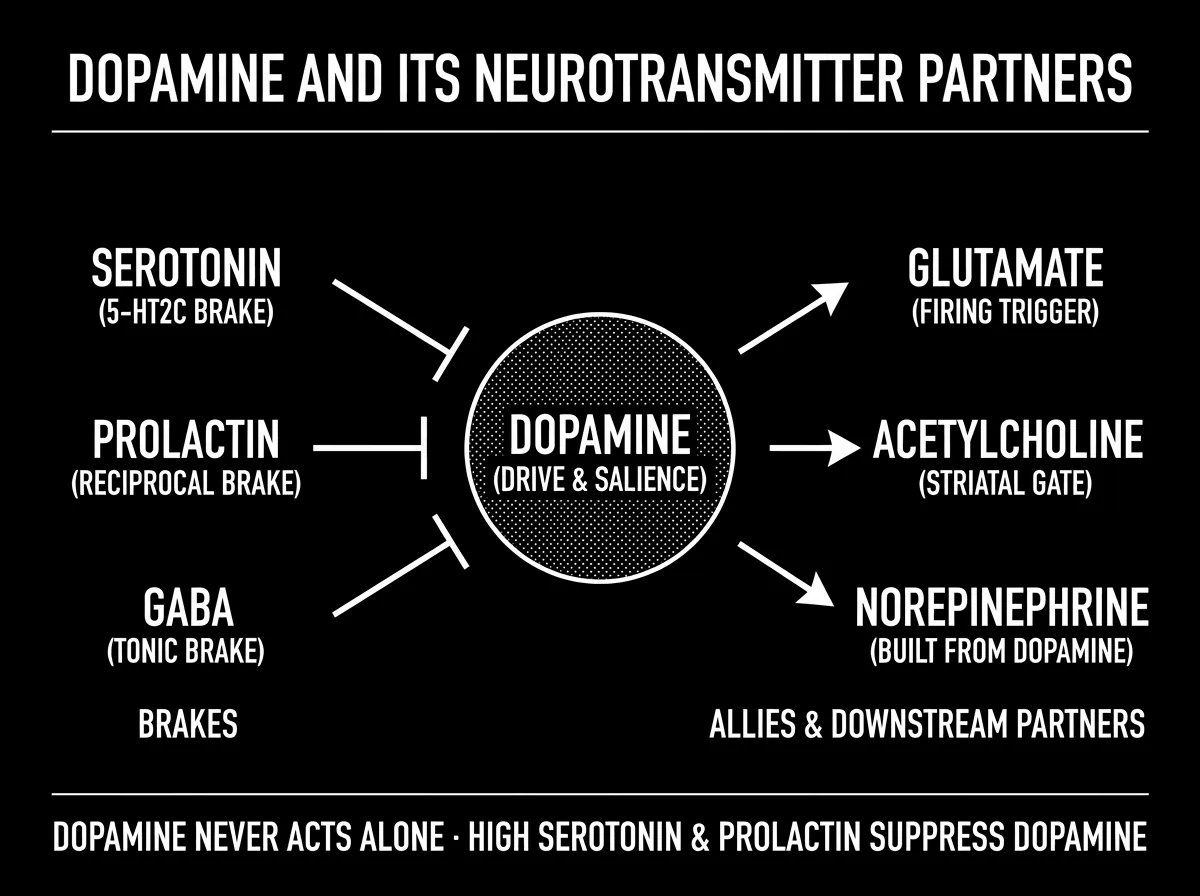
Dopamine does not operate alone. It sits on a biological seesaw against three powerful brakes: gut endotoxin, serotonin, and prolactin.
High endotoxin = low dopamine. High serotonin = low dopamine. High prolactin = low dopamine.
On the flip side, healthy glutamate, acetylcholine, and balanced norepinephrine work alongside dopamine to sharpen focus, memory, and execution.
Gut Endotoxin (LPS) directly shuts down your brain's reward center
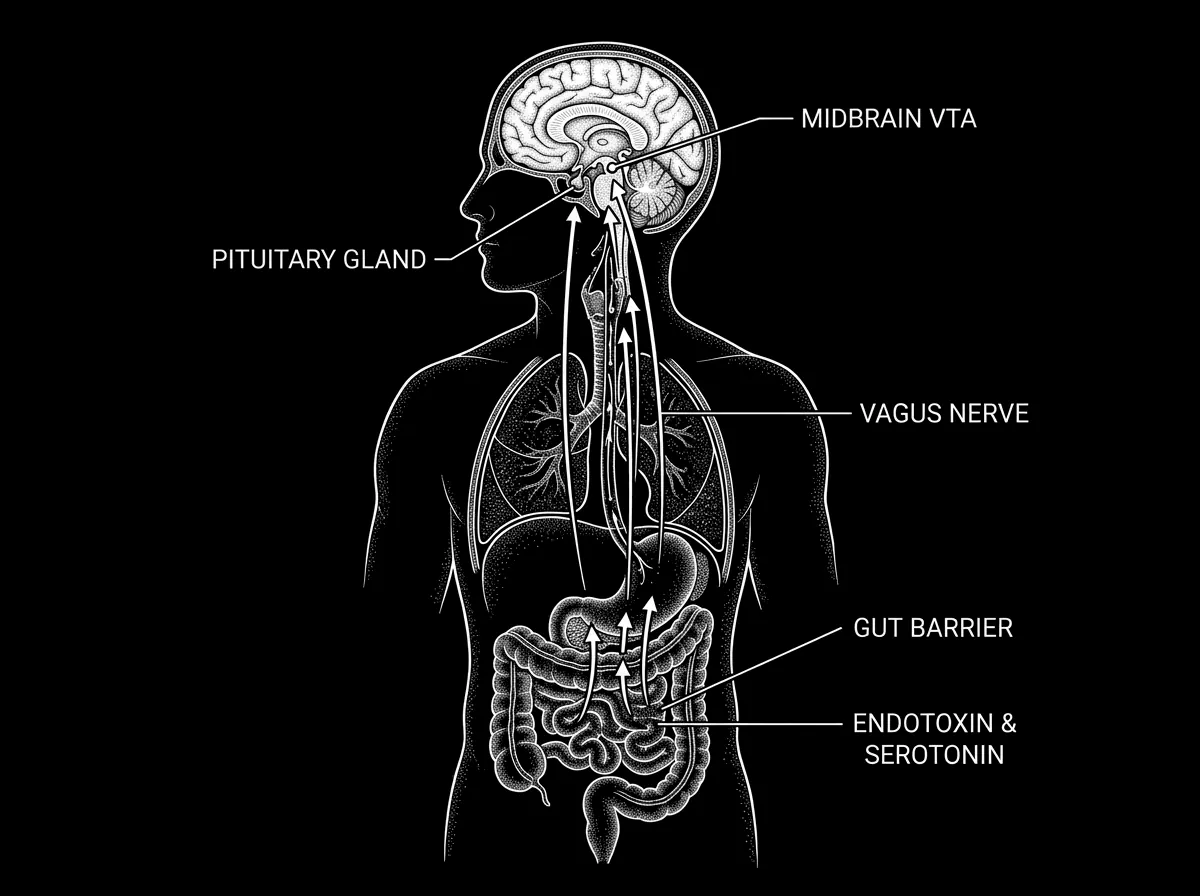
Over 90% of your serotonin is manufactured in your gut. When your gut lining is irritated or leaky, gram-negative bacterial endotoxin (LPS) crosses into your blood and triggers TLR4 inflammation.
Inflammatory cytokines deplete BH4 (the cofactor Tyrosine Hydroxylase needs to make dopamine), block Tyrosine transport, spike cortisol, and send danger signals up the vagus nerve straight into your midbrain.
In a landmark randomized controlled human trial (Biological Psychiatry), Eisenberger and colleagues gave healthy adults low-dose endotoxin versus placebo and scanned their brains with fMRI during a reward task. [9]
Endotoxin directly reduced ventral striatum responses to monetary reward and induced acute depressed mood and anhedonia. You cannot out-hustle a leaky gut leaking bacterial toxin into your bloodstream.
Eisenberger et al., Biol Psychiatry 2010. Randomized controlled human fMRI trial proving low-dose bacterial endotoxin directly suppresses ventral striatum reward activation and induces anhedonia. PubMed (PMID 20719303)
Grigoleit et al. (PLoS One) confirmed the exact dose-response curve in healthy men given 0.4 or 0.8 ng/kg LPS endotoxin versus saline. [10]
Within 2 to 4 hours, inflammatory cytokines and cortisol surged while positive mood, calmness, and alertness collapsed and state anxiety spiked. Fix your gut barrier and half of your "mental health" problems vanish.
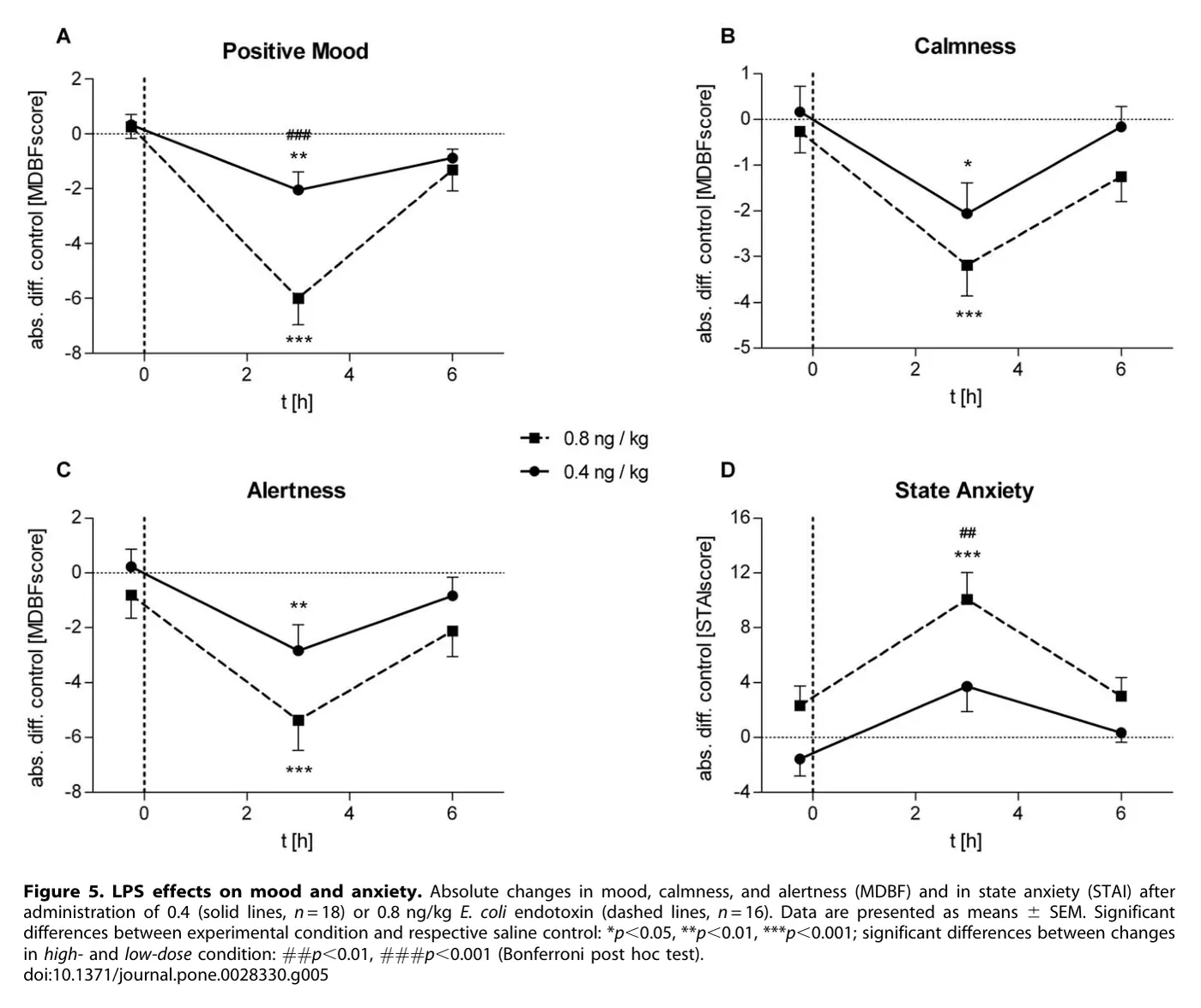
Grigoleit et al., PLoS One 2011 (Fig. 5). Low-dose human LPS endotoxin causes an acute collapse in positive mood, calmness, and alertness alongside a surge in anxiety. PubMed (PMID 22164271)
Raising serotonin with SSRIs physically silences VTA dopamine neurons
Mainstream psychiatry sold serotonin as the "happy chemical." Inside the midbrain, excess serotonin activates 5-HT2C receptors on GABA interneurons that clamp down directly on VTA dopamine firing. [11]
Dremencov et al. recorded live VTA dopamine neurons during sustained SSRI (escitalopram) administration. Firing rate and burst activity crashed sharply after both 2 days and 14 days. That is the exact biological reason high-serotonin states leave people emotionally numb, exhausted, and asexual.
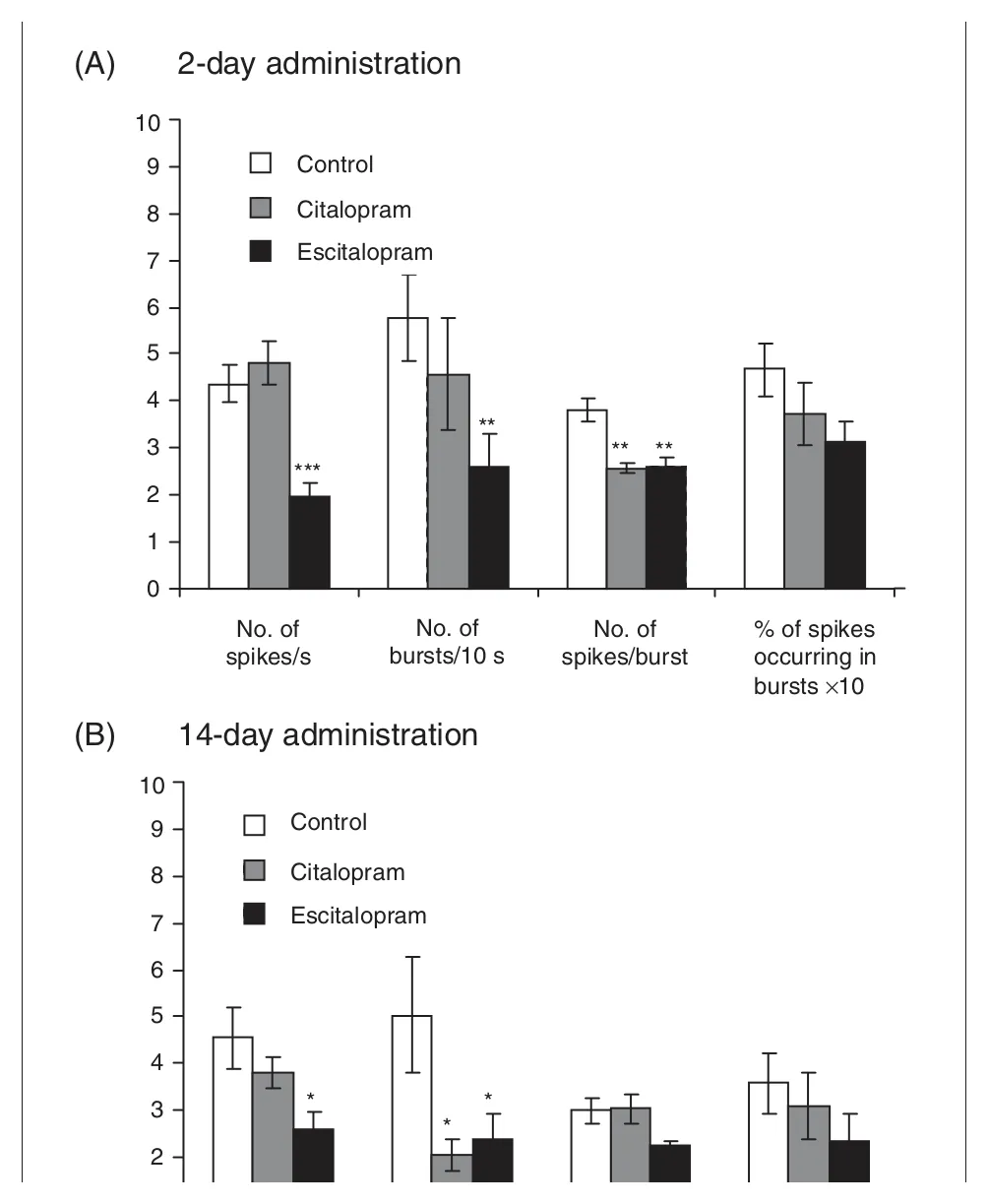
Dremencov et al., J Psychiatry Neurosci 2009 (Fig. 3). Sustained escitalopram suppresses VTA dopamine neuron firing rate and burst activity after both 2 and 14 days. PubMed (PMID 19448853)
Serotonin drives Prolactin up, and Prolactin crushes male androgen metabolism
Dopamine is literally the pituitary's prolactin-inhibiting hormone. Whenever dopamine drops, or serotonin climbs, prolactin surges.
In a classic Endocrinology study, Clemens et al. demonstrated that stimulating serotonergic signaling strongly increases serum prolactin, while blocking serotonin receptors stops the prolactin surge cold. [12]
Clemens et al., Endocrinology 1977. Serotonergic stimulation drives sharp increases in pituitary prolactin secretion, which is reversed by serotonin receptor blockade. PubMed (PMID 401022)
High prolactin is the blood-test mirror of suppressed dopamine. Magrini et al. (Journal of Clinical Endocrinology and Metabolism) showed in men that elevated plasma prolactin impairs peripheral androgen metabolism and lowers active DHT, draining drive, confidence, and vitality from both ends. [13]
Magrini et al., J Clin Endocrinol Metab 1976. Elevated plasma prolactin directly impairs androgen metabolism and DHT conversion in men. PubMed (PMID 977731)
Daily Habits That Raise (Or Destroy) Your Dopamine Baseline
No supplement can outrun broken daily inputs. Here is what human brain scans and controlled trials prove actually moves dopamine synthesis, D2 receptors, and real-world focus.
1. Doomscrolling social apps tracks directly with lower human dopamine synthesis
Everyone feels fried after two hours of scrolling, and now we have human PET scans proving why.
Westbrook et al. (iScience 2021) tracked real smartphone usage and scanned human brains with FDOPA PET imaging to measure striatal dopamine synthesis capacity. [14]
People who spent a higher proportion of their phone time on social apps had significantly lower striatal dopamine synthesis capacity. The endless slot machine in your pocket is quietly taxing the exact system you need for real work.
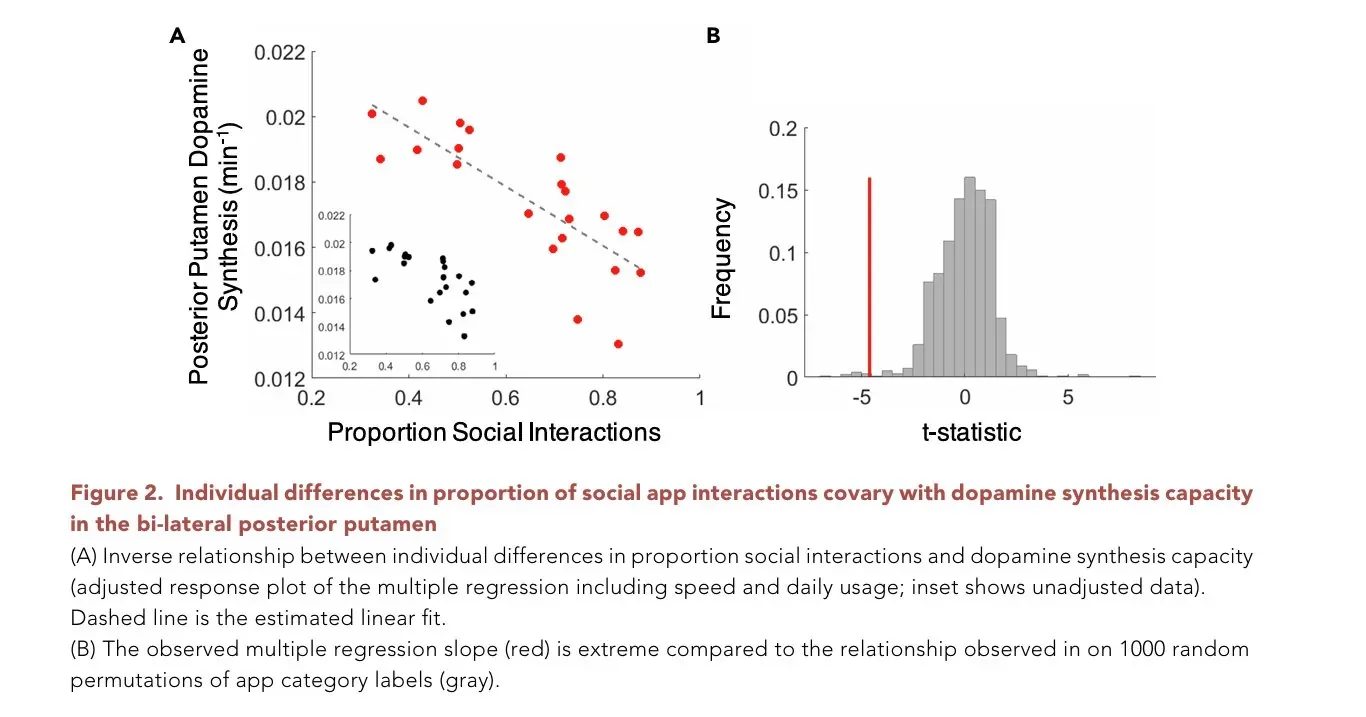
Westbrook et al., iScience 2021 (Fig. 2). Higher proportion of smartphone social-app interactions correlates directly with lower posterior putamen dopamine synthesis capacity on human PET scans. PubMed (PMID 34113831)
Even better: the damage is reversible fast. In a 2025 PNAS Nexus randomized controlled trial, Castelo et al. blocked all mobile internet on participants' smartphones for just 2 weeks. [15]
Daily screen time dropped in half (from 314 minutes to 161 minutes). Inside 14 days, objective sustained attention, mental health, and subjective well-being all climbed significantly.
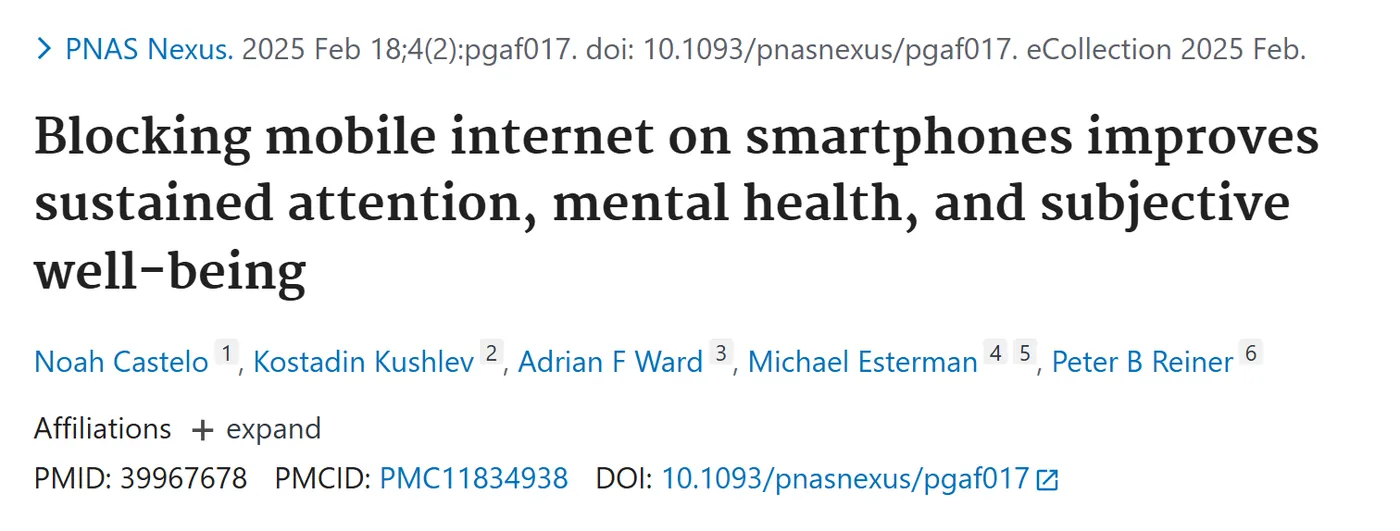
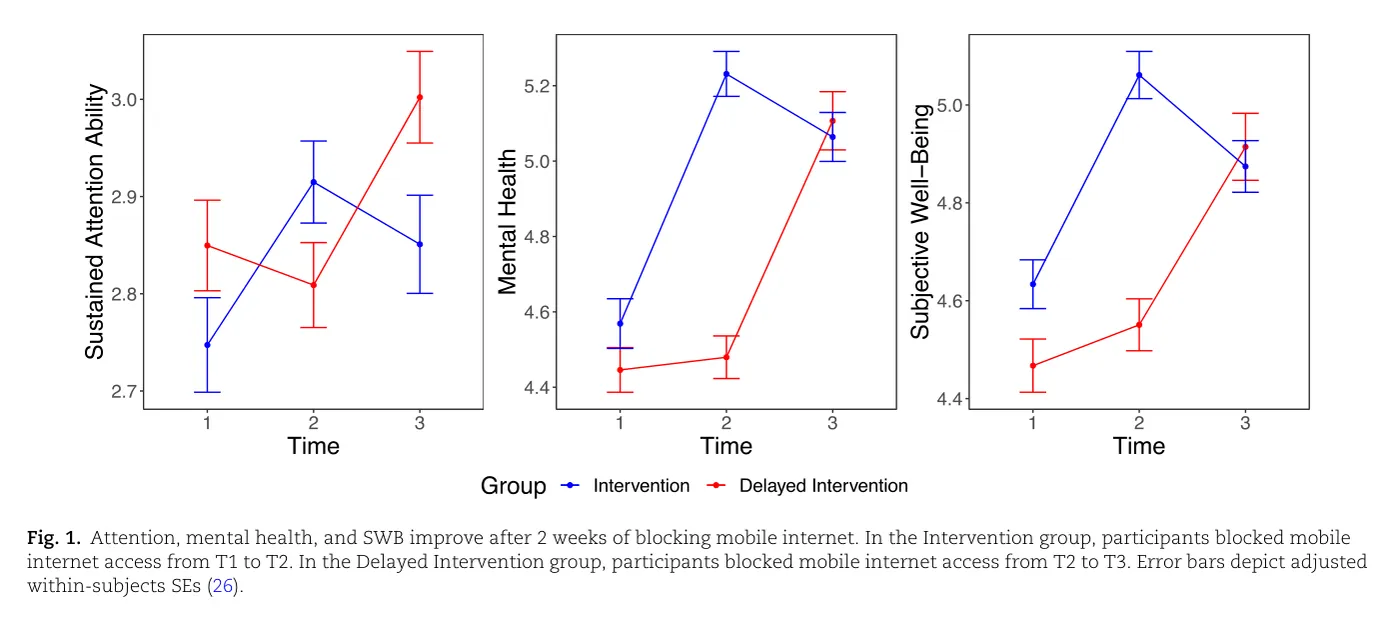
Castelo et al., PNAS Nexus 2025 (Fig. 1). Blocking mobile internet for 2 weeks significantly raises objective sustained attention, mental health, and subjective well-being. PubMed (PMID 39967678)
2. One bad night of sleep downregulates your D2 receptors
Volkow et al. (Journal of Neuroscience) scanned healthy adults with PET imaging after a full night of sleep versus after 1 single night of sleep deprivation. [16]
Sleep deprivation significantly reduced D2/D3 receptor availability in the ventral striatum. Crucially, giving methylphenidate still produced the same dopamine release during sleep loss, proving the drop was true D2 receptor downregulation.
Sleep loss = fewer dopamine receptors the very next morning. Protect 7.5 to 9 hours of dark, uninterrupted sleep before touching any nootropic.
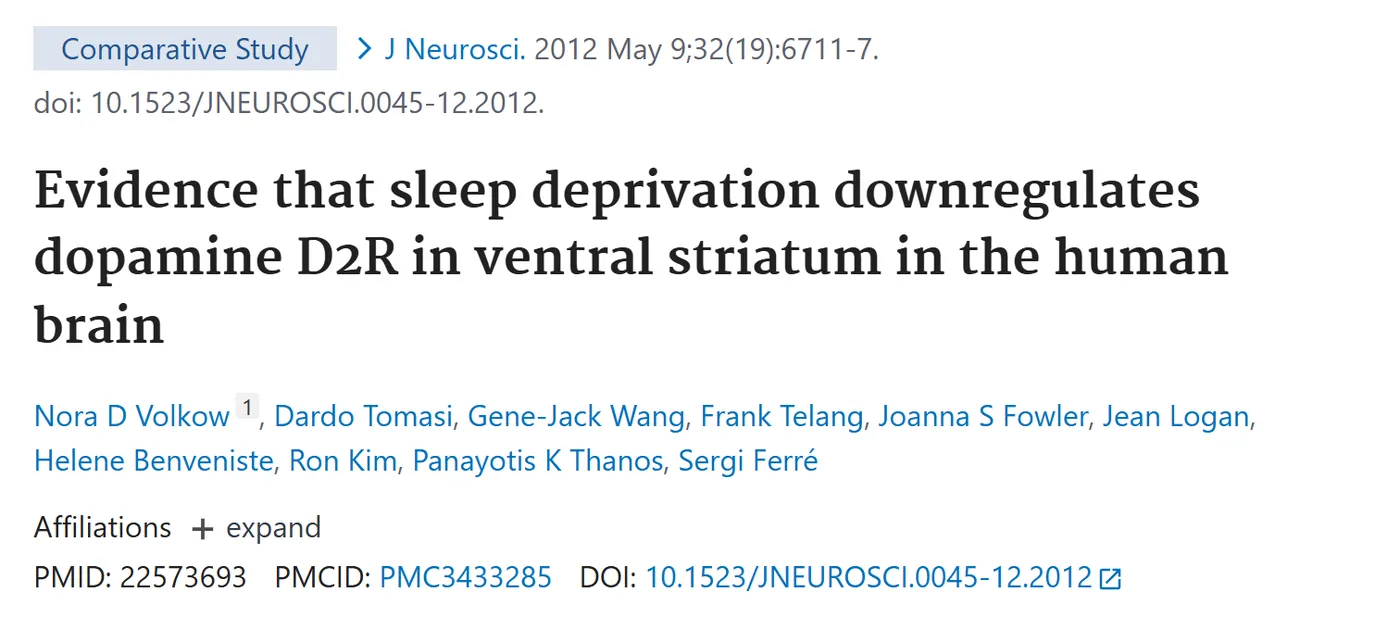
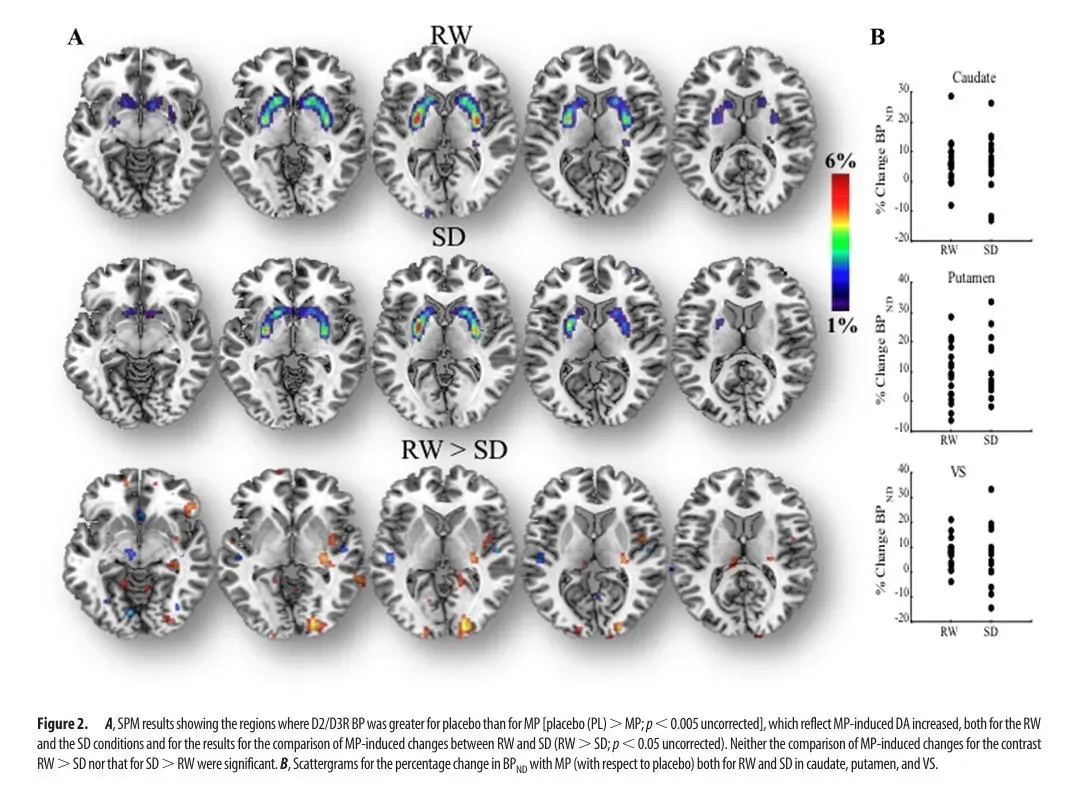
Volkow et al., J Neurosci 2012 (Fig. 2). Human PET scans showing significantly higher ventral striatal D2/D3 receptor availability when rested (RW) versus after 1 night of sleep deprivation (SD). PubMed (PMID 22573693)
3. Chronic stimulants burn out the exact system you are trying to boost
A JAMA Psychiatry meta-analysis pooled 31 PET and SPECT imaging studies comparing 519 chronic stimulant users (cocaine, amphetamine, methamphetamine) against 512 healthy controls. [17]
Chronic stimulant abuse slashed endogenous dopamine release, dopamine transporter availability, and striatal D2/D3 receptor density across the board. Forcing giant artificial releases borrows tomorrow's dopamine at brutal interest.
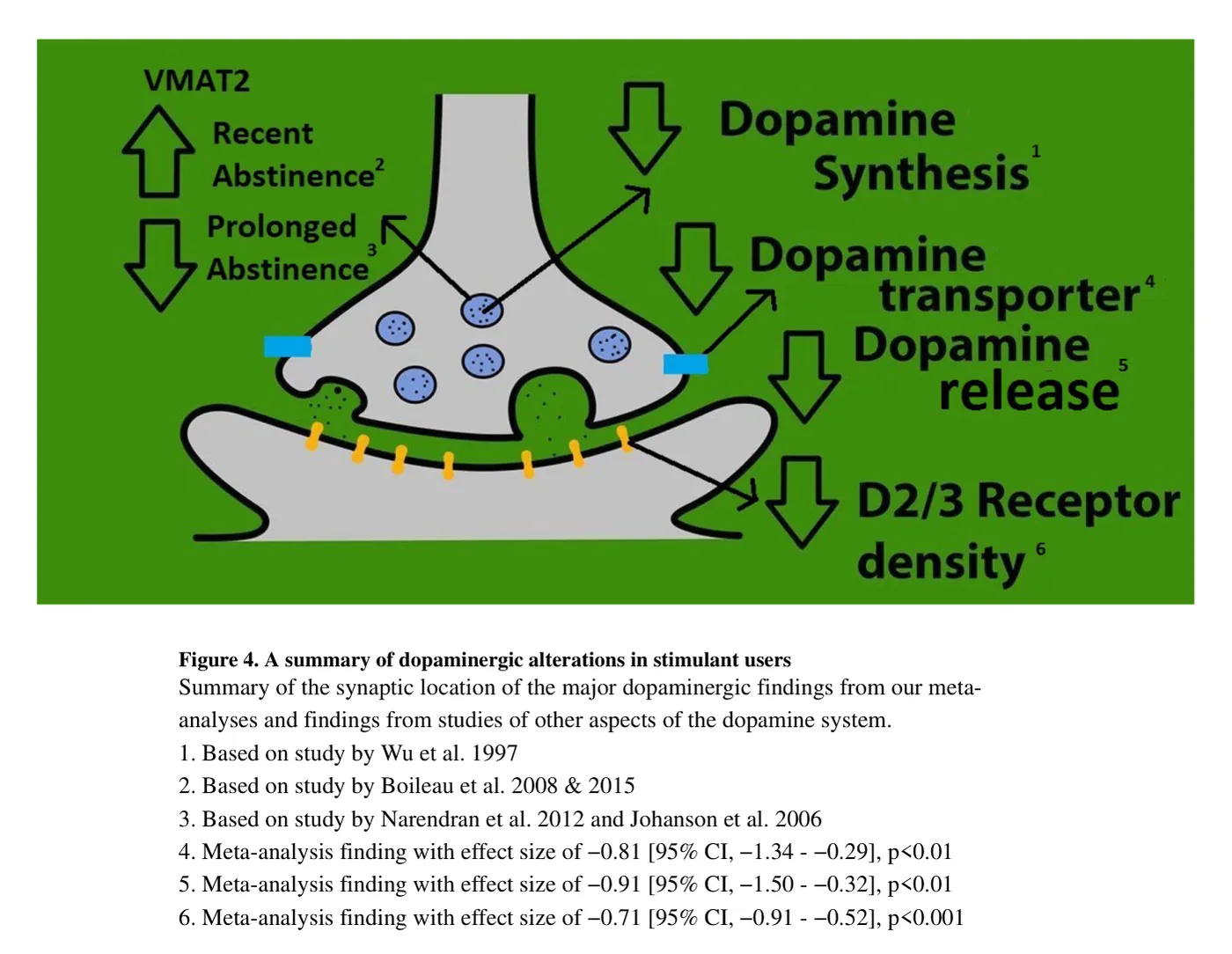
Ashok et al., JAMA Psychiatry 2017 (Fig. 4). Meta-analysis summary across 31 PET/SPECT studies showing large reductions in dopamine release, DAT, and D2/D3 receptor density. PubMed (PMID 28297025)
4. Structured exercise physically rebuilds human D2/D3 receptors
Can damaged human dopamine receptors actually grow back? Robertson and colleagues tested this directly with PET scans in a randomized trial of abstinent stimulant users. [18]
Eight weeks of sitting in abstinence education alone produced zero significant increase in striatal D2/D3 receptors. Adding structured exercise training for 8 weeks significantly increased D2/D3 receptor availability across every single striatal subdivision.
Sitting still waiting to "detox" does not rebuild receptors. Hard physical training does.
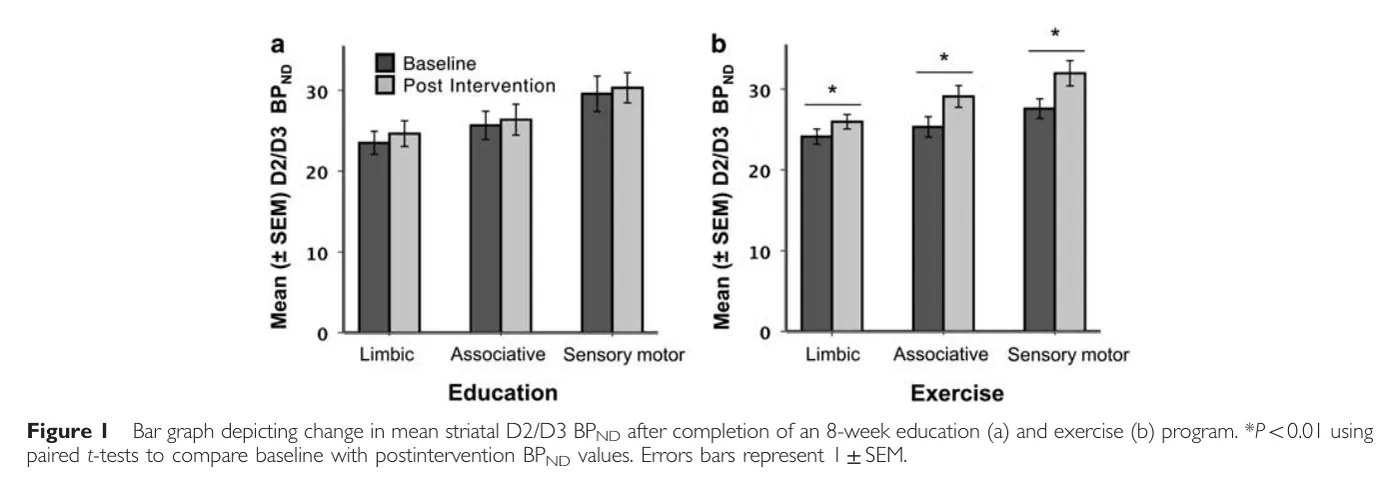
Robertson et al., Neuropsychopharmacology 2016 (Fig. 1). Eight weeks of exercise training significantly raises striatal D2/D3 receptor availability across all three subdivisions, while education alone does not. PubMed (PMID 26503310)
5. Morning sunlight through your eyes turns on Tyrosine Hydroxylase and raises human D2/D3
Light is a direct biochemical trigger for dopamine. Bright outdoor photons hit your retina, turn on local dopamine synthesis, and send wake-and-drive signals straight down the optic nerve to the hypothalamic SCN and midbrain VTA.
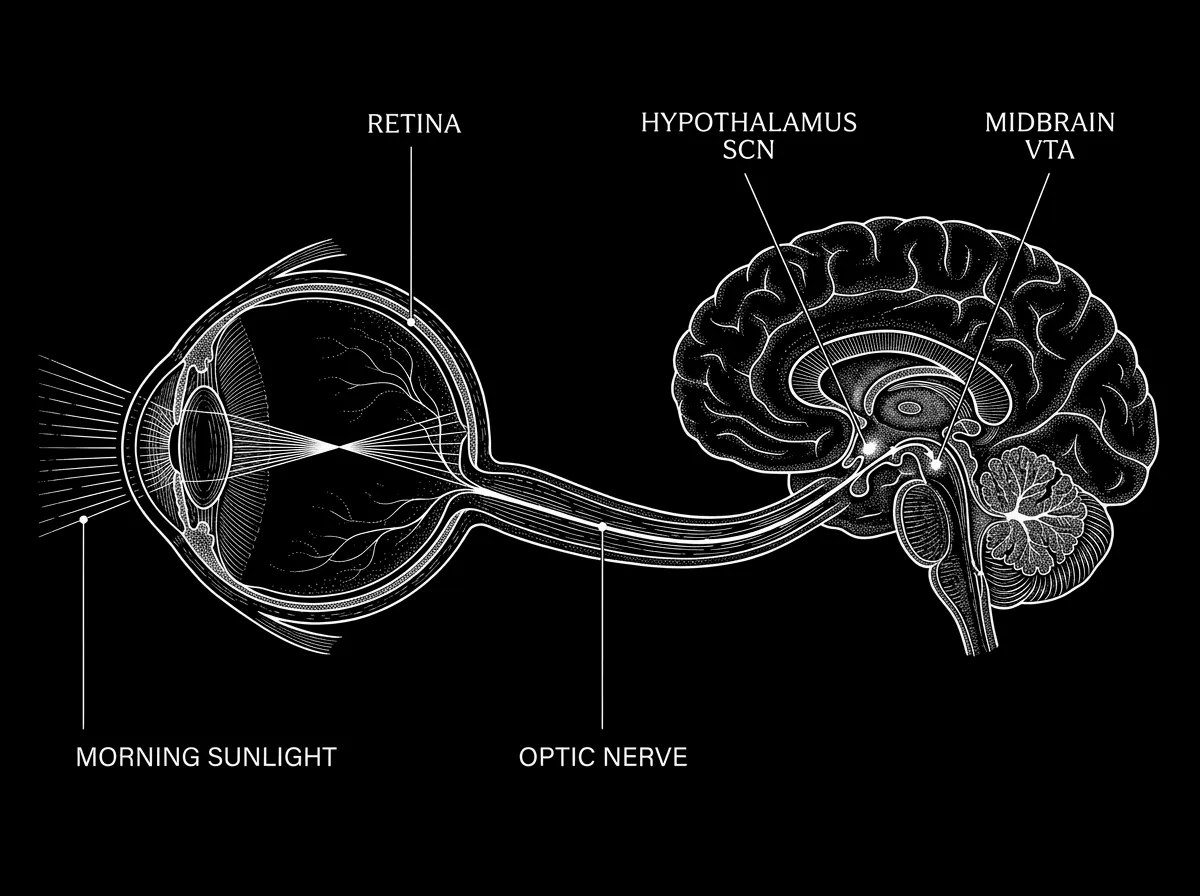
In a classic Science paper, Iuvone et al. proved that light directly stimulates Tyrosine Hydroxylase activity and accelerates dopamine synthesis in retinal neurons. [19]
Iuvone et al., Science 1978. Direct biochemical proof that light activates Tyrosine Hydroxylase and increases dopamine synthesis in retinal amacrine neurons. PubMed (PMID 30997)
And in living humans, Tsai et al. scanned 68 healthy volunteers with SPECT imaging and compared the highest quartile of sunshine exposure against the lowest quartile. [20]
High-sunshine volunteers had significantly higher striatal D2/D3 receptor availability, even after controlling for age, sex, and smoking. Get outside into real sky light within 30 minutes of waking, with no sunglasses.
Tsai et al., Prog Neuropsychopharmacol Biol Psychiatry 2011. Human SPECT imaging study showing higher striatal D2/D3 receptor availability in high-sunshine versus low-sunshine volunteers. PubMed (PMID 20875835)
6. Real simple sugar fuels dopamine neurons cleanly (stop starving your brain of glucose)
Your midbrain dopamine neurons burn massive amounts of oxidative ATP. Chronic low-carb and fasting stress force cortisol and adrenaline up just to keep blood sugar stable, crushing thyroid hormone and dopaminergic tone.
In Brain Research, Hajnal and Norgren measured real-time extracellular dopamine in the nucleus accumbens during sucrose intake. [21]
Sucrose triggered an immediate, clean surge in accumbens dopamine. Easy-to-digest natural sugars (ripe fruit, fresh orange juice, raw honey, maple syrup, milk with sugar) keep cellular energy high, keep stress hormones low, and let dopamine neurons fire effortlessly.
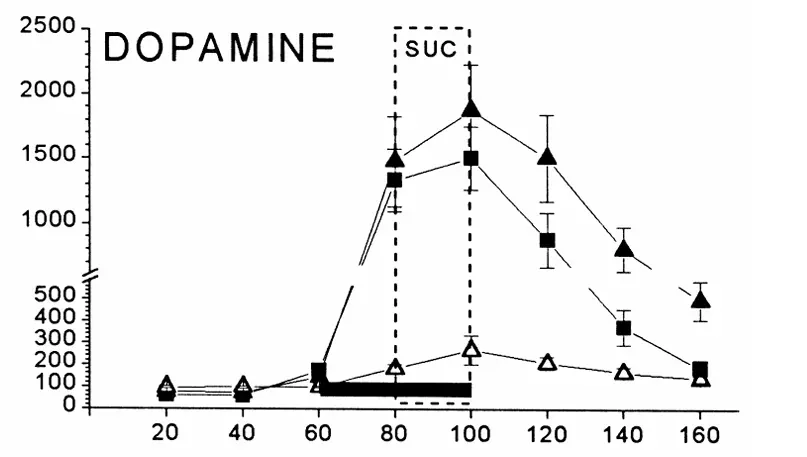
Hajnal and Norgren, Brain Res 2001. Real-time microdialysis curve showing rapid nucleus accumbens dopamine elevation in response to sucrose intake. PubMed (PMID 11516413)
Targeted Compounds and Supplements That Support Dopamine
Habits and nutrition build the foundation. Targeted compounds fix specific bottlenecks: upregulating Tyrosine Hydroxylase, sealing the gut barrier, unlocking glucose-to-ATP oxidation, dropping prolactin, or releasing the serotonin brake.
Every compound below is backed by real published studies, with direct links to the exact versions I trust.
1. Bromantane (Upregulates Tyrosine Hydroxylase without stimulant burnout)
Most stimulants dump your stored dopamine vesicles and leave you crashed five hours later. Bromantane (Ladasten) works from the root: it turns up the gene expression of the enzymes that manufacture dopamine.
Vakhitova et al. showed that Ladasten directly induces the expression of genes regulating dopamine biosynthesis across key brain structures. [22]
Vakhitova et al., Eksp Klin Farmakol 2004. Ladasten (Bromantane) induces expression of the genes regulating dopamine biosynthesis in rat brain structures. PubMed (PMID 15500036)
Mikhaylova et al. (Neuropharmacology) confirmed that a single oral dose of Bromantane increases Tyrosine Hydroxylase mRNA in the VTA, raises TH protein in the hypothalamus and striatum, and boosts L-DOPA and dopamine in the nucleus accumbens, striatum, and hippocampus without depleting catecholamine reserves. [23]
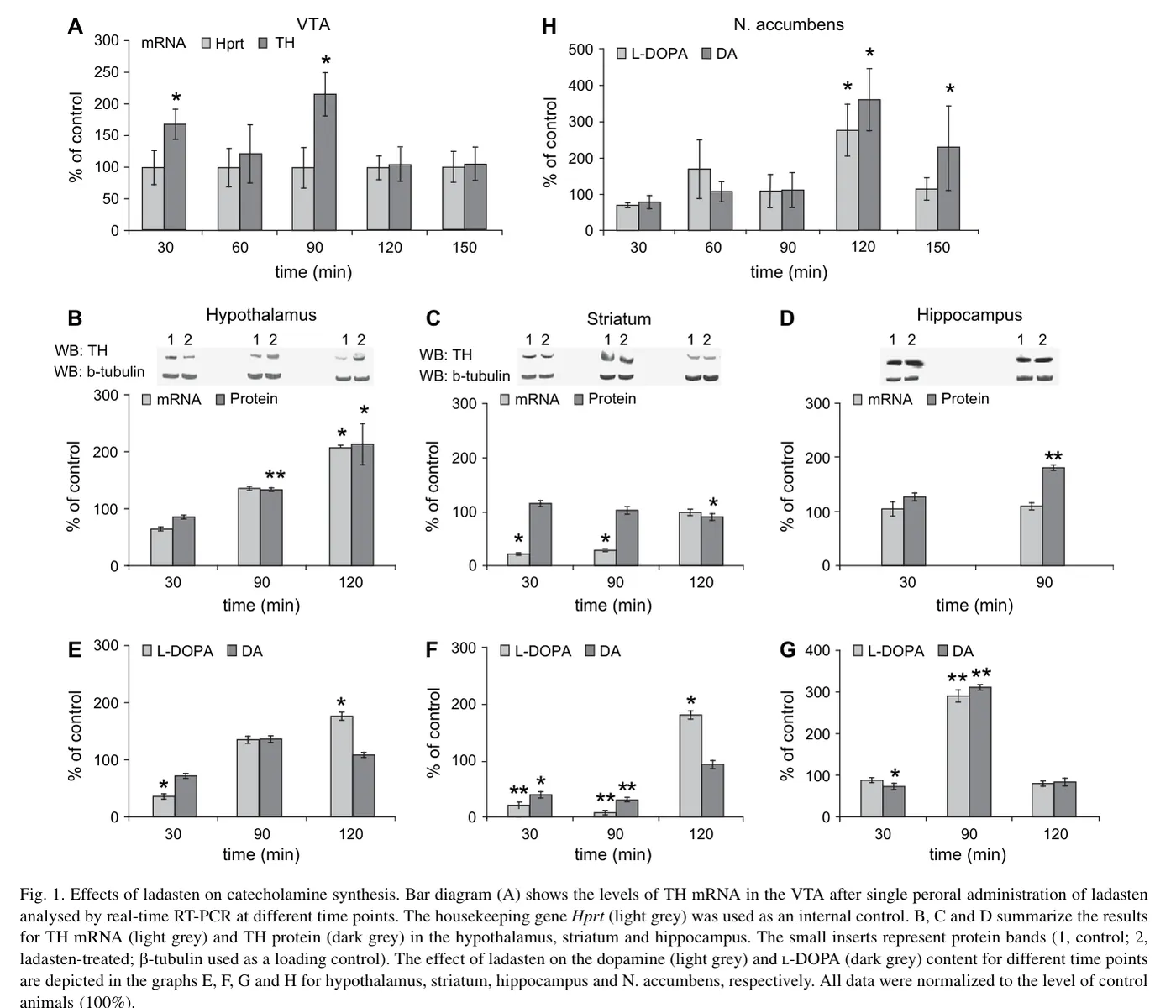
Mikhaylova et al., Neuropharmacology 2007 (Fig. 1). Oral Ladasten (Bromantane) upregulates TH mRNA, TH protein, L-DOPA, and dopamine across VTA, nucleus accumbens, and striatum. PubMed (PMID 17854844)
2. BPC-157 Capsules (Seals the gut barrier and repairs dopaminergic signaling)
If your gut barrier is leaking endotoxin, your dopamine system is fighting a fire every single meal. BPC-157 is a native gastric pentadecapeptide stable in human stomach acid.
Duzel et al. (World Journal of Gastroenterology) demonstrated BPC-157's powerful cytoprotective healing across severe colitis and mucosal ischemia, sealing the exact intestinal lining that keeps endotoxin out of your blood. [24]
Duzel et al., World J Gastroenterol 2017. Stable gastric pentadecapeptide BPC-157 repairs severe intestinal mucosal injury and restores gut-barrier integrity in rats. PubMed (PMID 29358856)
Even more directly for dopamine, Sikiric et al. (Acta Pharmacologica Sinica) showed that BPC-157 attenuates chronic amphetamine-induced dopaminergic disturbances, helping stabilize a battered brain-gut dopamine axis. [25]
Sikiric et al., Acta Pharmacol Sin 2002. Pentadecapeptide BPC-157 counteracts chronic amphetamine-induced dopaminergic behavioral disturbances. PubMed (PMID 11978191)
3. Thiamax / Vitamin B1 TTFD (Unlocks glucose oxidation, mood, and mental speed)
Dopamine neurons require huge amounts of oxidative ATP from glucose. Vitamin B1 (thiamine) is the gatekeeper cofactor for pyruvate dehydrogenase (PDH), the enzyme that pushes glucose into the Krebs cycle instead of dumping it into lactic acid.
In a classic double-blind RCT in 120 healthy young adults (Psychopharmacology), Benton et al. gave 50 mg/day of thiamine versus placebo for 2 months. Improved thiamine status led directly to reports of feeling more clearheaded, composed, and energetic, with measurably faster reaction times. [26]
Benton et al., Psychopharmacology 1997. Randomized trial in 120 healthy adults showing thiamine supplementation improves clearheadedness, energy, mood, and reaction time. PubMed (PMID 9122365)
And in a randomized double-blind placebo-controlled clinical trial in major depression (European Archives of Psychiatry and Clinical Neuroscience), Ghaleiha et al. proved that adjuvant thiamine significantly accelerated symptom improvement over standard therapy alone. [27] Fat-soluble TTFD (Thiamax) crosses straight into the brain far better than cheap thiamine HCl.
Ghaleiha et al., Eur Arch Psychiatry Clin Neurosci 2016. Randomized double-blind placebo-controlled trial showing adjuvant thiamine significantly improves outcomes in major depressive disorder. PubMed (PMID 26984349)
4. Energin / Active B-Complex (B6 P5P crushes Prolactin + B3 seals the gut)
Without active Vitamin B6 (P5P), your AADC enzyme cannot convert L-DOPA into dopamine. And because higher dopamine shuts down pituitary prolactin, B6 directly lowers high prolactin.
In a 16-week clinical trial of 200 men with severe hyperprolactinemia, Vitamin B6 drove serum prolactin down continuously from 95.5 ug/L to under 30 ug/L, outperforming the pharmaceutical drug aripiprazole after week 4 while improving cognition. [28]
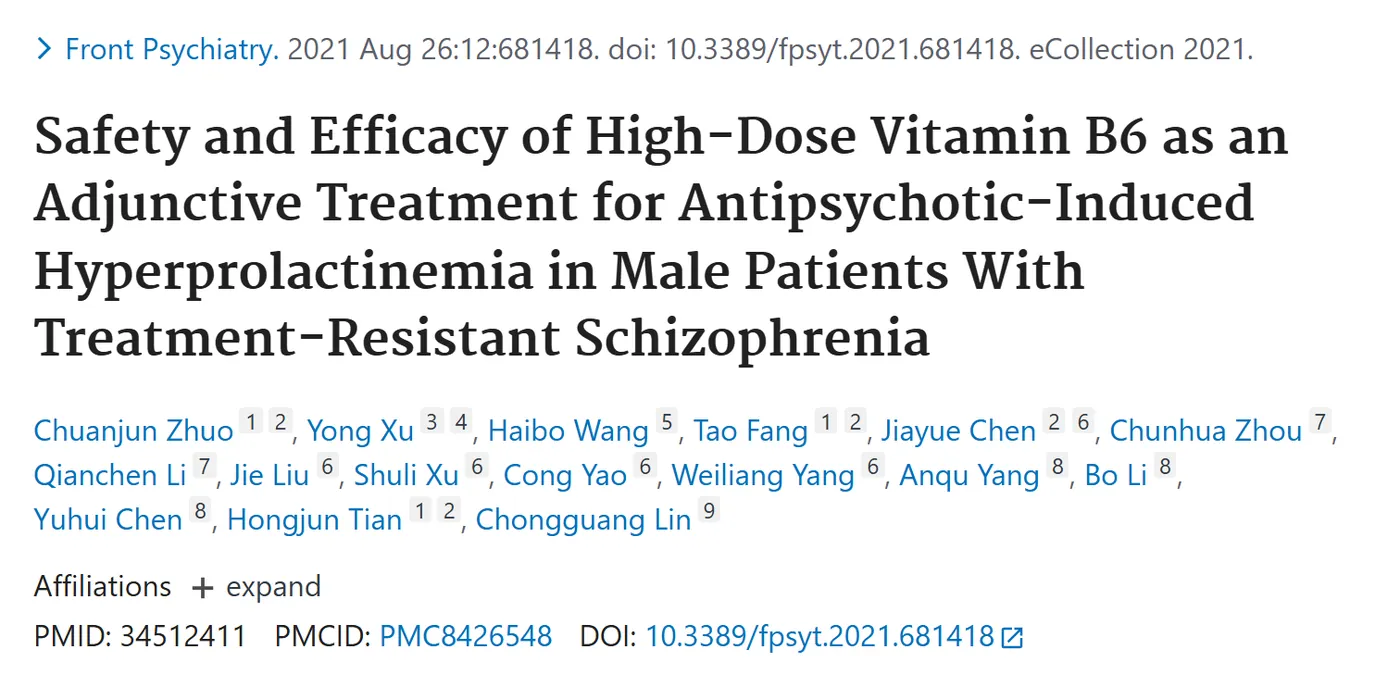
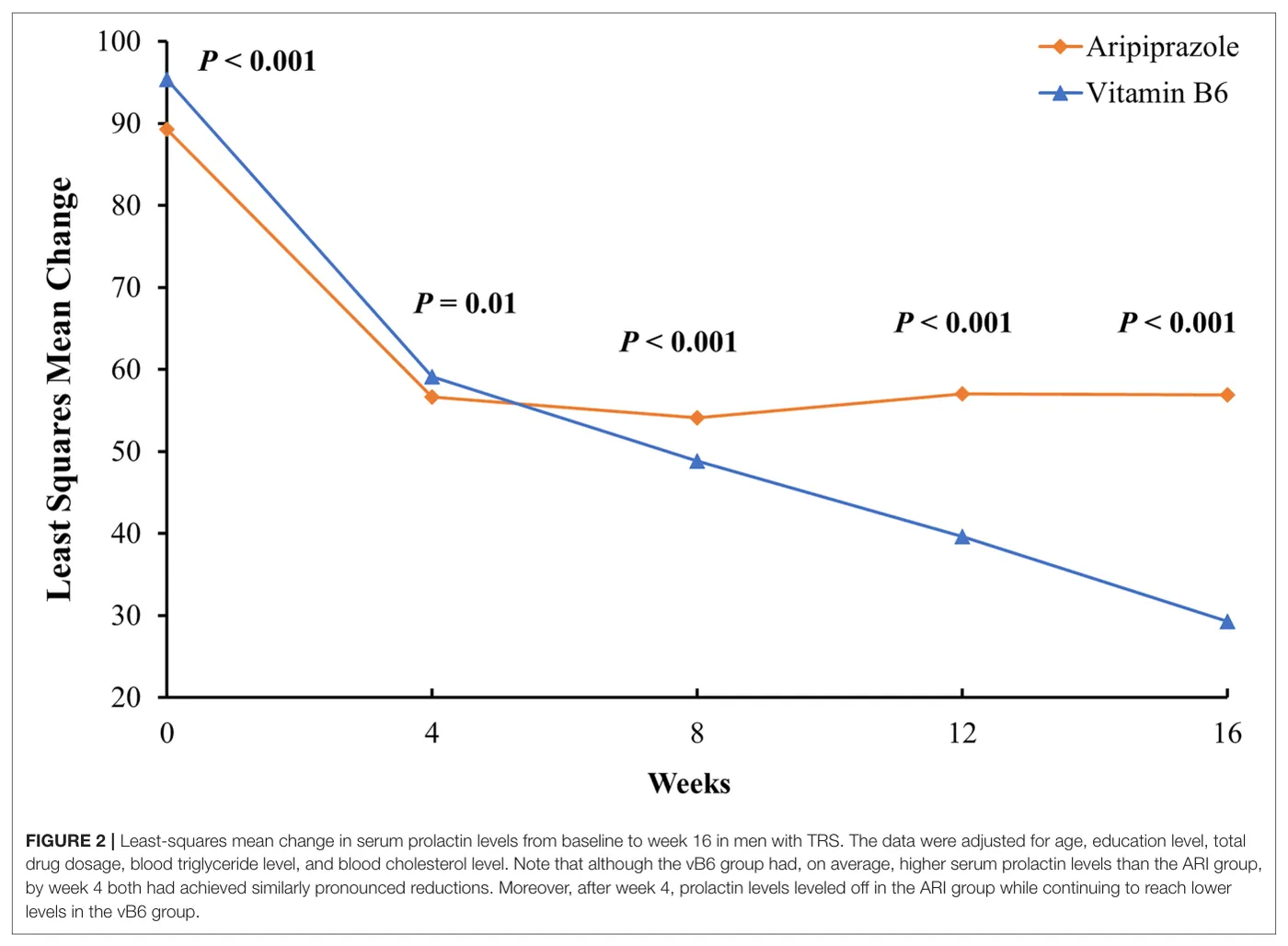
Zhuo et al., Front Psychiatry 2021 (Fig. 2). Vitamin B6 steadily lowers elevated serum prolactin across 16 weeks in men, outperforming aripiprazole after week 4. PubMed (PMID 34512411)
Pairing B6 with Vitamin B3 (niacinamide) adds a second win: NAD+ support strengthens intestinal barrier function (Ru et al., Food & Function 2022) and fuels BH4 recycling for Tyrosine Hydroxylase. [29] A clean balanced liquid B-complex like Energin covers B1, B2, B3, B5, B6 (P5P), and B7 together.
Ru et al., Food Funct 2022. Nicotinamide/NAD+ precursor supplementation protects intestinal barrier integrity and lowers gut inflammation. PubMed (PMID 35678708)
5. Oxidal / Methylene Blue + Caffeine (Raises D2/D3 receptors and mitochondrial ATP)
Most people assume caffeine just releases adrenaline. Volkow et al. (Translational Psychiatry) scanned 20 healthy humans with PET imaging after 300 mg oral caffeine versus placebo and proved something much better. [30]
Caffeine significantly increased striatal D2/D3 receptor availability in the putamen and ventral striatum by blocking adenosine A2A receptors, and that D2/D3 rise tracked directly with higher alertness.
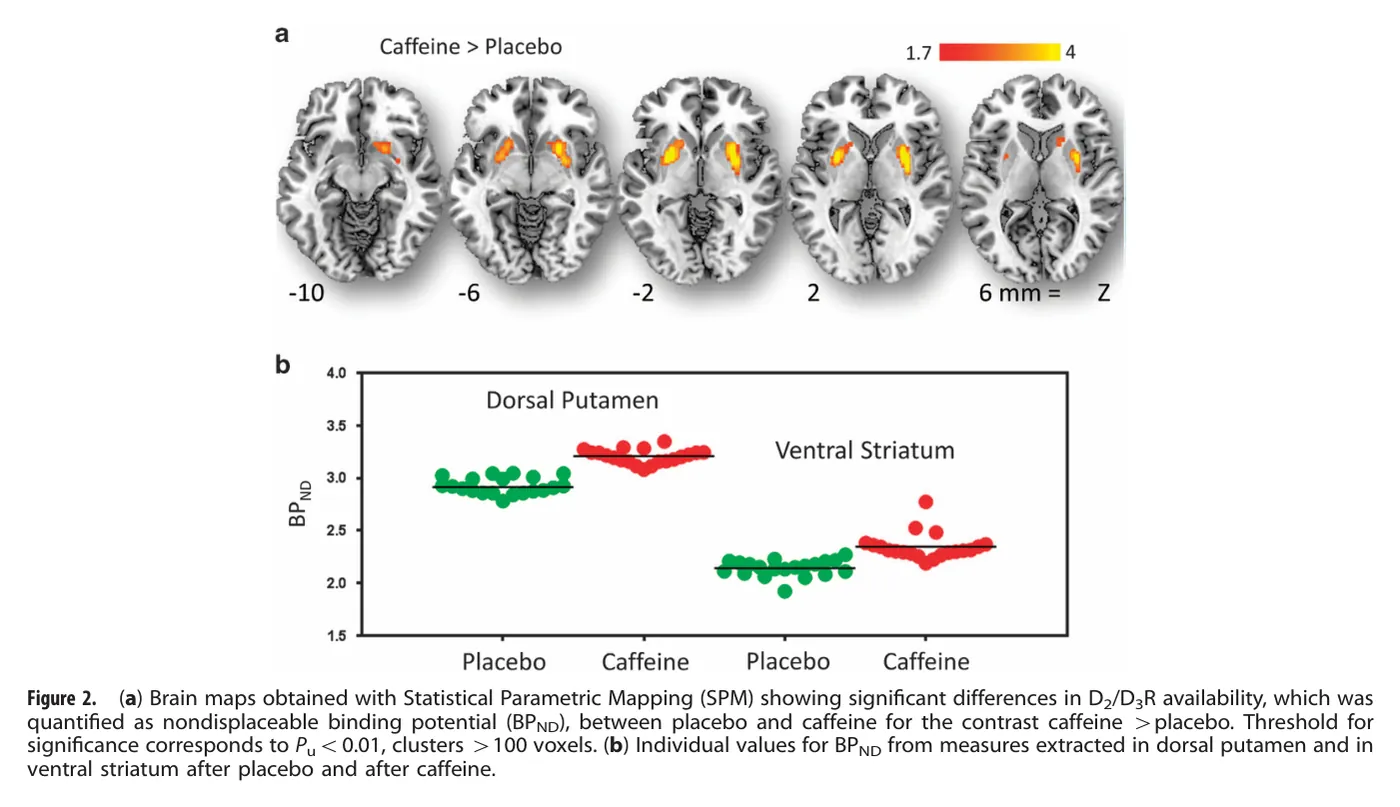
Volkow et al., Transl Psychiatry 2015 (Fig. 2). Oral caffeine (300 mg) significantly increases striatal D2/D3 receptor availability in the human putamen and ventral striatum. PubMed (PMID 25871974)
Pair caffeine with low-dose Methylene Blue, which acts as an alternate electron carrier in mitochondria to boost cytochrome c oxidase and brain oxygen consumption. In a double-blind Radiology RCT (n = 26), a single low oral dose of methylene blue significantly increased fMRI activation during sustained attention and short-term memory tasks. [31]
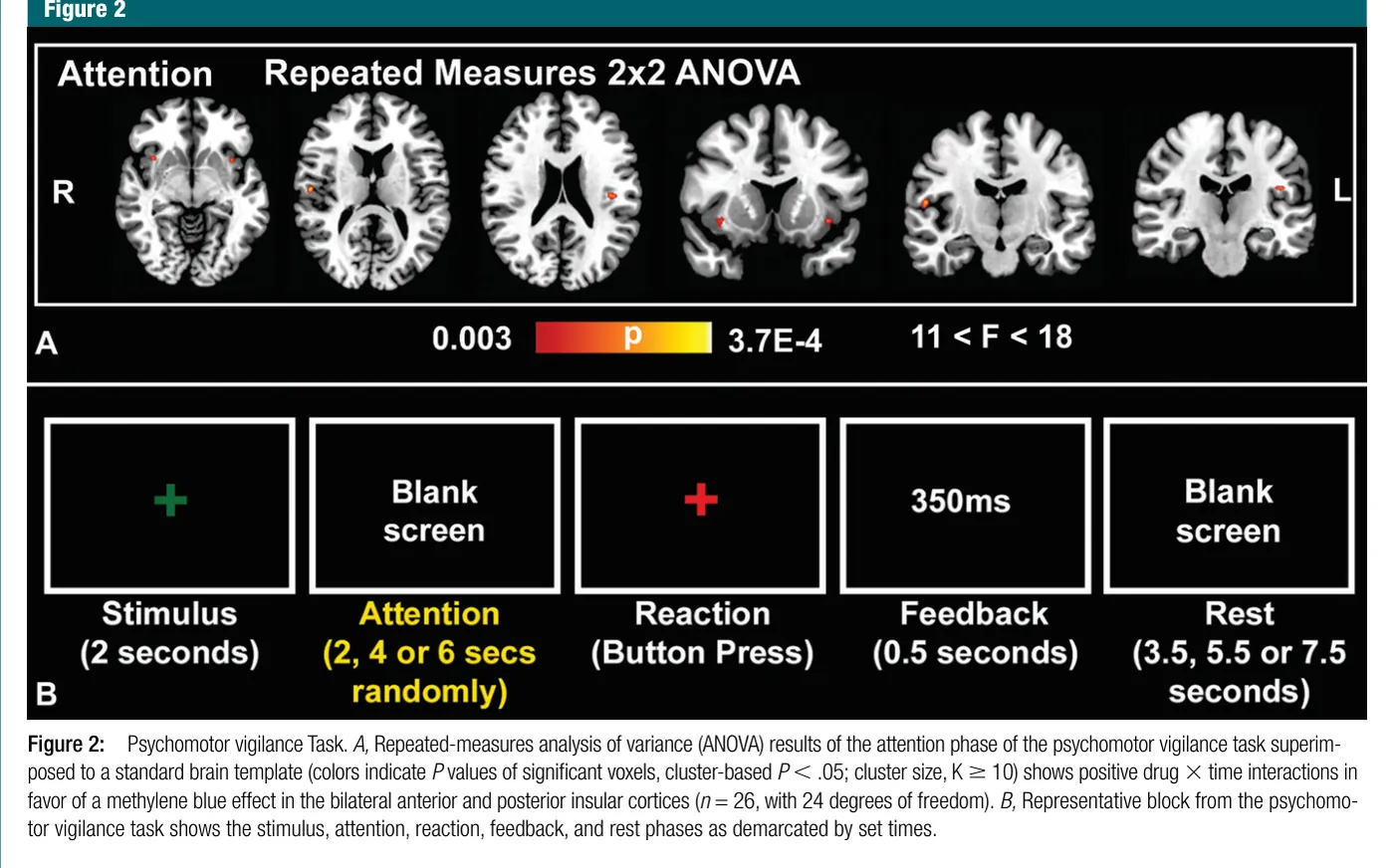
Rodriguez et al., Radiology 2016 (Fig. 2). Low-dose oral methylene blue increases human fMRI BOLD response in attention and vigilance brain networks versus placebo. PubMed (PMID 27351678)
6. Alpha-GPC (Increases human motivation via acetylcholine-dopamine crosstalk)
Acetylcholine and dopamine work side by side in the striatum and prefrontal cortex to lock attention onto goals. Alpha-GPC crosses the blood-brain barrier cleanly to supply choline for acetylcholine synthesis.
In a randomized placebo-controlled human trial (Nutrients 2021), 400 mg/day of Alpha-GPC for 2 weeks significantly increased subjective motivation scores in healthy volunteers without raising anxiety. [32]
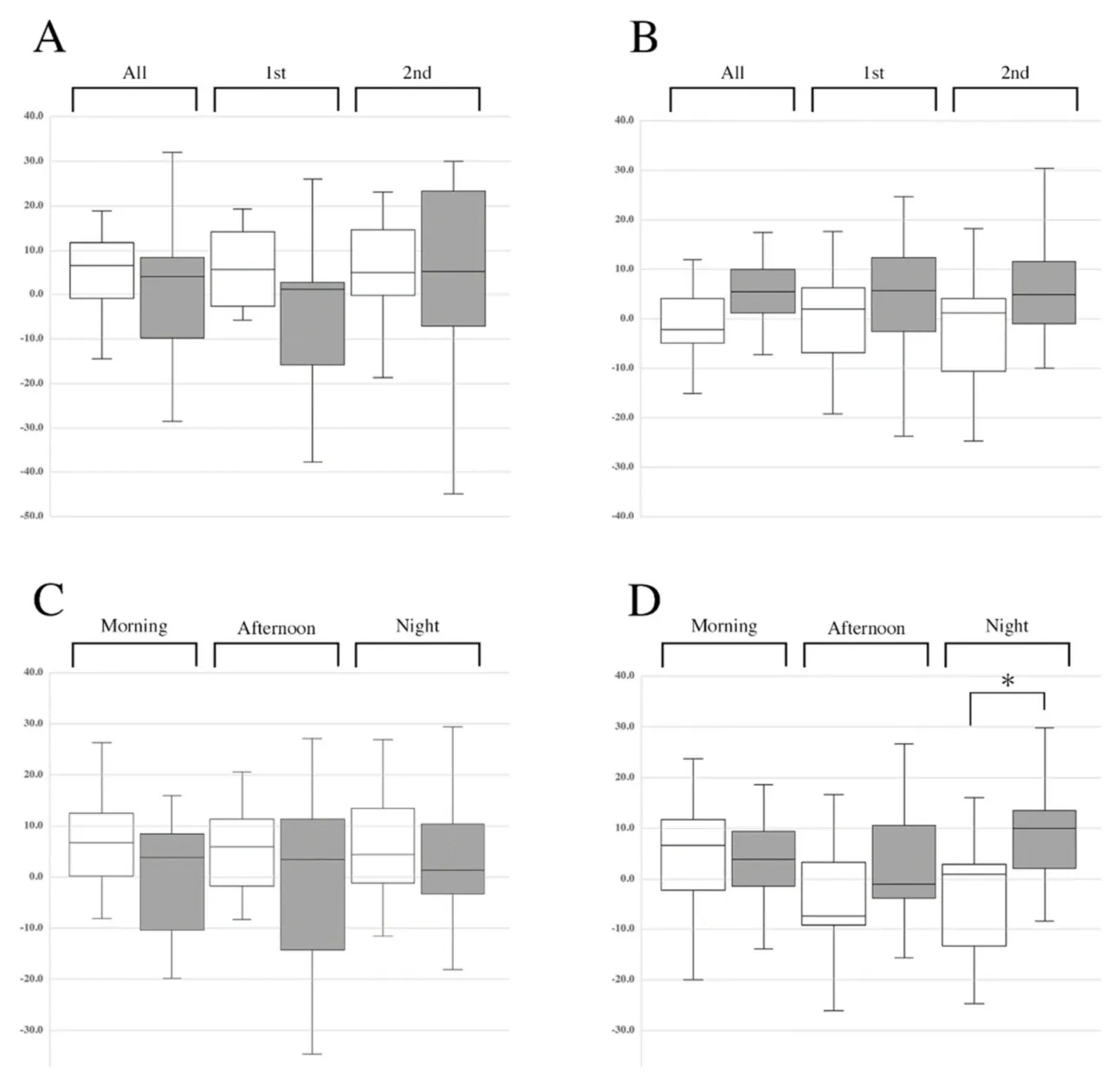
Tamura et al., Nutrients 2021 (Fig. 3). Two weeks of 400 mg/day Alpha-GPC increases motivation in healthy human volunteers without raising anxiety. PubMed (PMID 34207484)
7. Full-Spectrum Vitamin E (Protects brain membranes and raises androgen tone)
Dopamine neurons oxidize rapidly when polyunsaturated fats (seed oils) peroxidize inside cell membranes. Vitamin E is the primary lipid-soluble antioxidant shielding those membranes while opposing estrogen and prolactin excess.
In Umeda et al.'s human study in healthy men, 8 weeks of oral Vitamin E raised basal plasma testosterone from 416.4 ng/dL to 544.5 ng/dL and free testosterone index from 236.9 to 303.9. [33] Always use full-spectrum mixed tocopherols, never cheap synthetic alpha-only pills.
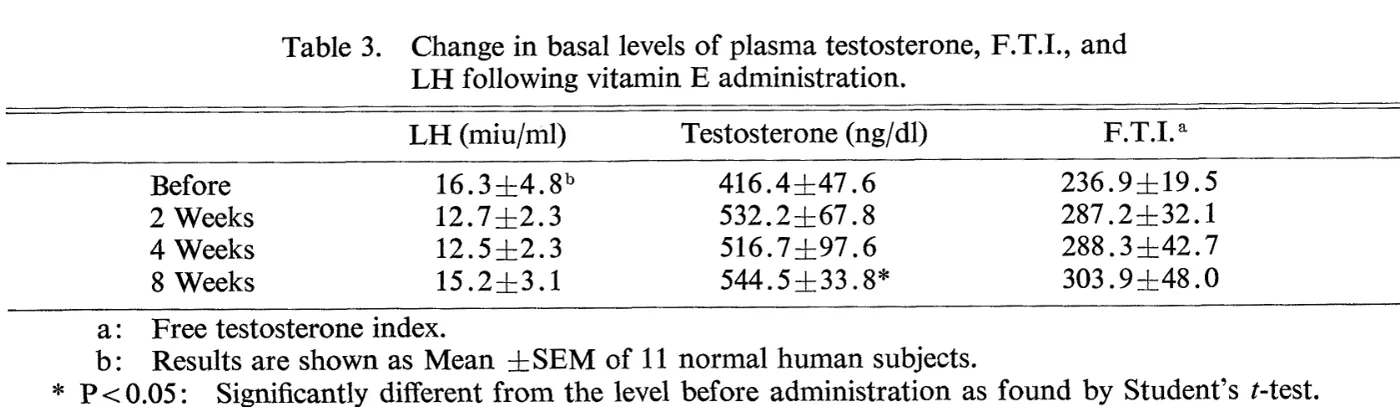
Umeda et al., Endocrinol Jpn 1982 (Table 3). Oral Vitamin E administration raises basal plasma testosterone and free testosterone index in healthy men over 8 weeks. PubMed (PMID 6816576)
8. Cyproheptadine (Releases the 5-HT2C serotonin brake and lowers Prolactin)
Remember how high serotonin silences VTA dopamine neurons via 5-HT2C receptors? Look at Figure 4 (Panel B) of that exact same Dremencov et al. electrophysiology study. [11]
Adding a selective 5-HT2C serotonin antagonist completely reversed the SSRI-induced suppression of VTA dopamine neurons, restoring firing rate and burst activity back to baseline.
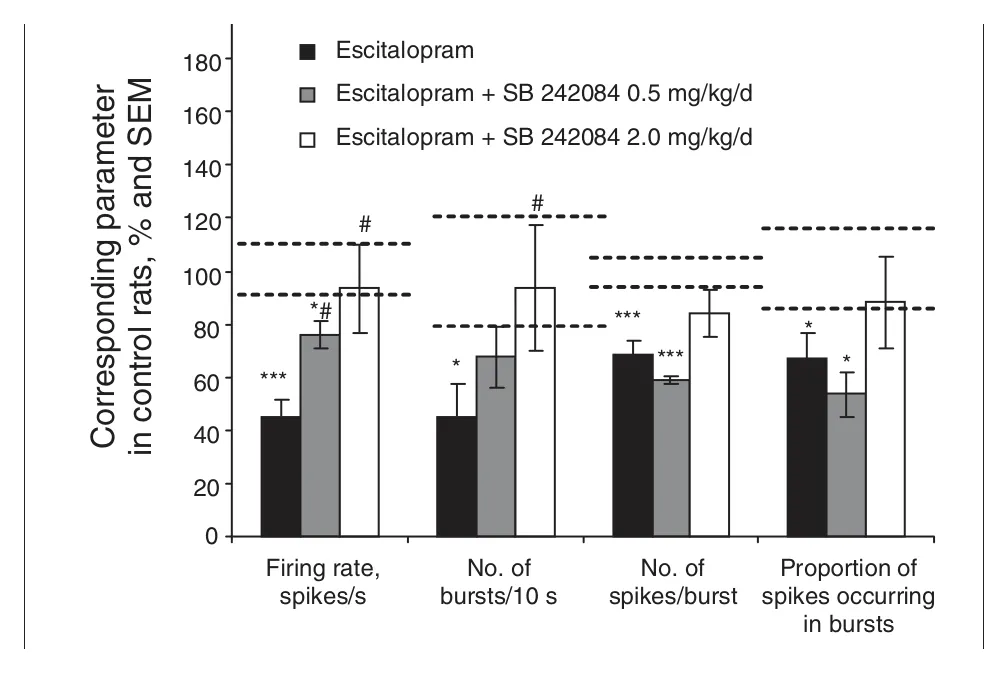
Dremencov et al., J Psychiatry Neurosci 2009 (Fig. 4, Panel B). Blocking 5-HT2C serotonin receptors completely reverses serotonin-driven suppression of VTA dopamine neuron firing. PubMed (PMID 19448853)
Cyproheptadine is the classic serotonin receptor antagonist used to release excess serotonergic tone and lower pituitary prolactin release (Krulich et al., Endocrinology). [34] Even microdoses (0.5 to 1 mg before bed) lower excess gut/brain serotonin, deepen sleep, and let dopamine breathe the next morning.
Krulich et al., Endocrinology 1981. Mechanistic demonstration of prolactin release-inhibiting action by serotonin receptor blockers including cyproheptadine. PubMed (PMID 7472261)
7 Practical Steps to Reset Your Dopamine Baseline Starting Tomorrow
You do not need a 90-page spreadsheet. Execute these 7 steps in order for the next 14 days and watch what happens to your morning drive, focus, and mood.
1. Get real sunlight in your eyes within 30 minutes of waking
Step outside onto a balcony, porch, or street for 10 to 20 minutes. Look toward the bright sky (never directly at the sun), no sunglasses, no glass window between you and the light.
This activates retinal Tyrosine Hydroxylase, sets your morning cortisol pulse cleanly, and anchors your sleep drive for that night. At sunset, dim overhead blue LEDs and switch to warm incandescent or red light.
2. Lock down 8 hours of real sleep before touching any nootropic
One single night of short sleep downregulates ventral striatal D2 receptors. Set a non-negotiable bedtime, keep the room cool and pitch-black, and put your phone in another room on airplane mode.
If you wake up wired at 3 AM, your liver ran out of glycogen and stress hormones spiked. Eat a small carb + salt snack before bed (warm milk with honey, or orange juice with a pinch of sea salt).
3. Kill social-app scrolling during the first 2 hours of the day
Zero phone scrolling, zero short-form reels, zero news feeds, and zero porn for the first 120 minutes after waking. Leave mobile internet off or use an app blocker during deep work blocks.
Start your morning with your single hardest, highest-value task first. Effort first, easy entertainment only after the work is done.
4. Fuel dopamine with simple carbs, tyrosine-rich protein, and zero seed oils
Eat 30 to 40g of animal protein (eggs, steak, dairy, shellfish) paired with easy-to-digest carbohydrates (ripe fruit, fresh orange juice, raw honey, potatoes, white rice) early in the day.
Never drink black coffee on a starving empty stomach with zero carbs. Pair coffee with real food, milk, and sugar so caffeine raises D2/D3 receptors without triggering an adrenaline crash. Cut industrial seed oils (soybean, canola, sunflower) completely.
5. Seal your gut and clear endotoxin daily
If you bloat after meals, feel brain-fogged 30 minutes after eating, or wake up anxious, gut endotoxin is shutting down your ventral striatum.
Eat a raw grated carrot salad (shredded carrot, coconut oil, splash of vinegar, sea salt) or well-cooked white button mushrooms daily to sweep endotoxin and excess estrogen out of your colon. Add beef gelatin or bone broth to supply glycine and heal the gut wall.
6. Lift heavy 3 to 4 days a week and move outdoors daily
Structured physical training is the behavioral intervention proven on human PET scans to physically rebuild striatal D2/D3 receptors.
Combine heavy strength training with daily outdoor walks in real daylight with zero headphones so your brain can actually think and generate original ideas again.
7. Layer targeted compounds only on top of a working base
Once sleep, morning sunlight, simple carbs, and gut health are moving in the right direction, pick 1 or 2 targeted tools matched to your exact bottleneck:
- Low drive and slow starter: Bromantane or Alpha-GPC.
- Brain fog, fatigue, or poor glucose oxidation: Thiamax (TTFD B1) + Oxidal (Methylene Blue + Caffeine).
- High prolactin, low libido, or emotional numbness: Energin (active B-complex with P5P), E-Complete (Vitamin E), and microdose Cyproheptadine before bed.
- Bloating, gut irritation, or past stimulant burnout: BPC-157 Capsules alongside the daily raw carrot salad.
Blood Tests That Show If Your Dopamine System Is Suppressed
You cannot measure brain dopamine directly with a standard blood draw, because dopamine does not cross the blood-brain barrier cleanly. Instead, check the downstream hormones and raw cofactors:
- Serum Prolactin (morning, fasted, relaxed): The cleanest indirect mirror of hypothalamic dopamine. Optimal for men is typically under 7 ng/mL (top of lab "normal" at 15 to 18 ng/mL is already high enough to dull drive, DHT, and libido).
- TSH, Free T3, and Free T4: Low thyroid hormone slows cellular ATP production in every dopaminergic neuron. Look for low TSH (ideally under 1.5 mIU/L) and upper-range Free T3.
- Ferritin and Serum Iron: Tyrosine Hydroxylase requires iron to function. Very low ferritin starves synthesis, while very high ferritin (> 200 ng/mL) signals inflammation or iron overload.
- Vitamin B12, Folate, and Vitamin D: Support BH4 recycling, methylation, and midbrain dopamine gene expression.
Fix your energy, clear your gut, protect your sleep, step into the sun, and stop feeding your brain fake rewards. Your drive was never gone. It was just buried.
If you want a customized protocol built around your exact bloodwork, gut symptoms, and goals, apply for 1:1 coaching here: oxidativestate.com/coaching
Hope you find this useful. Not medical advice. Oxidative State.
Peer-reviewed studies cited
- Dopamine promotes cognitive effort by biasing the benefits versus costs of cognitive workWestbrook A et al. · Science · 2020 · PMID 32193325
- Levodopa: faster and better word learning in normal humansKnecht S et al. · Ann Neurol · 2004 · PMID 15236398
- Enhanced creative thinking under dopaminergic therapy in Parkinson diseaseFaust-Socher A et al. · Ann Neurol · 2014 · PMID 24816898
- Dopamine reward prediction error codingSchultz W · Dialogues Clin Neurosci · 2016 · PMID 27069377
- Motivation deficit in ADHD is associated with dysfunction of the dopamine reward pathwayVolkow ND et al. · Mol Psychiatry · 2011 · PMID 20856250
- Proinflammatory Cytokines and Oxidative Stress Decrease the Transport of Dopamine Precursor Tyrosine in Human FibroblastsVumma R et al. · Neuropsychobiology · 2017 · PMID 29339668
- Treatment with tyrosine, a neurotransmitter precursor, reduces environmental stress in humansBanderet LE et al. · Brain Res Bull · 1989 · PMID 2736402
- Striatal dopamine D2/D3 receptor regulation of human reward processing and behaviourOsugo M et al. · Nat Commun · 2025 · PMID 39984436
- Inflammation-induced anhedonia: endotoxin reduces ventral striatum responses to rewardEisenberger NI et al. · Biol Psychiatry · 2010 · PMID 20719303
- Dose-dependent effects of endotoxin on neurobehavioral functions in humansGrigoleit JS et al. · PLoS One · 2011 · PMID 22164271
- Effects of sustained serotonin reuptake inhibition on the firing of dopamine neurons in the rat ventral tegmental areaDremencov E et al. · J Psychiatry Neurosci · 2009 · PMID 19448853
- Further evidence that serotonin is a neurotransmitter involved in the control of prolactin secretionClemens JA et al. · Endocrinology · 1977 · PMID 401022
- Study on the relationship between plasma prolactin levels and androgen metabolism in manMagrini B et al. · J Clin Endocrinol Metab · 1976 · PMID 977731
- Striatal dopamine synthesis capacity reflects smartphone social activityWestbrook A et al. · iScience · 2021 · PMID 34113831
- Blocking mobile internet on smartphones improves sustained attention, mental health, and subjective well-beingCastelo N et al. · PNAS Nexus · 2025 · PMID 39967678
- Evidence that sleep deprivation downregulates dopamine D2R in ventral striatum in the human brainVolkow ND et al. · J Neurosci · 2012 · PMID 22573693
- Association of Stimulant Use With Dopaminergic Alterations in Users of Cocaine, Amphetamine, or Methamphetamine: A Systematic Review and Meta-analysisAshok AH et al. · JAMA Psychiatry · 2017 · PMID 28297025
- Effect of Exercise Training on Striatal Dopamine D2/D3 Receptors in Methamphetamine Users during Behavioral TreatmentRobertson CL et al. · Neuropsychopharmacology · 2016 · PMID 26503310
- Light stimulates tyrosine hydroxylase activity and dopamine synthesis in retinal amacrine neuronsIuvone PM et al. · Science · 1978 · PMID 30997
- Sunshine-exposure variation of human striatal dopamine D(2)/D(3) receptor availability in healthy volunteersTsai HY et al. · Prog Neuropsychopharmacol Biol Psychiatry · 2011 · PMID 20875835
- Accumbens dopamine mechanisms in sucrose intakeHajnal A et al. · Brain Res · 2001 · PMID 11516413
- [Ladasten induces the expression of genes regulating dopamine biosynthesis in various structures of rat brain]Vakhitova IuV et al. · Eksp Klin Farmakol · 2004 · PMID 15500036
- The effects of ladasten on dopaminergic neurotransmission and hippocampal synaptic plasticity in ratsMikhaylova M et al. · Neuropharmacology · 2007 · PMID 17854844
- Stable gastric pentadecapeptide BPC 157 in the treatment of colitis and ischemia and reperfusion in rats: New insightsDuzel A et al. · World J Gastroenterol · 2017 · PMID 29358856
- Pentadecapeptide BPC 157 attenuates chronic amphetamine-induced behavior disturbancesSikiric P et al. · Acta Pharmacol Sin · 2002 · PMID 11978191
- Thiamine supplementation mood and cognitive functioningBenton D et al. · Psychopharmacology (Berl) · 1997 · PMID 9122365
- Adjuvant thiamine improved standard treatment in patients with major depressive disorder: results from a randomized, double-blind, and placebo-controlled clinical trialGhaleiha A et al. · Eur Arch Psychiatry Clin Neurosci · 2016 · PMID 26984349
- Safety and Efficacy of High-Dose Vitamin B6 as an Adjunctive Treatment for Antipsychotic-Induced Hyperprolactinemia in Male Patients With Treatment-Resistant SchizophreniaZhuo C et al. · Front Psychiatry · 2021 · PMID 34512411
- Nicotinamide mononucleotide supplementation protects the intestinal function in aging mice and D-galactose induced senescent cellsRu M et al. · Food Funct · 2022 · PMID 35678708
- Caffeine increases striatal dopamine D2/D3 receptor availability in the human brainVolkow ND et al. · Transl Psychiatry · 2015 · PMID 25871974
- Multimodal Randomized Functional MR Imaging of the Effects of Methylene Blue in the Human BrainRodriguez P et al. · Radiology · 2016 · PMID 27351678
- Alpha-Glycerylphosphorylcholine Increases Motivation in Healthy Volunteers: A Single-Blind, Randomized, Placebo-Controlled Human StudyTamura Y et al. · Nutrients · 2021 · PMID 34207484
- Effect of vitamin E on function of pituitary-gonadal axis in male rats and human subjectsUmeda F et al. · Endocrinol Jpn · 1982 · PMID 6816576
- On the mode of the prolactin release-inhibiting action of the serotonin receptor blockers metergoline, methysergide, and cyproheptadineKrulich L et al. · Endocrinology · 1981 · PMID 7472261