Estrogen therapy decreased LDL particle size.
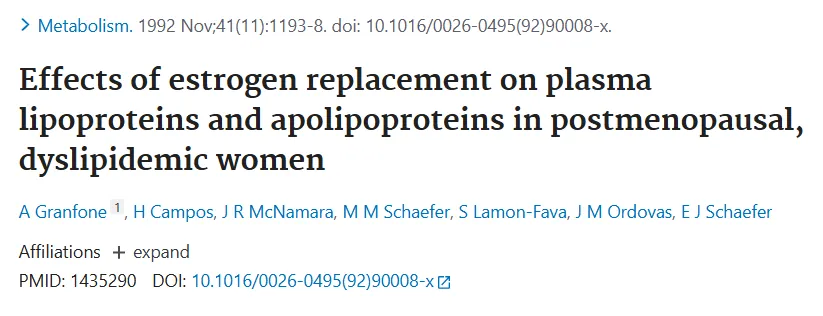
Estrogen therapy decreased LDL particle size.
they penetrate easier to the arterial wall, more susceptible to oxidation, harder to clear from bloodstream by the liver, associated with insulin resistance and metabolic syndromes.
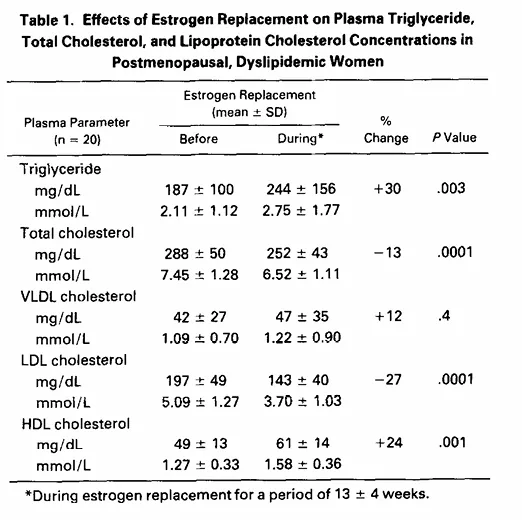
estrogen also increased plasma triglycerides by 30%
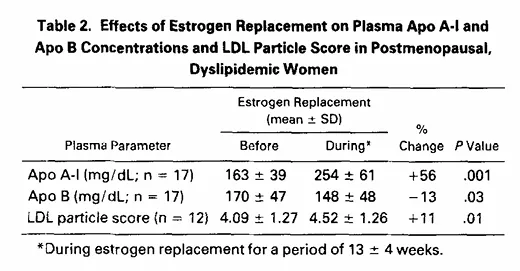
In this study, LDL particle size was measured by GGE.
Gradient Gel Electrophoresis (GGE) separates LDL particles by migrating them through a gel with increasing density and decreasing pore sizes. Because smaller, denser particles navigate through the tighter pores and travel further down the gel, they register a higher score than larger particles.
estrogen increased the score by 10%, which indicates that it lowered their size by 10%.
An increase of 10% in the GGE score is highly significant because it reflects a clear physical shift toward smaller, denser LDL particles.
This smaller particle size inherently carries a greater potential to penetrate the endothelial wall easily and undergo rapid oxidation within the arteries.
The study in brief
Does oral estrogen make LDL particles smaller?
In this study it did. After a mean of 13 weeks of oral ethinyl estradiol, LDL particles were 11% smaller and triglycerides 30% higher, while LDL cholesterol fell 27%.
- Who was studied
- 20 postmenopausal women with dyslipidemia who had previously had a hysterectomy.
- What they did
- The women took oral ethinyl estradiol 0.02 mg a day. Fasting blood was sampled before and after a mean of 13 weeks of treatment.
- What they found
- Triglycerides rose from 2.11 to 2.75 mmol/L. LDL cholesterol fell from 5.09 to 3.70 mmol/L and HDL cholesterol rose from 1.27 to 1.58 mmol/L (24%). The LDL particle score on gel electrophoresis went from 4.09 to 4.52.
- What it does not show
- Small before-and-after study with no placebo group described. It measured blood lipids, not heart disease.
- Note on the post above
- The abstract gives the particle size change as 11%, and its authors judged the overall lipid changes favorable.
Summary written from the PubMed abstract, not from the full paper.
The study
- Effects of estrogen replacement on plasma lipoproteins and apolipoproteins in postmenopausal, dyslipidemic womenMetabolism · 1992 · PMID 1435290