Endotoxin
Endotoxin is a molecule that coats the outside of certain gut bacteria. Inside the gut, behind a healthy barrier, it does little harm. When the barrier leaks and it reaches your blood, it switches on inflammation through one receptor: TLR4.
SupplementsTap one: a pill drops in, dissolves after 3 s and its molecules act for 10 s
The mucus keeps the bacteria at arm's length. Endotoxin stays in the gut, where it belongs.
What endotoxin is
Endotoxin is the common name for lipopolysaccharide (LPS). It is built from three parts: a fatty anchor called lipid A (this is the endotoxin proper), a short sugar core, and a long sugar chain called the O-antigen that sticks out from the cell (Raetz 2002).
Only one family of bacteria wears it: the Gram-negatives. It is part of their outer wall, a kind of bulletproof vest. When they die, the wall breaks apart and the endotoxin is released into the gut.
Your body has a sensor built for exactly this molecule. The receptor TLR4 and its partner MD-2 recognise a common pattern shared by very different LPS molecules (Park 2009). Before it reaches them, two helper proteins, LBP and CD14, pull single LPS molecules out of clumps and hand them over (Ryu 2017).
Gram-negative vs Gram-positive
In 1884 Hans Christian Gram found a way to split bacteria into two groups by their walls. He soaked them in a purple dye with iodine, then washed them with alcohol. In some bacteria the dye locked inside and tinted the cell purple: these became Gram-positive. In others the alcohol dissolved their outer membrane and the dye leaked out: Gram-negative.
Gram-negativestains pink · carries endotoxin
Gram-positivestains purple · no endotoxin
| Feature | Gram-negative | Gram-positive |
|---|---|---|
| Gram stain | Pink: the dye washes out | Purple: the dye locks in |
| Outer membrane | Yes, a second outer wall | None |
| Peptidoglycan wall | Thin | Thick |
| Endotoxin (LPS) | Yes, covers the outside | None |
| Main gut groups | Bacteroidetes 20–25%, Proteobacteria 1–5%, Verrucomicrobia 1–5% | Firmicutes 60–70%, Actinobacteria 3–5% in adults |
| Examples | E. coli, Salmonella, Helicobacter, Klebsiella, B. fragilis | Faecalibacterium prausnitzii, Roseburia, Eubacterium rectale, Bifidobacterium |
| Known for | Proteobacteria: highly toxic and inflammatory | Mostly the butyrate makers that feed the gut lining |
Gram-positives (mostly Firmicutes) are usually called the good bacteria: many of them make butyrate, the fuel of the cells that line the colon. Among the Gram-negatives, Proteobacteria overgrowth is the clearest sign of a gut out of balance (dysbiosis): E. coli, Salmonella, Helicobacter, Klebsiella pneumoniae, Shigella.
Zoom into one molecule
One endotoxin molecule, pulled out of the outer membrane. Its neighbours are packed around it like a forest.
- Lipid A is the trigger. MD-2 grips it in a deep pocket: five of its six fatty chains sink inside, the sixth touches TLR4 (Park 2009).
- One sensor, many shapes. TLR4 with MD-2 reads a pattern common to structurally different LPS (Park 2009).
- The sugar chain is the disguise. Bacteria swap O-antigen genes between each other, so the outer chain varies from strain to strain (Raetz 2002).
- Not all endotoxin is equal. Bacteroides make an under-acylated lipid A that quiets TLR4 instead of firing it (d’Hennezel 2017, Vatanen 2016). E. coli endotoxin is the potent kind.
The studies
Every number on this page comes from these abstracts, unless a note says it comes from the full paper. Tap a title to read it on PubMed.
Endotoxin opens the barrier and fires TLR4 · Endotoxin and testosterone · Endotoxin in the blood: clotting and survival · BPC-157 strengthens the gut · Vitamin B3 (NAD) protects the barrier · White mushrooms and digestion · Activated charcoal binds endotoxin
Endotoxin opens the barrier and fires TLR4
The order of events in the model above, one study at a time: the leak, the switch, the cytokines, the hormones.
Gut cells + mice · 2013
Endotoxin at normal body levels opens the gut's tight junctions
Lipopolysaccharide causes an increase in intestinal tight junction permeability in vitro and in vivo by inducing enterocyte membrane expression and localization of TLR-4 and CD14Am J Pathol · 2013 · PMID 23201091
What they found
In gut-cell layers grown on filters, endotoxin on the blood side made the junctions leakier over time. In mice, an injection that gave clinically relevant blood levels did the same. The cause: more TLR4 on the gut-cell membrane, and more CD14 moving next to it.
Gut cells + mice · 2015
TLR4 → FAK → MyD88: the switch behind the leak
Lipopolysaccharide Regulation of Intestinal Tight Junction Permeability Is Mediated by TLR4 Signal Transduction Pathway Activation of FAK and MyD88J Immunol · 2015 · PMID 26466961
What they found
Endotoxin activated FAK through TLR4, and FAK then activated MyD88 and IRAK4. Silencing MyD88 stopped the leak. In mice, knocking down FAK in the gut lining prevented the rise in permeability, and high-dose endotoxin inflammation depended on the same TLR4/FAK/MyD88 axis.
Healthy men · double-blind · 2005
A tiny dose of endotoxin in the blood: IL-6 up 7-fold
Low-dose endotoxemia and human neuropsychological functionsBrain Behav Immun · 2005 · PMID 15963684
7×rise in IL-6 (TNF-α 2×), peaking at 3 hours, after 0.2 ng/kg E. coli endotoxin in 12 healthy young men
Review · 2020
BPC-157 against leaky gut from painkillers
BPC 157 Rescued NSAID-cytotoxicity Via Stabilizing Intestinal Permeability and Enhancing CytoprotectionCurr Pharm Des · 2020 · PMID 32445447
What they found
The review describes BPC-157 protecting stomach cells against alcohol and NSAIDs, and protecting other tissues (skin, liver, pancreas, heart, brain). It counteracts the injury to blood vessels that comes before damage to the lining. It names stress, NSAIDs, bile acids and alcohol as causes of leaky gut, and describes BPC-157 rescuing leaky gut after NSAIDs for the first time.
Review · 1997
Endotoxin's cytokines rewrite the brain's hormone orders
Nitric oxide controls the hypothalamic-pituitary response to cytokinesNeuroimmunomodulation · 1997 · PMID 9483201
What they found
Cytokines released by endotoxin act through nitric oxide in the brain: CRH and ACTH go up, the LHRH that drives pulsatile LH is blocked, growth hormone is inhibited, and prolactin rises because nitric oxide cuts dopamine. Nitric oxide also releases prostaglandin E2 and leukotrienes.
Endotoxin and testosterone
In most of these studies testosterone falls while LH, the brain's signal to the testis, stays the same: the testis itself makes less. The animal studies inject far more endotoxin than a leaky gut lets through, so they show the mechanism, not the size of the effect in a person. More on the hormone itself on the androgens page.
Men · observational + endotoxin challenge · 2018
In men, endotoxin in the blood goes with lower testosterone
Endotoxin-initiated inflammation reduces testosterone production in men of reproductive ageAm J Physiol Endocrinol Metab · 2018 · PMID 29183872
What they found
In 75 men, LBP (a blood marker of endotoxin exposure) went down as testosterone went down, and went up with IL-6. More body fat went with more LBP, more inflammation and less testosterone, and IL-6 was negatively linked to free testosterone. In a second study, a low dose of endotoxin given to lean men caused a short burst of inflammation, then testosterone fell, with no change in LH or FSH.
Keep in mind: The abstract gives no number for how far testosterone fell after the challenge.
Men aged 21–50 · 2017
More body fat, more endotoxin, less testosterone
Metabolic endotoxaemia related inflammation is associated with hypogonadism in overweight menBasic Clin Androl · 2017 · PMID 28286655
What they found
Body fat was linked to LBP (r = 0.366), CRP and IL-6, and negatively to testosterone (r = −0.403). Testosterone was negatively linked to CRP (r = −0.471), IL-6 and LBP, even after adjusting for LH. IL-6 was also linked to lower AMH.
Mice · 1996
One dose of endotoxin: testosterone down 90% in 2 hours
Acute in vivo inhibition of testosterone by endotoxin parallels loss of steroidogenic acute regulatory (StAR) protein in Leydig cellsEndocrinology · 1996 · PMID 8828518
90%drop in serum testosterone 2 hours after one injection of 200 µg LPS; still low 9 days later
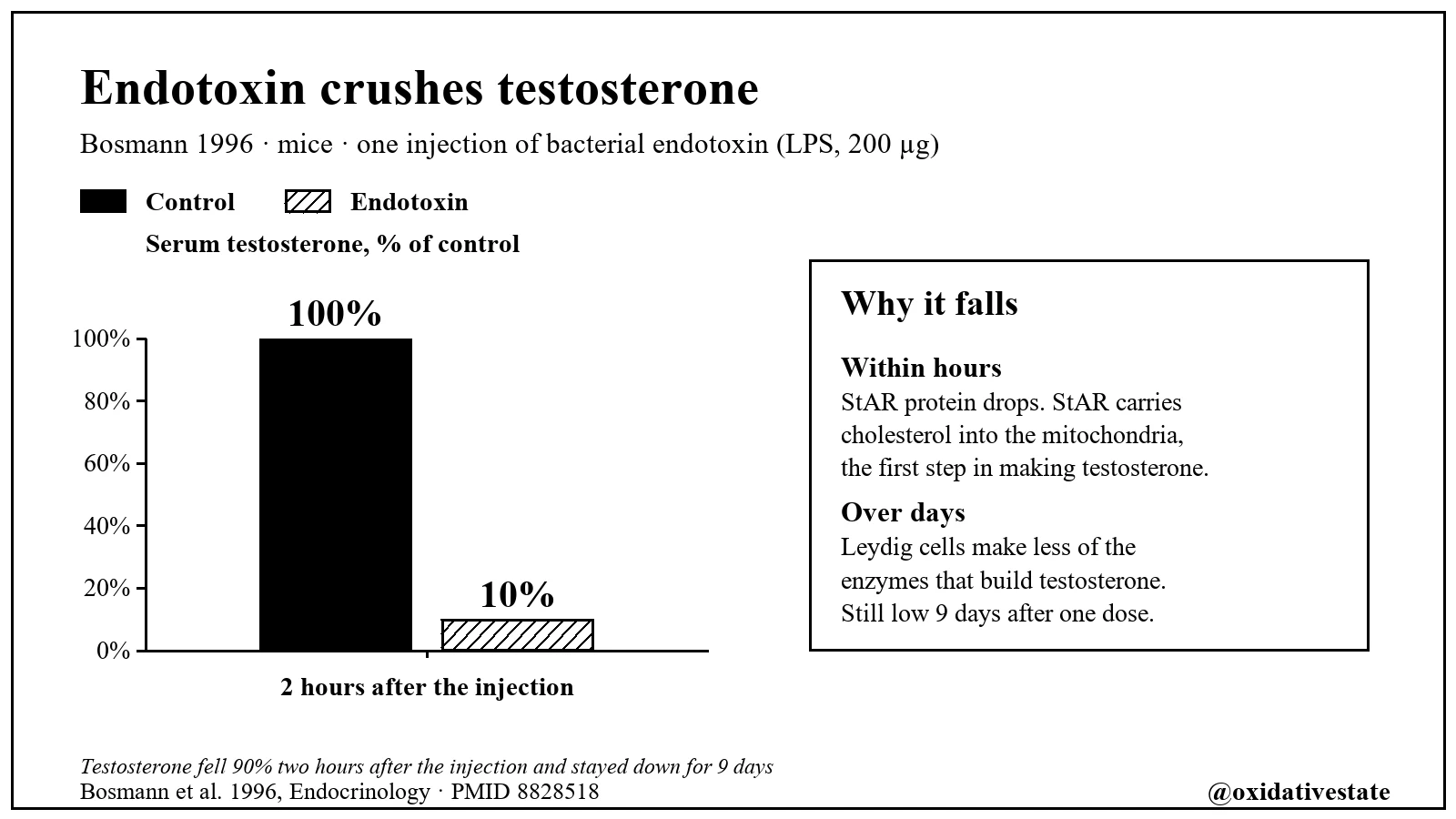
What they found
The early drop came with a loss of StAR, the protein that carries cholesterol into the mitochondria, the first step in making testosterone. The drop that lasted for days came with less of the steroid-making enzymes, as protein and as transcript, in the Leydig cells.
Mice · 2000
LH stayed the same, the testis still stopped
Diametric effects of bacterial endotoxin lipopolysaccharide on adrenal and Leydig cell steroidogenic acute regulatory proteinEndocrinology · 2000 · PMID 11089530
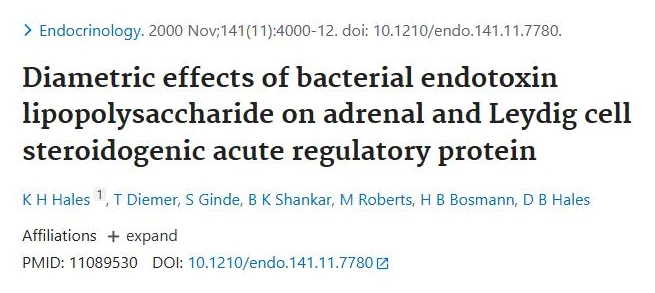
What they found
Testosterone fell within 2 hours of the injection while LH did not change. The LH receptor and the cAMP the Leydig cells made were the same as in controls. StAR protein in the Leydig cells fell over time, with no change in its mRNA. In the adrenal gland the opposite happened: StAR went up.
Mice + Leydig cells · 2004
Endotoxin burns the Leydig cell's mitochondria
Bacterial endotoxin lipopolysaccharide and reactive oxygen species inhibit Leydig cell steroidogenesis via perturbation of mitochondriaEndocrine · 2004 · PMID 15758255
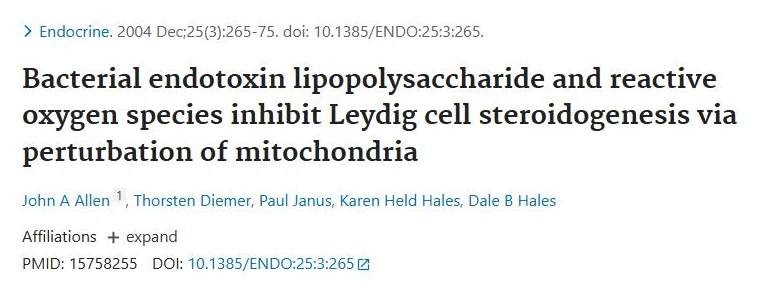
What they found
Testosterone fell within 2 hours, with less StAR and less 3β-HSD. Lipid peroxidation of the Leydig cell membranes went up, the mitochondria were disrupted and their membrane potential dropped. The authors propose that macrophages in the testis release reactive oxygen species; hydrogen peroxide alone had a similar effect on the cells.
Rats · 2006
Oxidative stress in the testis, then less StAR
Bacterial lipopolysaccharide-induced oxidative stress in the impairment of steroidogenesis and spermatogenesis in ratsReprod Toxicol · 2006 · PMID 16644180
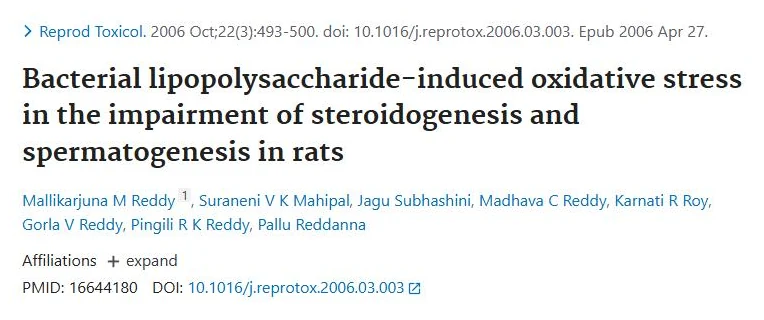
What they found
An injection of 5 mg/kg endotoxin raised MDA and HNE (markers of fat oxidation) in the testis and lowered catalase, SOD, glutathione peroxidase, glutathione reductase and the GSH/GSSG ratio. IL-1β, iNOS and COX-2 rose from 3 to 12 hours. StAR in the testis fell for up to 24 hours, together with damage to sperm production.
Rats · 2000
Mild or severe inflammation, the Leydig cells slow down
Bacterial lipopolysaccharide-induced inflammation compromises testicular function at multiple levels in vivoEndocrinology · 2000 · PMID 10614644
What they found
A single injection at a dose that caused mild or severe inflammation lowered Leydig cell testosterone production in two waves. LH fell only at the high dose. Only the high dose leaked the testis's vessels, let inflammatory cells in and damaged sperm-making cells.
Keep in mind: Testosterone inside the testis stayed high enough for sperm to form in both groups.
Rats · sepsis · 1999
A day of sepsis: testosterone down, estradiol up
Sepsis produces depression of testosterone and steroidogenic acute regulatory (StAR) proteinShock · 1999 · PMID 10220309
What they found
Sepsis from gut contents put into the belly (6 rats per group) lowered serum testosterone and Leydig cell StAR and raised estradiol at 24 hours. The enzyme P450c17, progesterone and corticosterone did not change.
Rats · 1992
Endotoxin turns androgens into estrogens, through aromatase
Effect of the aromatase inhibitor, 4 hydroxyandrostenedione, on the endotoxin-induced changes in steroid hormones in male ratsLife Sci · 1992 · PMID 1573977
What they found
Two hours after E. coli endotoxin, androgens dropped and estrogens rose sharply. An aromatase blocker (4-hydroxyandrostenedione) stopped this, more with a higher dose: 100 mg/kg blocked every change in the sex steroids. It did not change the other steroid responses.
Hypothesis · 2016
GELDING: gut endotoxin as a cause of low testosterone in obese men
Gut Endotoxin Leading to a Decline IN Gonadal function (GELDING) - a novel theory for the development of late onset hypogonadism in obese menBasic Clin Androl · 2016 · PMID 27340554
What they found
The authors propose that a high-fat, high-calorie diet and obesity change the gut bacteria and the gut wall, endotoxin passes into the blood, and the inflammation lowers testosterone, directly in the Leydig cells and by lowering LH from the pituitary. They suggest the body evolved to lower testosterone during infection, since testosterone suppresses the immune system.
Keep in mind: This is a theory paper, with no new data. The two studies in men above tested it.
Endotoxin in the blood: clotting and survival
What endotoxin does once it is in the blood: one study measured it in sick children and followed who survived, the other looked at how it starts blood clotting.
Children · 9 sites in 6 countries · 2025
Children with the most endotoxin in their blood died more often
Plasma lipopolysaccharide levels predict mortality in acutely ill children in Low- and Middle-Income CountriesNat Commun · 2025 · PMID 41315218
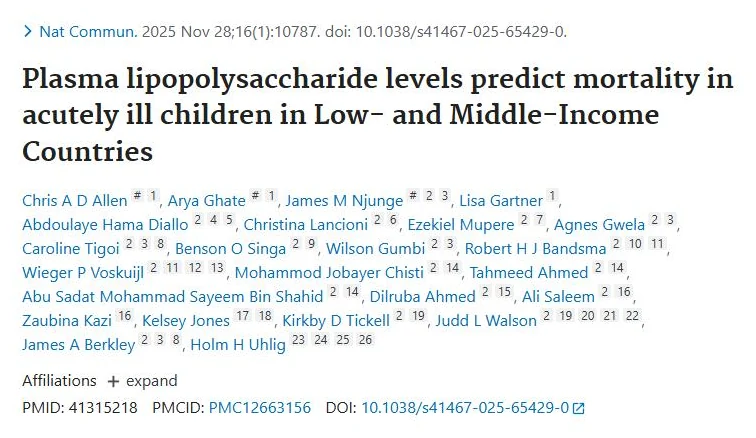
10.75%died within 90 days in the highest third of blood LPS, vs 4.25% in the lowest third
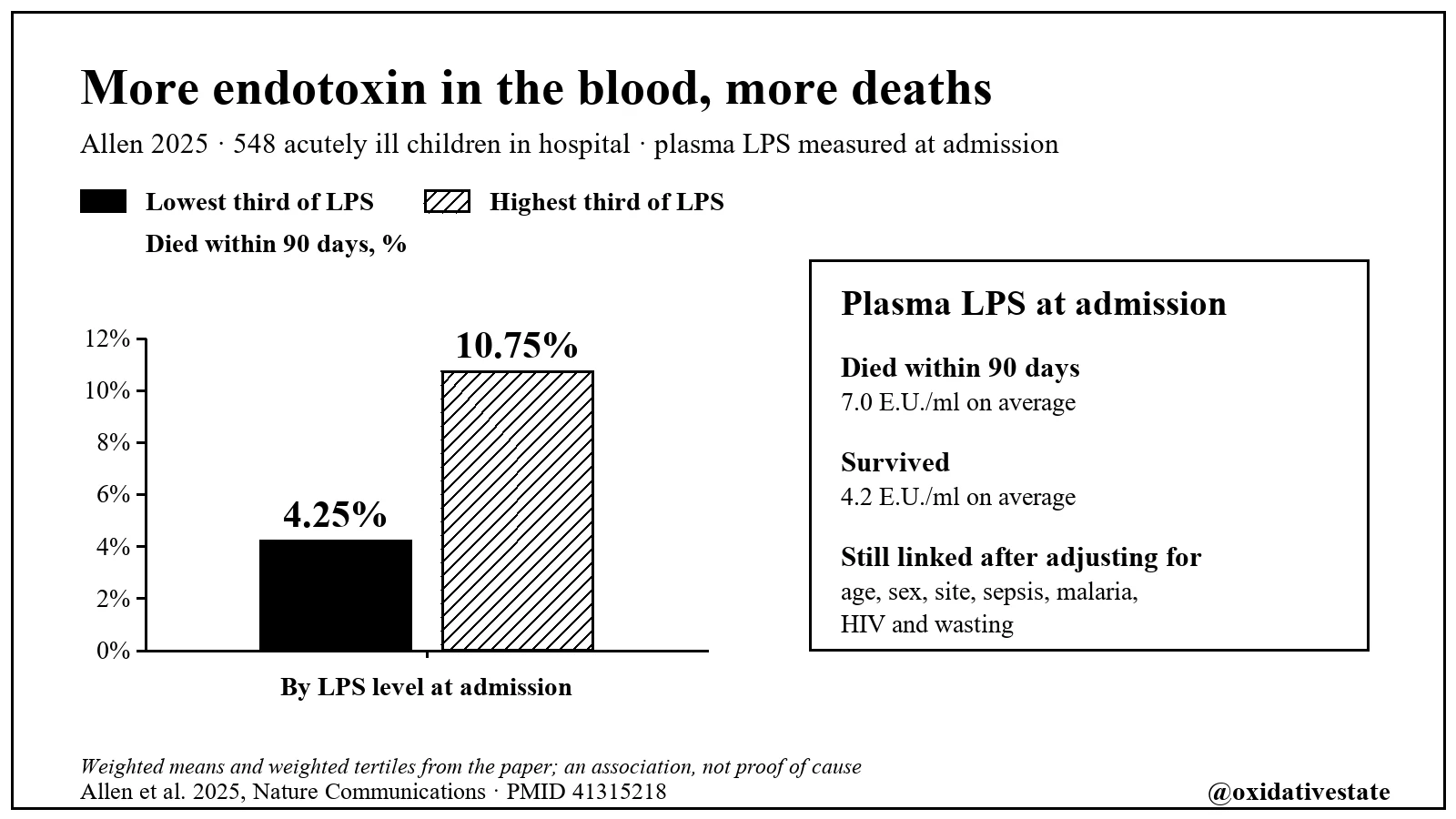
What they found
638 acutely ill children in hospitals in sub-Saharan Africa and South Asia were compared with 251 well children from the same communities. Higher LPS at admission, and higher inflammation markers (fecal calprotectin, myeloperoxidase, CD14), went with more deaths within 90 days, whether or not the child was wasted. The children who died had 7.0 E.U./ml of LPS on average, the survivors 4.2. Those who died with high LPS had more Gram-negative gut bacteria and more signs of gut damage.
Keep in mind: The 10.75% vs 4.25%, the 7.0 vs 4.2 E.U./ml and the adjustments come from the full paper, not the abstract. The average LPS of the sick children (4.40) and the well children (4.47) was the same: the risk sat in the group with high levels. It is an association in very sick children, not proof that LPS caused the deaths.
Baboons + purified proteins · 2025
Endotoxin switches on a clotting pathway, depending on the strain
The physicochemical properties of lipopolysaccharide chemotypes regulate activation of the contact pathway of blood coagulationJ Biol Chem · 2025 · PMID 39706265
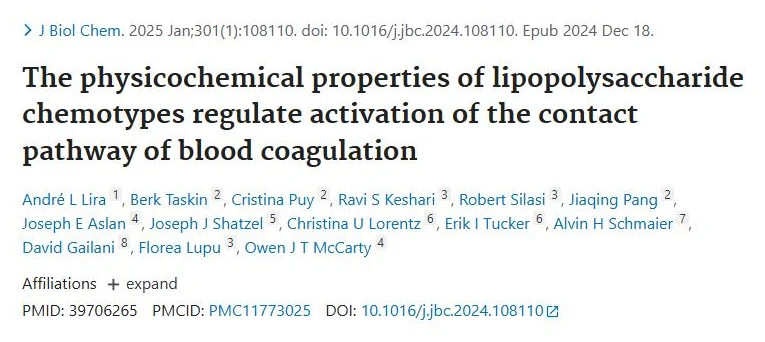
What they found
In baboons with E. coli sepsis, the contact pathway of clotting (factors XII and XI, and prekallikrein) was activated. In the lab, three types of E. coli endotoxin all bound these factors, but only one (O26:B6) made factor XII activate itself, which then cut factor XI and prekallikrein into their active forms. The other two could still change how active those enzymes were.
Keep in mind: The abstract gives no numbers. Sepsis with endotoxin in the blood is linked to widespread clotting; this study shows one way it can start.
BPC-157 strengthens the gut
BPC-157 is a stable 15-amino-acid peptide from the stomach (a gastric pentadecapeptide). In animal studies it protects the stomach and gut lining and rebuilds blood supply to damaged gut. More on the BPC-157 page and in BPC-157 and leaky gut.
Rats · ischemic colitis · 2017
BPC-157 brings the blood back to a starved colon
Stable gastric pentadecapeptide BPC 157 in the treatment of colitis and ischemia and reperfusion in rats: New insightsWorld J Gastroenterol · 2017 · PMID 29358856
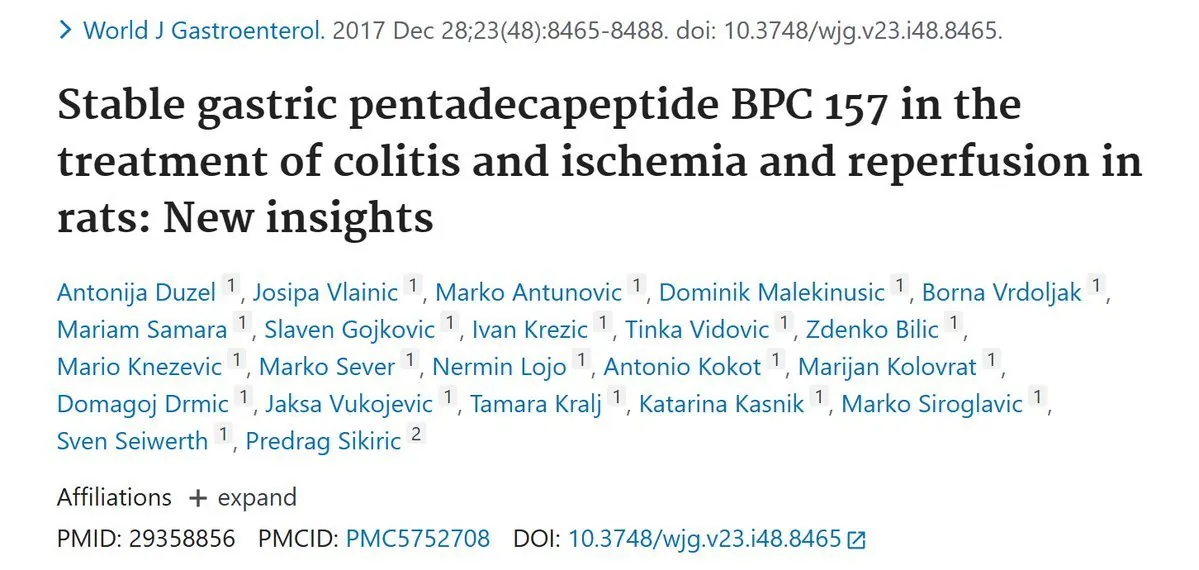
What they found
A 25 mm piece of colon was cut off from its blood supply. BPC-157 bathed on it made more vessels appear and reconnected the vessel arcades quickly. The mucosal folds were kept and the pale (dying) areas shrank. By day 10 the mucosa was almost completely spared. The effect runs through the nitric oxide system.
Rats · stomach · 1996
BPC-157 shields the stomach from alcohol, stress and painkillers
Beneficial effect of a novel pentadecapeptide BPC 157 on gastric lesions induced by restraint stress, ethanol, indomethacin, and capsaicin neurotoxicityDig Dis Sci · 1996 · PMID 8769287
What they found
At 10 µg/kg and 10 ng/kg, BPC-157 protected the stomach lining against 96% alcohol, restraint stress and indomethacin, and the protection held even after the sensory nerves were damaged. The authors also note its strong effect on gut and liver lesions.
Keep in mind: This is the stomach, in rats.
Rats · duodenum-colon fistula · 2024
Every treated rat closed the hole
Duodenocolic fistula healing by pentadecapeptide BPC 157 in rats. A cytoprotection viewpointJ Physiol Pharmacol · 2024 · PMID 38583442
AllBPC-157-treated rats closed both defects; in the controls both stayed open and leaked
What they found
A fistula joined the duodenum to the colon. Given in drinking water or by injection, BPC-157 quickly drew vessels toward the defect from both sides. Treated rats had no leakage, no diarrhea, no weight loss and far fewer adhesions; the controls kept leaking, lost weight and had diarrhea.
Keep in mind: These are rat studies. A form of BPC-157 (PL14736) is described as safe in clinical trials for inflammatory bowel disease and for intestinal anastomosis (Klicek 2008, PMID 18818478).
Vitamin B3 (NAD) protects the barrier
Vitamin B3 is the raw material for NAD, the molecule the gut cells need to make energy. Two studies tested NAD itself and nicotinamide riboside, a form of B3.
Mice + gut cells · 2022
A form of B3 kept alcohol from opening the gut
NAD Supplement Alleviates Intestinal Barrier Injury Induced by Ethanol Via Protecting Epithelial Mitochondrial FunctionNutrients · 2022 · PMID 36615829
What they found
Chronic-plus-binge alcohol made the mouse gut leaky and let endotoxin into the blood. Nicotinamide riboside lessened the barrier injury: it kept the tight-junction proteins and NAD levels, activated SirT1 and PGC-1α, and reversed the mitochondrial damage. The protection depended on SirT1.
Gut cells + mice · 2003
NAD kept the gut sealed against cytokines and endotoxin
NAD+ ameliorates inflammation-induced epithelial barrier dysfunction in cultured enterocytes and mouse ileal mucosaJ Pharmacol Exp Ther · 2003 · PMID 12975482
What they found
Found by chance: NAD added outside the cells preserved the gut-cell barrier against a cytokine mix (IFN-γ, IL-1β, TNF-α), more with more NAD. It kept the junction proteins occludin and ZO-1 and blocked NF-κB and nitric oxide. In mice, the gut turned leaky 18 hours after endotoxin, and NAD lessened it.
Keep in mind: These studies used nicotinamide riboside and NAD, not niacinamide. I take niacinamide and stay under 500 mg a day.
White mushrooms and digestion
White button mushrooms carry fibres that feed gut bacteria. I eat them long-cooked with carrots for fibre (see the carrot salad), and it speeds up my bowel movements.
Healthy adults · randomized crossover · 2018
Mushrooms twice a day for 10 days: heavier stool, a changed microbiome
Impact of Agaricus bisporus Mushroom Consumption on Gut Health Markers in Healthy AdultsNutrients · 2018 · PMID 30279332
10 daysof white button mushrooms twice a day vs meat, in 32 adults
What they found
Stool weight went up (p = 0.002). Bacteroidetes rose and Firmicutes fell. Stool frequency, consistency, pH and short-chain fatty acids did not change, and some people had more gut symptoms on the first two days. Undigested mushroom pieces showed up in the stool, and the authors say mushrooms may affect laxation.
Keep in mind: Transit time was not measured. More Bacteroidetes means more Gram-negative cells, but Bacteroides make a weak form of endotoxin that can quiet TLR4 (PMID 29152585). Whether that helps here was not tested.
Immune cells + mice · 2023
Mushroom powder calmed the immune response to endotoxin
Negative Regulation of Innate Immune Signaling by Components of the Button Mushroom Agaricus bisporusMol Nutr Food Res · 2023 · PMID 37195234
What they found
Pre-treating mouse and human immune cells (macrophages) with white button mushroom powder dampened their response to endotoxin and β-glucan, including NF-κB activation and inflammatory cytokines. The effect survived simulated digestion, and the powder eased colitis in mice. The authors suggest mushroom compounds occupy the immune receptors.
Activated charcoal binds endotoxin
One study on pulling endotoxin out of the blood of a patient with sepsis.
Patient plasma + mice · 1990
Activated charcoal made a sepsis patient's plasma harmless to mice
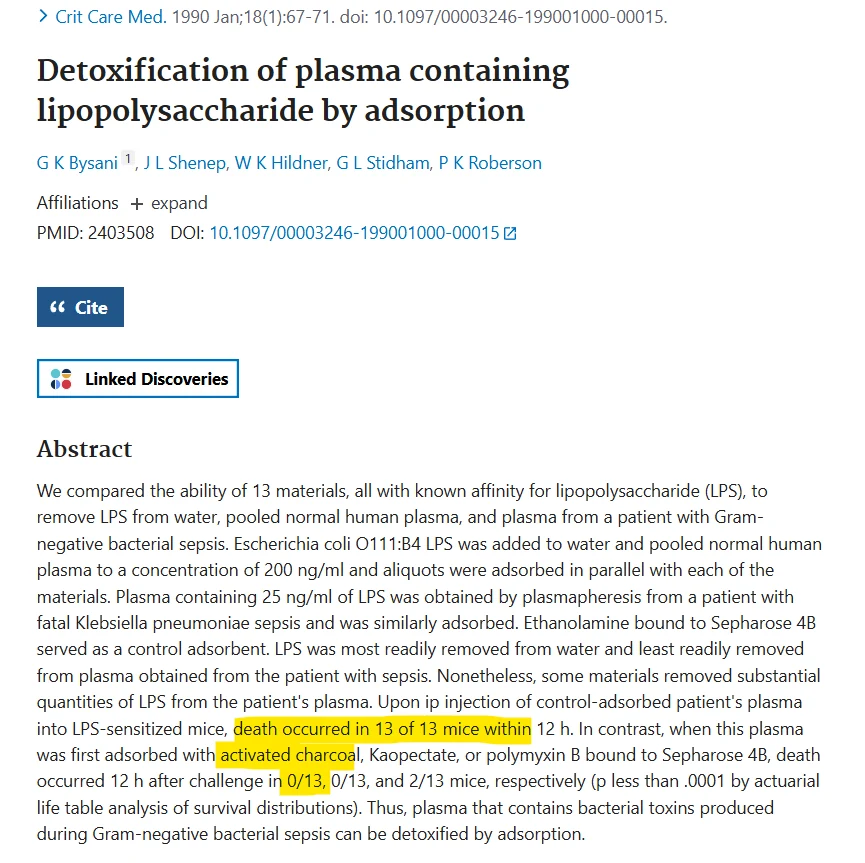
Detoxification of plasma containing lipopolysaccharide by adsorptionCrit Care Med · 1990 · PMID 2403508
What they found
They took the blood of a patient who died from endotoxemia and injected it into mice. The endotoxin killed 100% of them. Then they took that blood, filtered it with activated charcoal and injected it into mice. NONE of them died. Activated charcoal binds and deactivates LPS.
Go deeper: how to fix leaky gut · heal your gut barrier · Ray Peat on endotoxin · gut health studies · BPC-157
This is educational content and my own experience, not medical advice. Talk to your doctor before you start any supplement or peptide.