A systematic review on the role of aromatase inhibitors for men with prolactinoma and hypogonadism shows that…
A systematic review on the role of aromatase inhibitors for men with prolactinoma and hypogonadism shows that Testosterone therapy can increase prolactin levels probably because the patients have high aromatase activity, aromatase converts the testosterone they get to estrogen that increases prolactin levels causing hypogonadism and erectile dysfunction.
A combination of Androgen(DHT/T) + Aromatase inhibitor(Examastane) + Dopamine agonist(Bromocriptine) can be VERY powerful in lowering prolactin and estrogen.
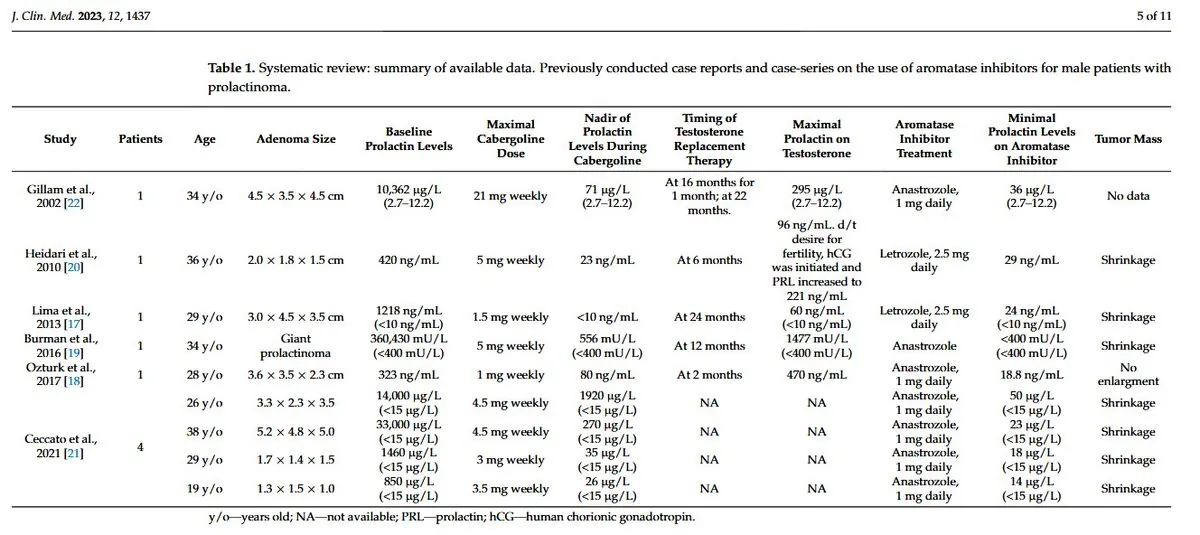
"In 2002, Gillam and colleagues reported on a case of a 34-year-old male patient with a macroprolactinoma and low testosterone levels; the patient responded to cabergoline treatment with significant reduction in prolactin levels, from 10,362 μf/L to 61 μg/L. However,
as symptoms of hypogonadism persisted, testosterone was added, followed by an increase
in prolactin levels, which came back down following the discontinuation of testosterone. A combination of cabergoline with anastrozole (1 mg daily) and a testosterone treatment resulted in improved clinical symptoms without increasing prolactin levels. Interestingly, at attempt to discontinue the anastrozole to determine the effect of anastrozole on prolactin
levels resulted in an immediate spike in the prolactin levels, with a subsequent decline after re-introducing the aromatase inhibitor. The authors concluded that the addition of an aromatase inhibitor allowed for the continued use of testosterone as it prevented the
testosterone-induced prolactin increase and potential tumor enlargement. Furthermore, the combination of an aromatase inhibitor with a dopamine agonist resulted in prolactin levels that were lower than those recorded at any other time point,"
"Lima and colleagues reported on a 29-year-old man with hyperprolactinemia exacerbated by testosterone replacement therapy. The patient was diagnosed with a giant prolactinoma and achieved normal serum prolactin levels with cabergoline. However, as
symptoms of hypogonadism persisted, testosterone replacement therapy was initiated, followed by a more than six-fold increase in prolactin levels. Adding letrozole (2.5 mg daily) treatment was associated with a significant reduction in prolactin levels "
A much better option than testosterone would be DHT, which can't be aromatised to estrogen, also exemestane was shown to be much safer in blocking aromatase, this shows that combination of Androgen + Aromatase inhibitor + Dopamine agonist can be VERY powerful in lowering prolactin and estrogen.
[PMID: 36835974]
The study
- The Role of Aromatase Inhibitors in Male ProlactinomaJ Clin Med · 2023 · PMID 36835974