Testicular Enhancement: What Shrinks Your Testes and What Feeds Them
Your testes have two jobs. They make testosterone and they make sperm.
Both jobs are done by the same small organ, and both are very easy to shut down. Stress does it. A leaky gut does it. A testosterone shot does it.
I went through 35 studies for this article and read the full PDF of each one. Every number you see here comes from the study itself.
In this article I will show:
- How the brain talks to the testes (the HPG axis), with drawings
- Why testicular volume matters
- How cortisol and stress shrink the testes and lower testosterone
- How endotoxin from the gut does the same thing
- Why testosterone from outside shuts down your own
- What vitamin E, DHEA, progesterone and sugar do for the testes and the sperm
- What to do with all of this
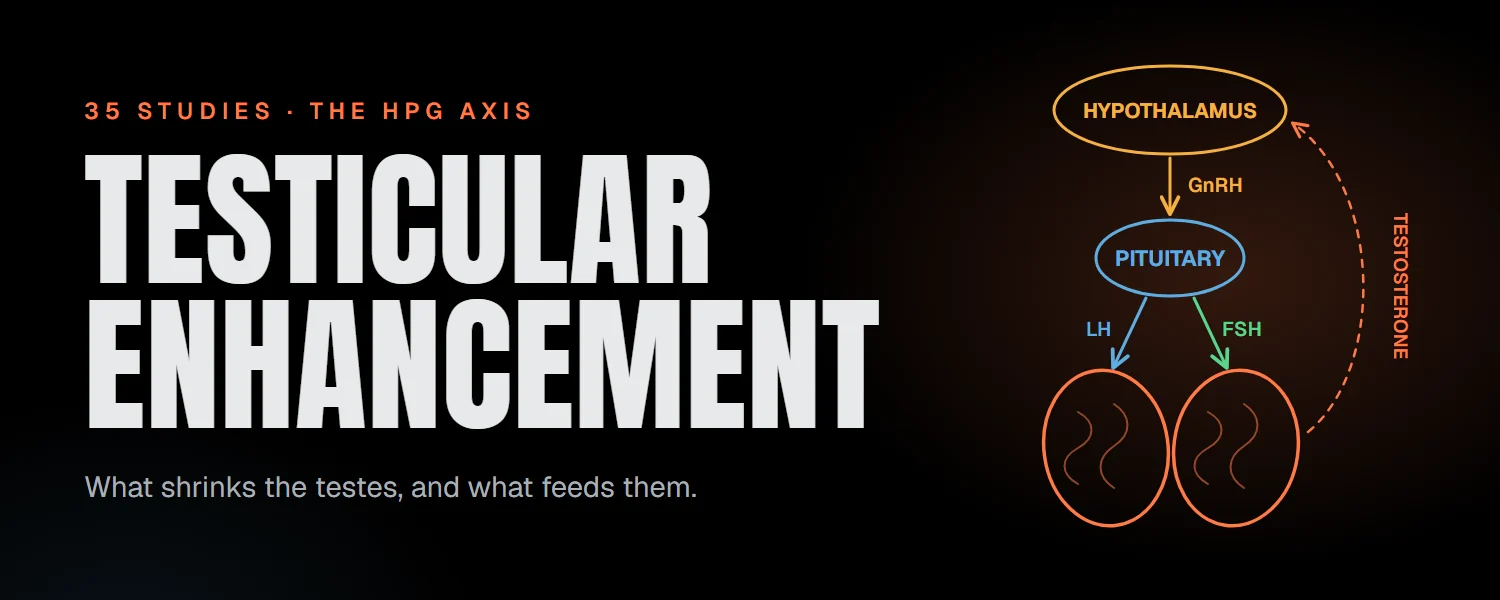
The HPG axis
HPG stands for Hypothalamus, Pituitary, Gonads. It is a chain of three stations, and each one fires a hormone at the next.
Station 1, the hypothalamus. A small area at the base of the brain. It releases GnRH.
Station 2, the pituitary. A gland that hangs right under it. When GnRH arrives, it fires two hormones into the blood: LH and FSH.
Station 3, the testes. LH and FSH travel in the blood all the way down, and the testes answer with testosterone and sperm.
The interesting part is how GnRH is released. It does not flow in a steady stream. It is fired in short pulses, and the pituitary answers each pulse with a pulse of LH.
The pulse is the message. If the stress system slows the pulses down, the testes get less signal.
Now let's go inside the testis. It has two kinds of worker cells:
- Leydig cells sit between the tubules. LH lands on them and they turn cholesterol into testosterone.
- Sertoli cells sit inside the tubules. FSH lands on them and they feed the developing sperm.
The Sertoli cells need two things to do their job: FSH from the pituitary, and a lot of testosterone from the Leydig cells next door.
How much? The testosterone inside the testis is about 100 times higher than in the blood. Remember this number, it comes back later.
And this is how the Leydig cell builds testosterone:
Notice two things in this drawing. Progesterone and DHEA are both on the road to testosterone, they are the raw material. And the first step, carrying cholesterol into the mitochondrion (StAR), is exactly the step that stress and endotoxin shut down. You will see it in the studies below.
The last piece is the brake. When testosterone is high enough, it tells the hypothalamus and the pituitary to slow down. This is a good brake when it is your own testosterone. It becomes a problem when the testosterone comes from a needle.
Why testicular volume matters
Most of the testis is tubules, the place where the sperm is made. So the size of the testis tells you a lot about how much working tissue is inside.
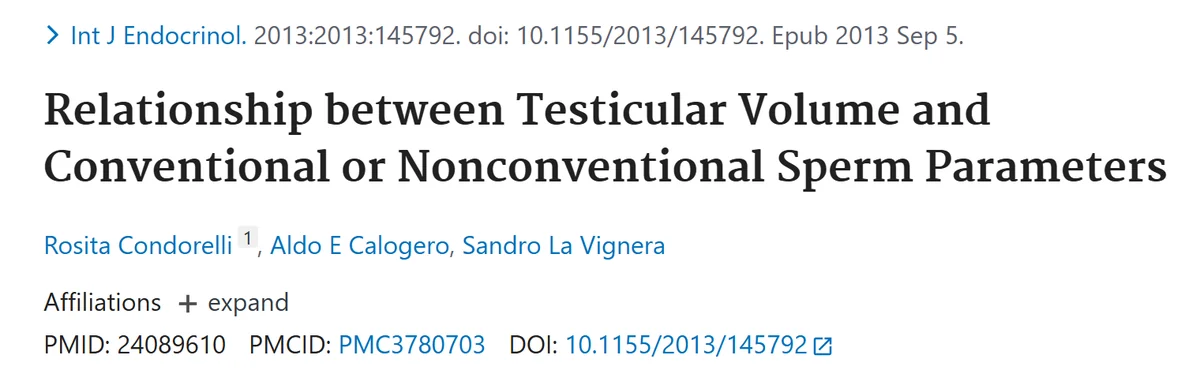
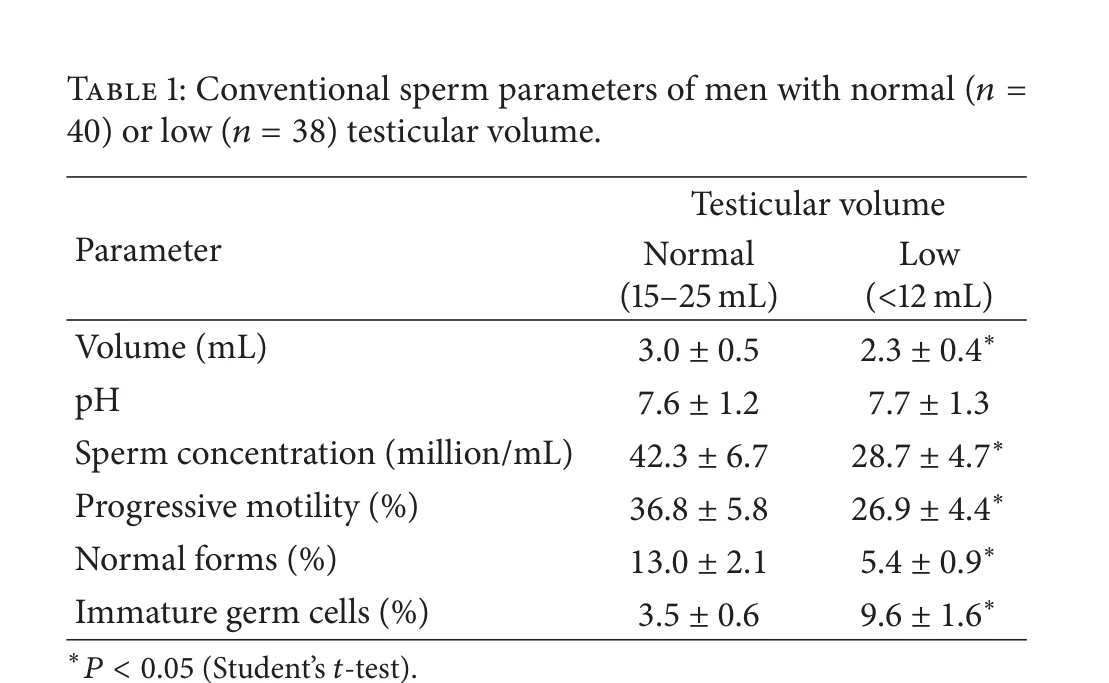
In this study 78 men were split by testicular volume: 40 men with normal volume (15 to 25 mL) and 38 men with low volume (under 12 mL).
- Sperm concentration: 42.3 million/mL in the normal group, 28.7 in the low volume group
- Progressive motility: 36.8% vs 26.9%
- Normally shaped sperm: 13.0% vs 5.4%
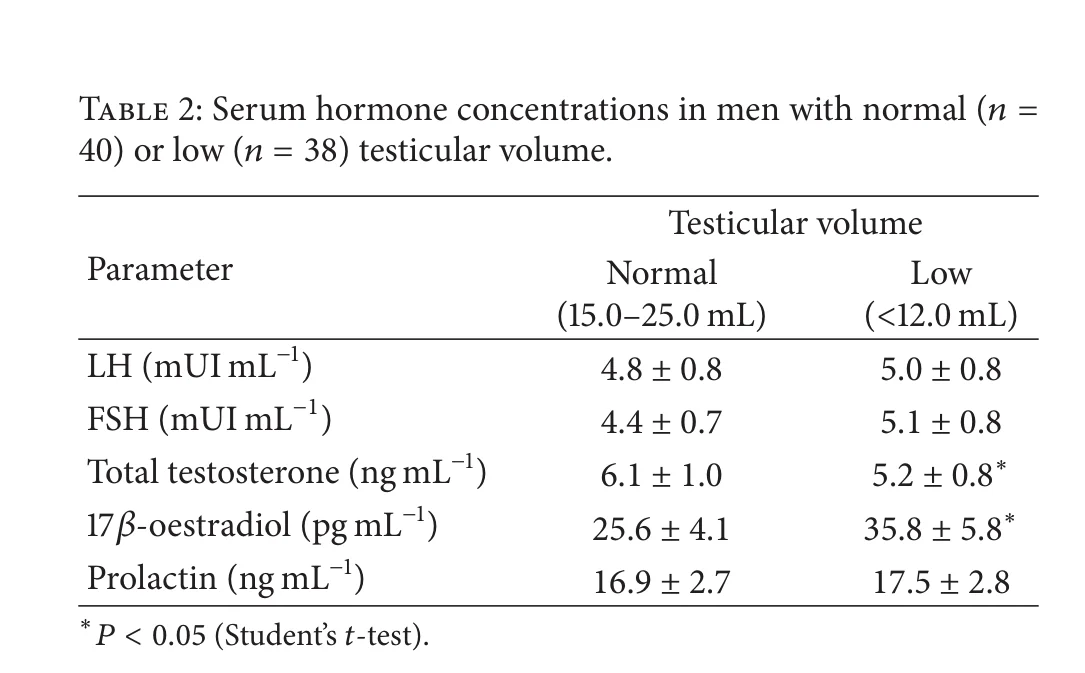
- Total testosterone: 6.1 ng/mL vs 5.2 ng/mL
- Estradiol: 25.6 pg/mL vs 35.8 pg/mL (higher in the men with small testes)
LH and FSH were the same in both groups. The brain was sending the same signal. The smaller testes simply answered with less.
Smaller testes: less sperm, less testosterone, more estrogen. So the real question is what shrinks them.
Cortisol VS the testes
Cortisol is the stress hormone, and it works against testosterone at every station of the axis. The clearest human evidence comes from men who take cortisol drugs (glucocorticoids).
In this study 11 men with asthma who were on long-term prednisone were compared with 11 men with asthma of the same age who were not.
- Total testosterone: 12.2 nmol/l on prednisone vs 19.4 nmol/l in the controls
- Free testosterone: 340 pmol/l vs 578 pmol/l
- That is roughly 60% of the control group
- DHEA-S was only 26% of the control group
- In 6 of the 11 men both total and free testosterone were below the normal range
A bigger and newer study found the same. This one had 152 men: 57 using glucocorticoids now, 43 who used them in the past and 52 who never did.
- Total testosterone: 318 ng/dl in the current users vs 430 ng/dl in the controls
- Low testosterone (hypogonadism): 40.4% of the users vs 13.5% of the non users
- The men who had stopped the drug were back to normal (490 vs 430 ng/dl, no real difference)
LH was not different between the groups. So the signal from the brain was there. The testes just made less.
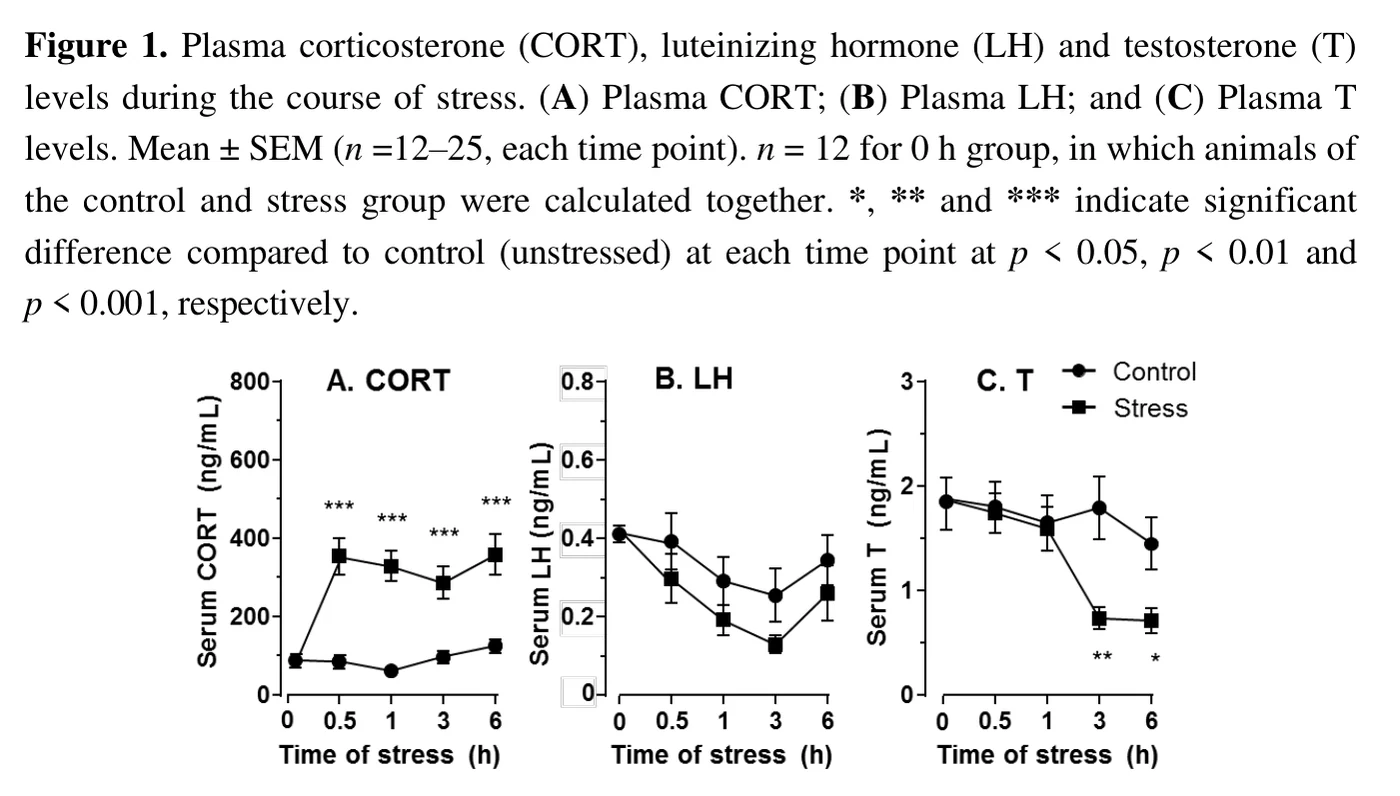
The animal studies show how it happens. In this study rats were put under immobilization stress.
- Corticosterone (the rat's cortisol) went up within 30 minutes
- Testosterone was lower at 3 hours and at 6 hours
- LH did not change
- Leydig cells taken from the stressed rats made less testosterone, even when they were given LH directly
- The genes that bring cholesterol into the cell and into the mitochondrion (Scarb1, Star) dropped from the first hour
- When the cortisol receptor was blocked (with RU486), testosterone came back
This is the important point. The brain kept sending LH. Cortisol blocked the testis from answering.
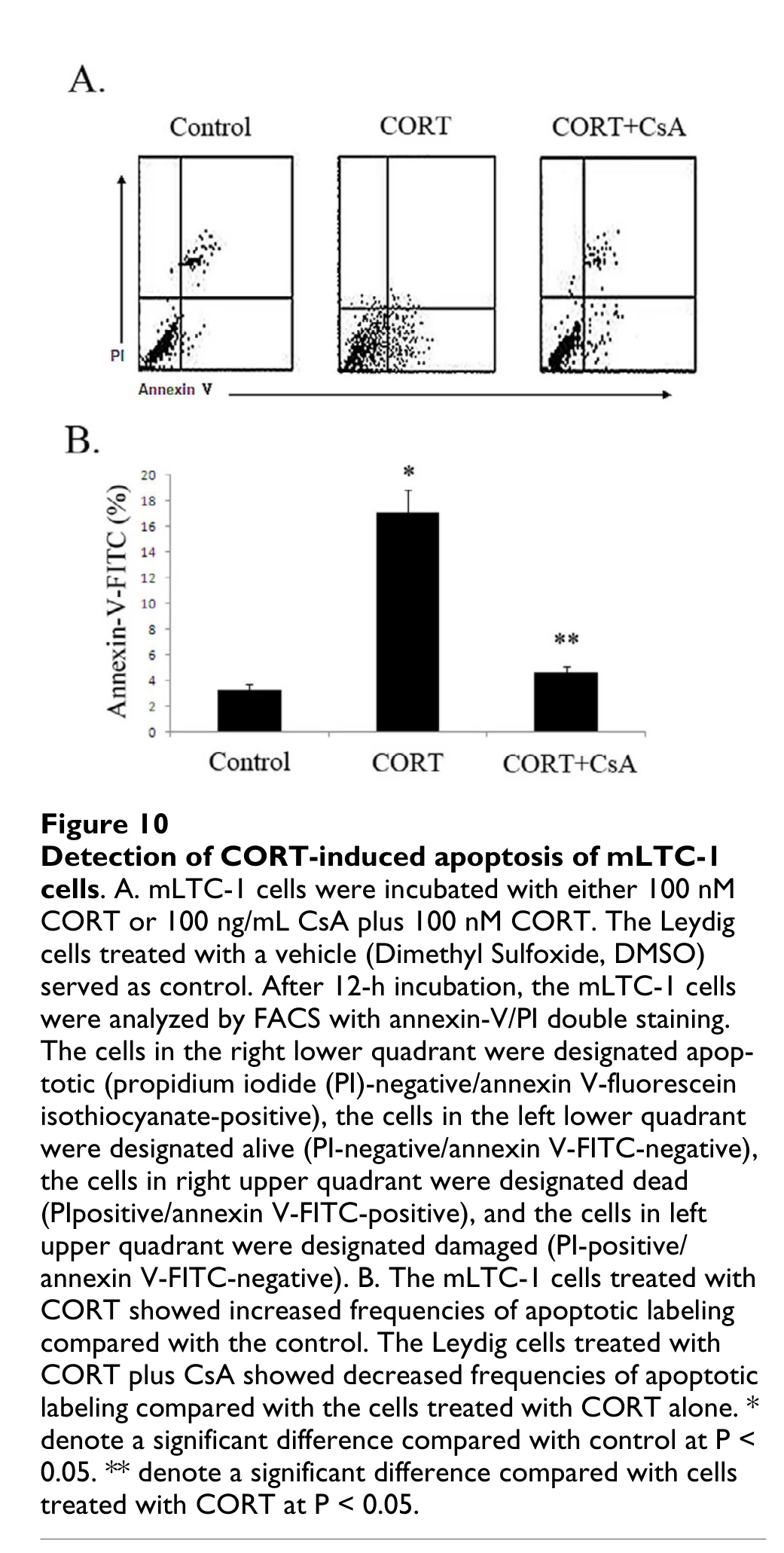
And cortisol does more than block the Leydig cell. It kills it. In this study Leydig cells in a dish were given corticosterone. The activity of the death signal FasL went up 6-fold, and more cells went into apoptosis (cell suicide). You can see it in the bar chart.
What does it do to the size of the testes? In this study rats got dexamethasone (a strong cortisol drug) for 7 days.
- Testis weight and testis volume went down
- Testosterone went down
- Sperm number went down
- The Leydig cells were degenerated and more cells in the testis were dying
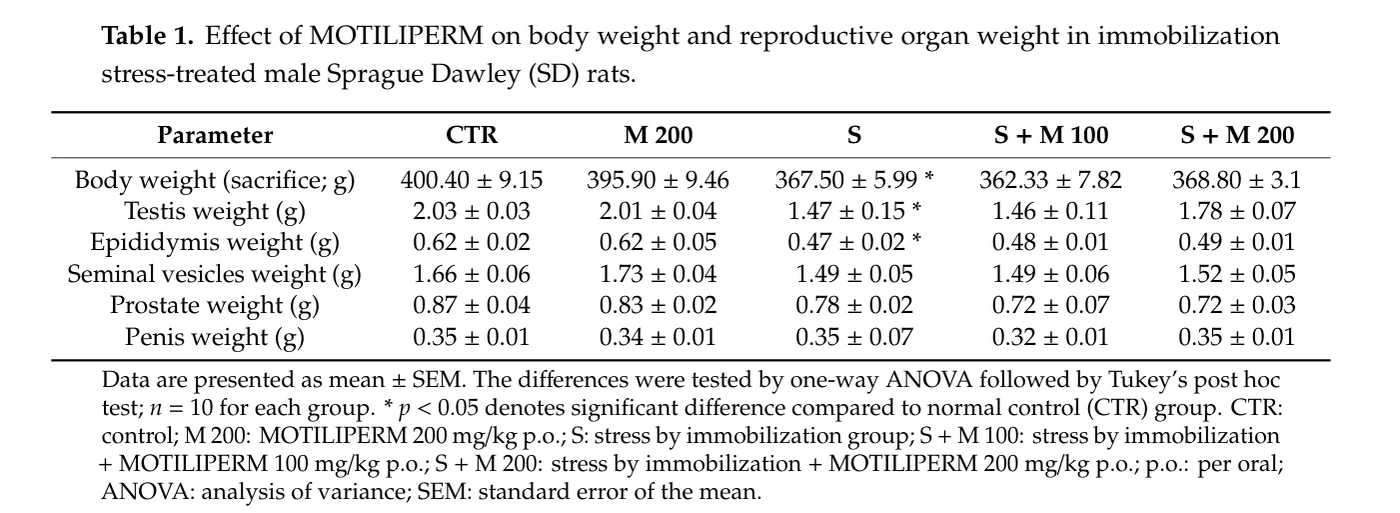
You don't need a drug for this. Stress alone is enough. In this study rats were immobilized for 6 hours a day, for 30 days.
- Testis weight: 2.03 g in the controls vs 1.47 g in the stressed rats
- Epididymis weight: 0.62 g vs 0.47 g
- Sperm count, sperm motility and testosterone were all lower
- LH was higher. The brain was pushing harder and the testes still did not answer
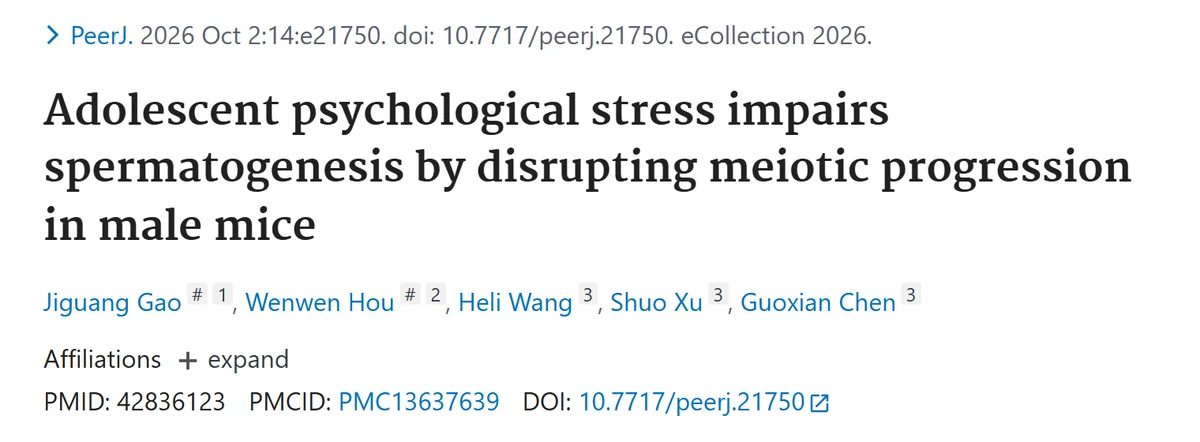
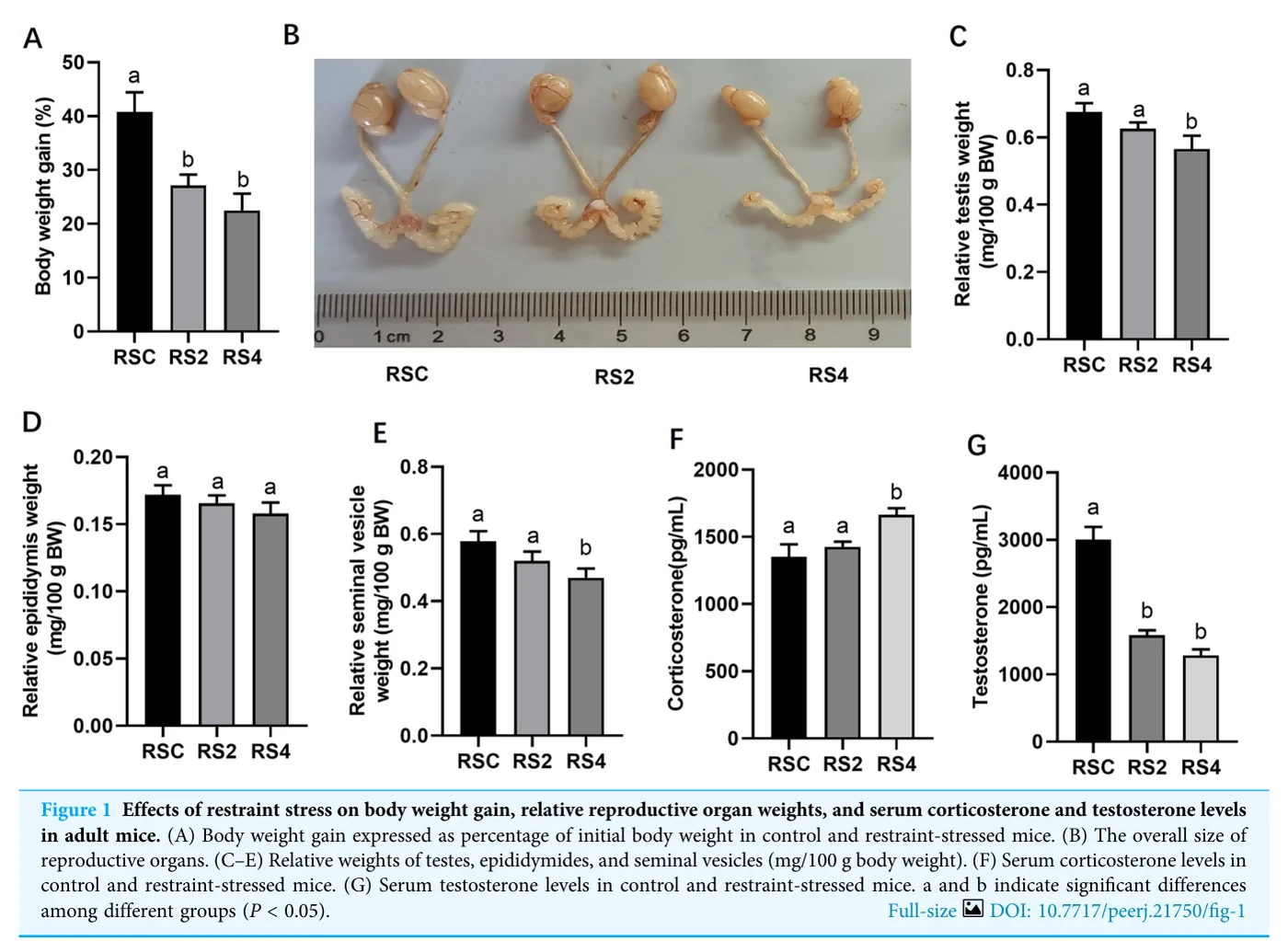
And when the stress comes at a young age, it is worse. In this study adolescent mice were restrained for 2 or 4 hours a day for four weeks.
- Corticosterone went up, testosterone went down
- Relative testis weight was lower in the 4 hour group
- Sperm concentration was lower and there were more abnormal sperm
- The chromosomes failed to pair properly in 54.97% of the dividing cells, vs 20.51% in the controls
- They had smaller litters
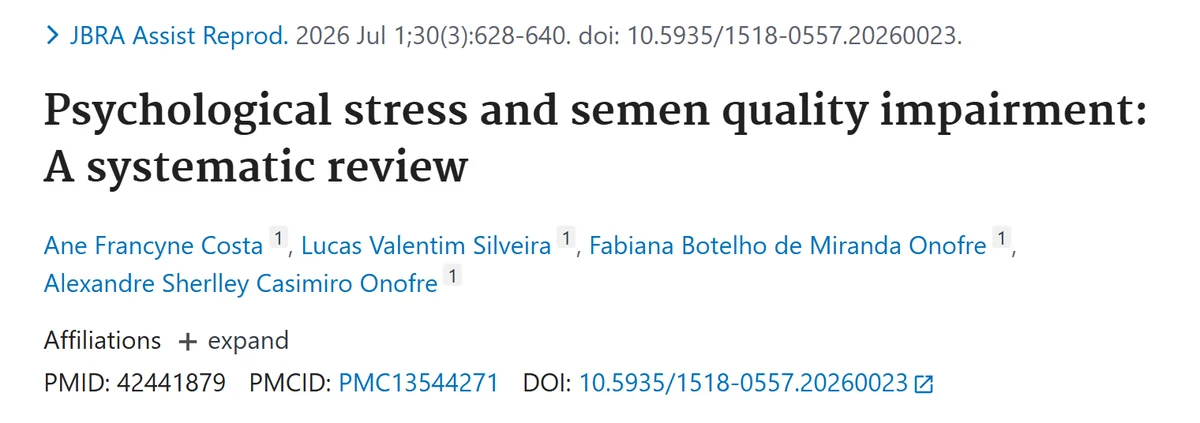
What about stress in men? This systematic review collected 34 human studies with 11,141 men.
- Stress was linked to lower sperm concentration in 52.9% of the studies
- To lower total sperm count in 56.3%
- To lower motility in 63.3%
The authors say it themselves: most of these studies are observational, so they show a link, not a cause.
And this review looked at cortisol itself. Only 4 of its 16 studies were on men. In 3 of the 4, infertile men had higher cortisol. In one there was no difference. The authors could not conclude that cortisol is clearly higher in infertile patients overall.
To be fair, not every study agrees. In one recent study, men who reported more stress had higher sperm motility 2 to 3 months later (PMID: 39261485). Stress on a questionnaire and cortisol in the blood are not the same thing.
So the strong evidence is this: cortisol drugs lower testosterone in men, and in animals stress and cortisol shrink the testes, kill Leydig cells and damage the sperm. I wrote about lowering cortisol here and about the stress axis here.
Endotoxin VS the testes
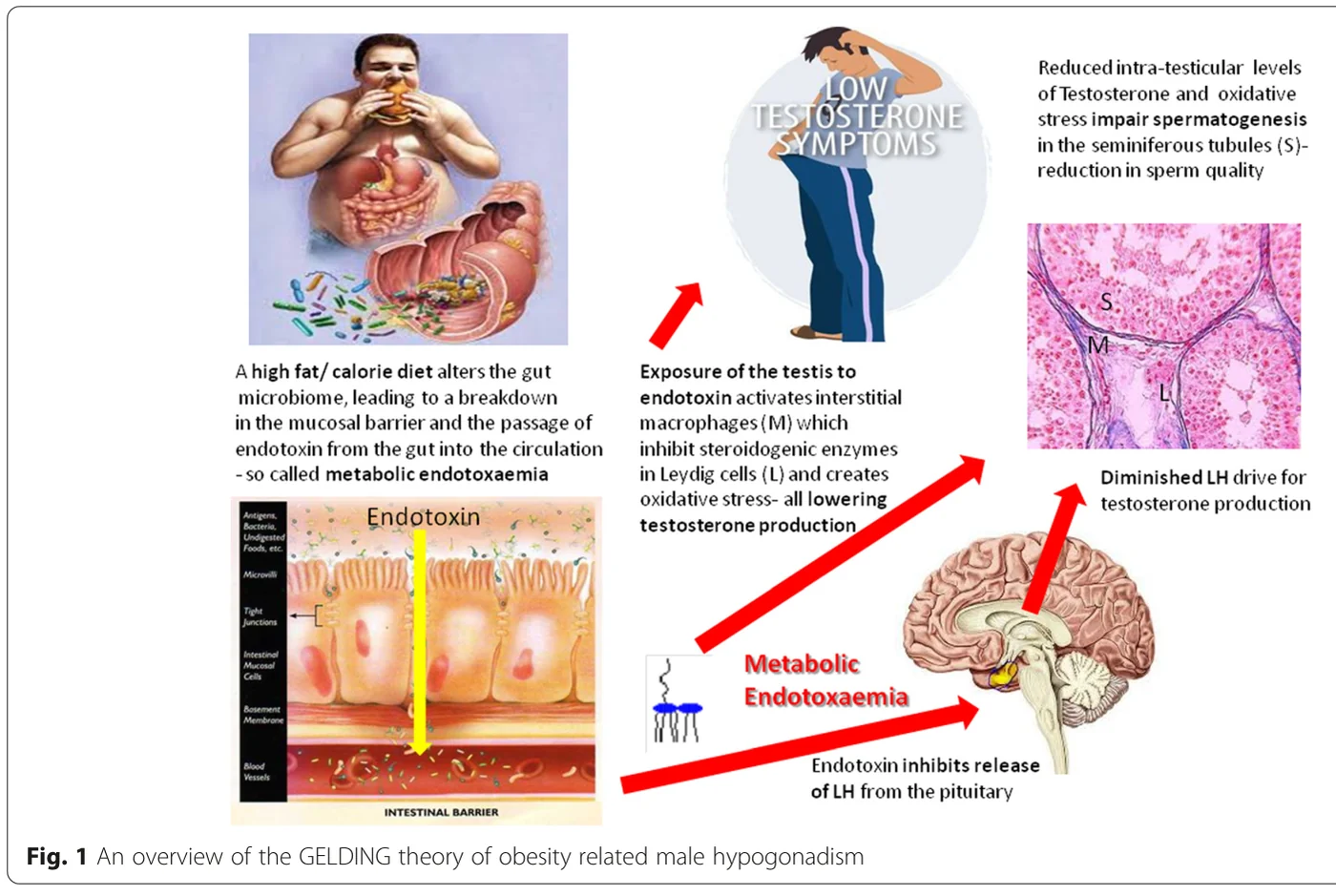
Endotoxin (LPS) is a piece of the wall of gut bacteria. When the gut barrier is weak it leaks into the blood, and the immune system answers with inflammation.
The testes hate it.
This paper gave the idea a name: GELDING, Gut Endotoxin Leading to a Decline IN Gonadal function. Obesity and a bad diet open the gut, endotoxin gets into the blood, and it lowers testosterone in two ways: directly at the Leydig cell, and by lowering LH.
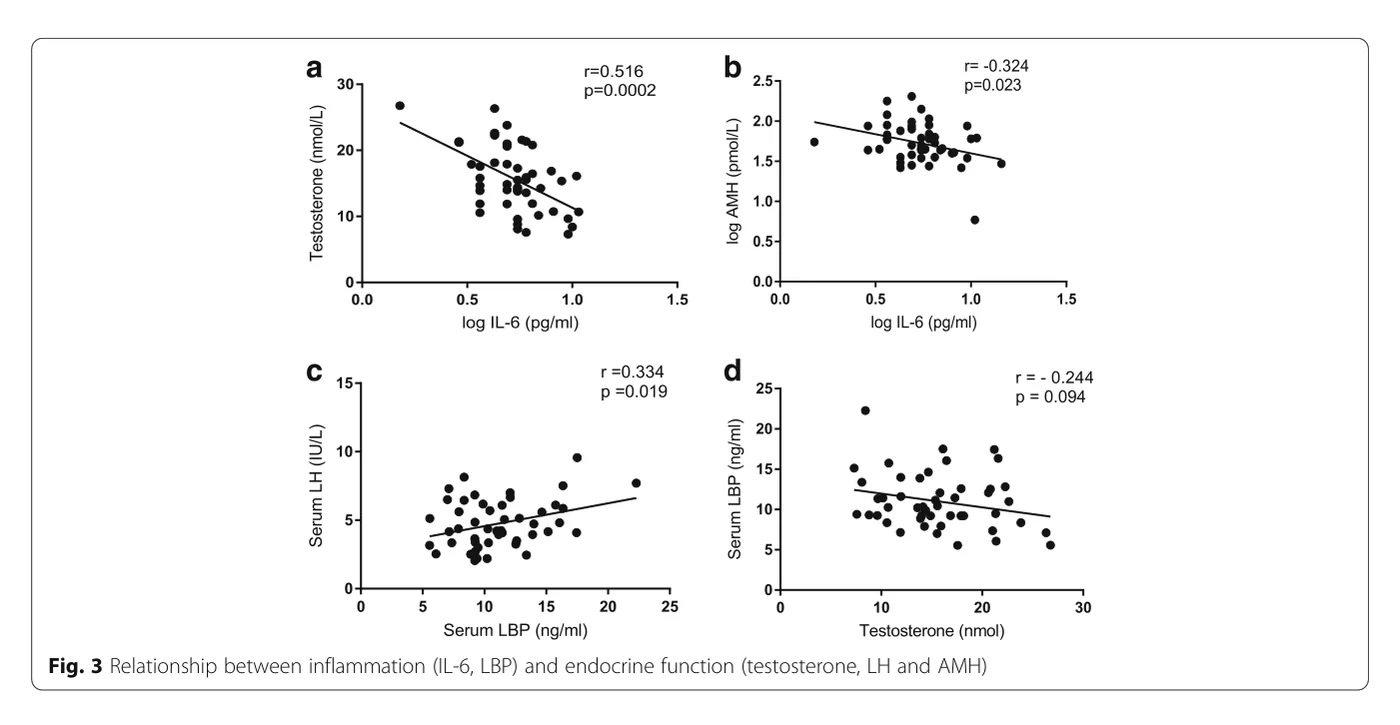
Then the same group tested it. In this study they took 50 men aged 21 to 50 and measured LBP, a blood marker that shows how much endotoxin the body is seeing.
- More body fat, more LBP (r = 0.366)
- More body fat, less testosterone (r = -0.403)
- More inflammation, less testosterone: CRP r = -0.471, IL-6 r = -0.516
- LBP was linked to lower testosterone even after adjusting for LH (-0.317, p = 0.03)
- IL-6, estrogen and SHBG together explained 51% of the differences in total testosterone
In a small pilot study on 9 men, they also measured zonulin, a marker of a leaky gut.
- Zonulin vs testosterone: -0.830
- LBP vs testosterone: -0.586
- Zonulin vs LBP: 0.609
The leakier the gut, the lower the testosterone. Only 9 men, so take it as a direction.
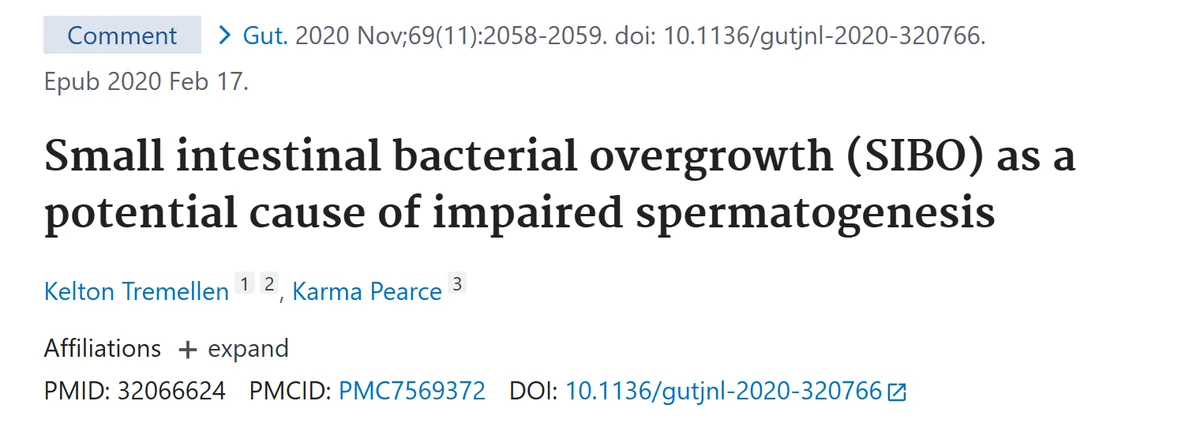
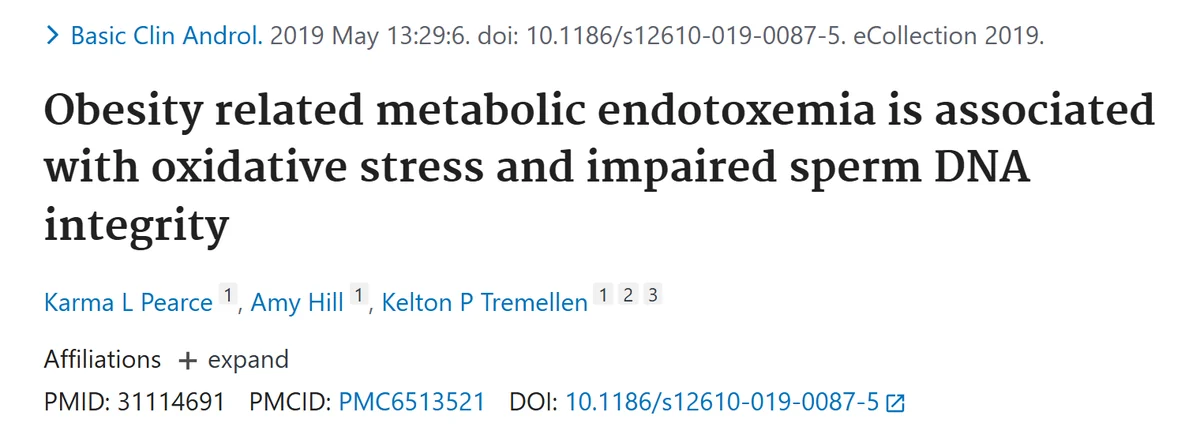
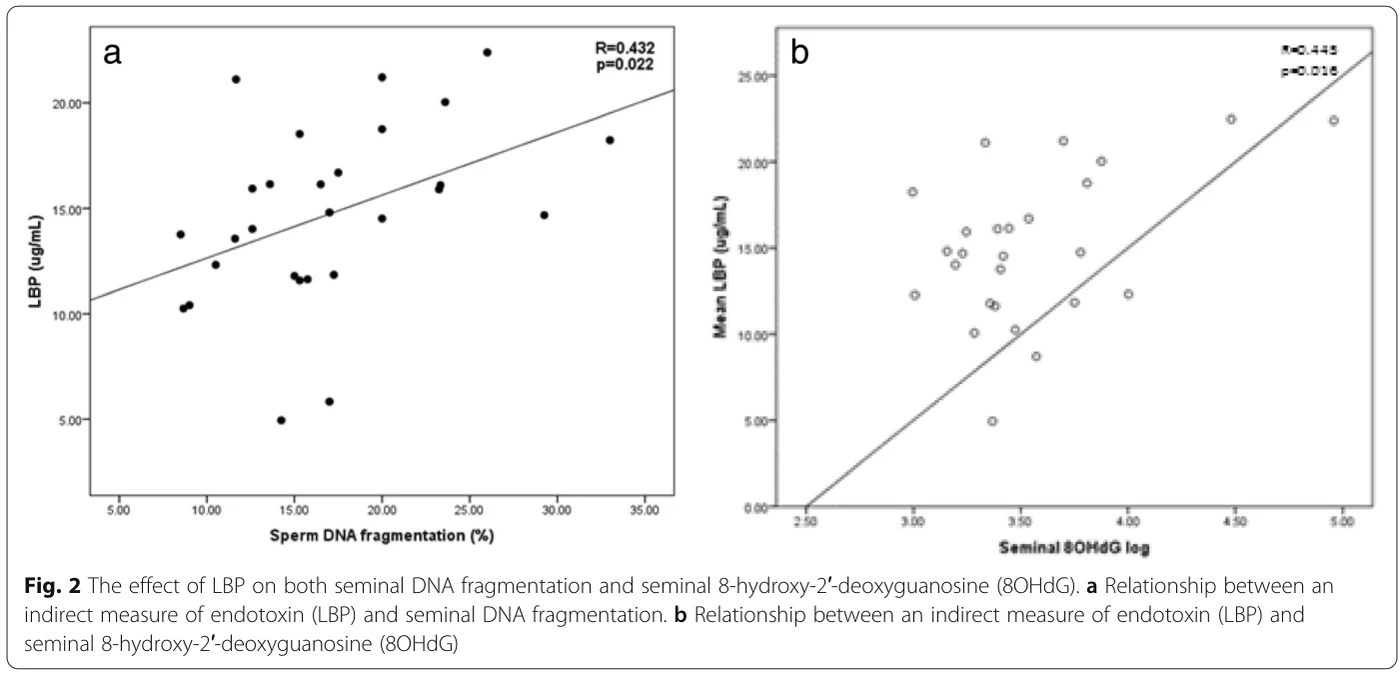
And the sperm? In this study on 37 infertile men:
- More LBP, more broken sperm DNA (R = 0.460)
- More LBP, more oxidative damage in the semen (R = 0.440)
- More zonulin, more LBP (R = 0.374)
- More oxidative damage, less motility (R = -0.624)
LBP itself was not linked to sperm count or motility in this study. The damage was to the DNA.
These human studies are small and they show links, not causes. The cause is shown in the lab.
It turns out human sperm carry the endotoxin detectors (TLR2 and TLR4) on them. In this study endotoxin lowered the motility of human sperm and pushed them into apoptosis. In mice, about 60% of the eggs were fertilized with normal sperm, and under 20% with sperm that had been exposed to bacteria. In mice without the two detectors, the damage was blocked.
In this study sperm samples from 73 men were left with endotoxin for 18 hours.
- Motility: 31.38% down to 26.17%
- In samples with many white blood cells: 45.76% down to 32.3%
- The marker of fat oxidation (MDA): 0.76 up to 1.09 nmol/ml
In samples from men with normal semen there was no effect. The weak samples were the ones that got hurt.
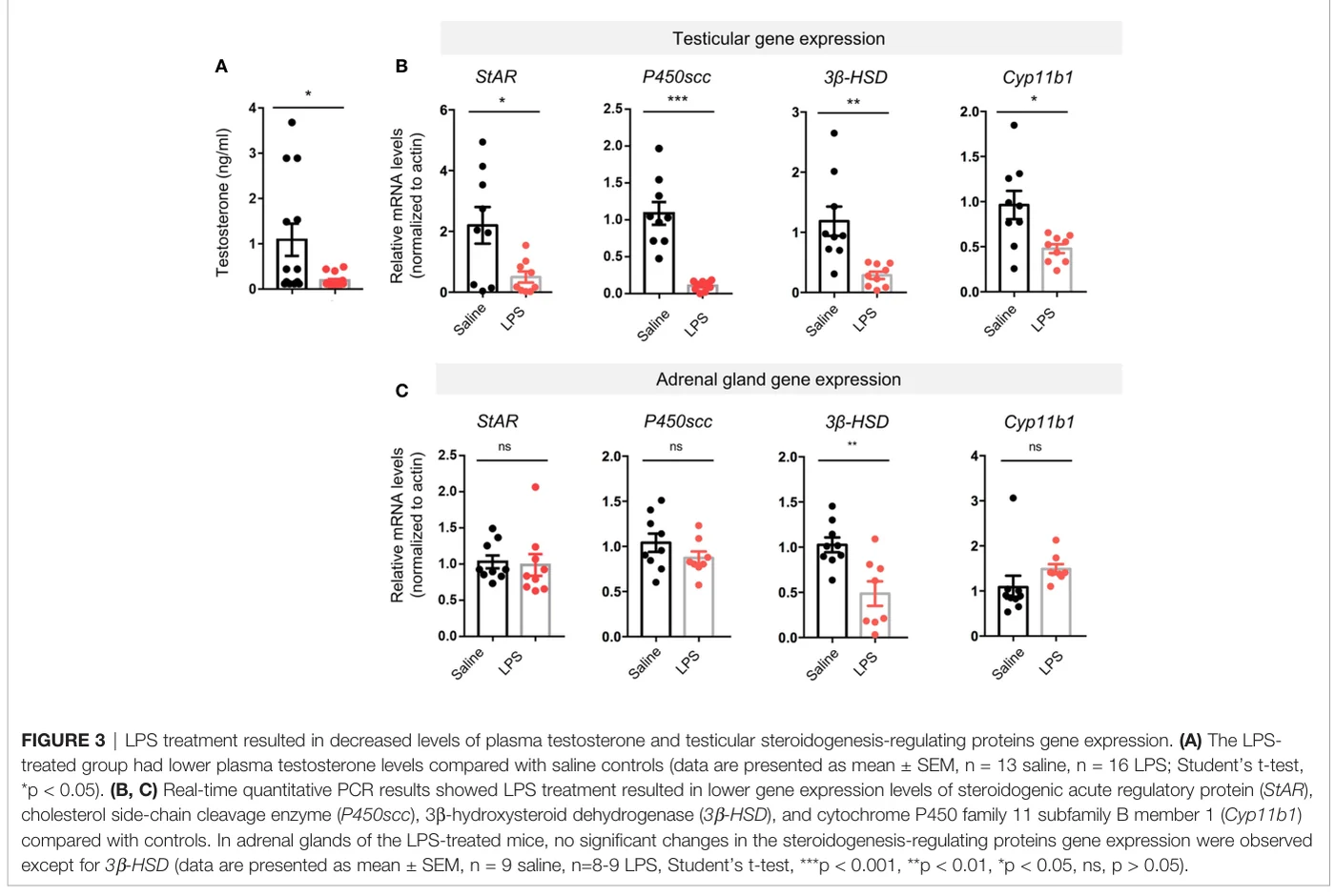
Now the testis itself. In this study mice got one injection of endotoxin.
- Testosterone was down 48 hours later
- The testosterone machinery of the testis was down: StAR, P450scc and 3β-HSD
- The developing sperm cells were falling off the wall of the tubules
- FSH and LH went up. Again, the brain was pushing and the testes were not answering
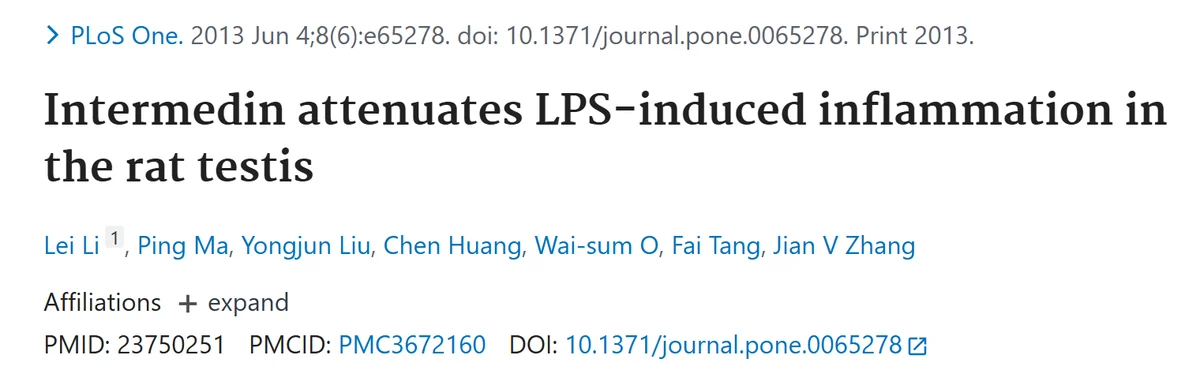
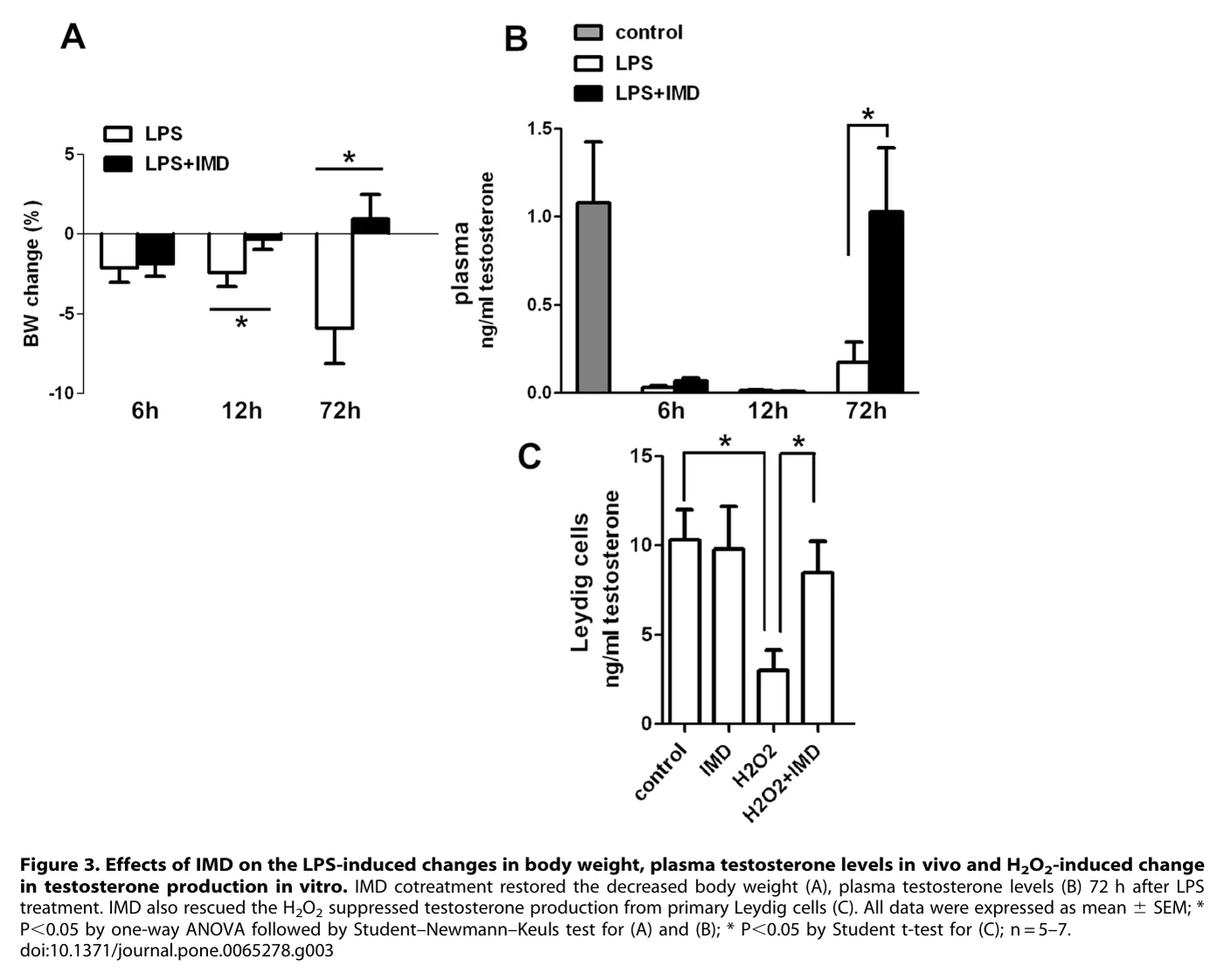
In this study on rats, the authors describe "a dramatic drop in plasma testosterone levels" at 6, 12 and 72 hours after endotoxin. Fat oxidation in the blood was more than 3 times higher at 6 hours.
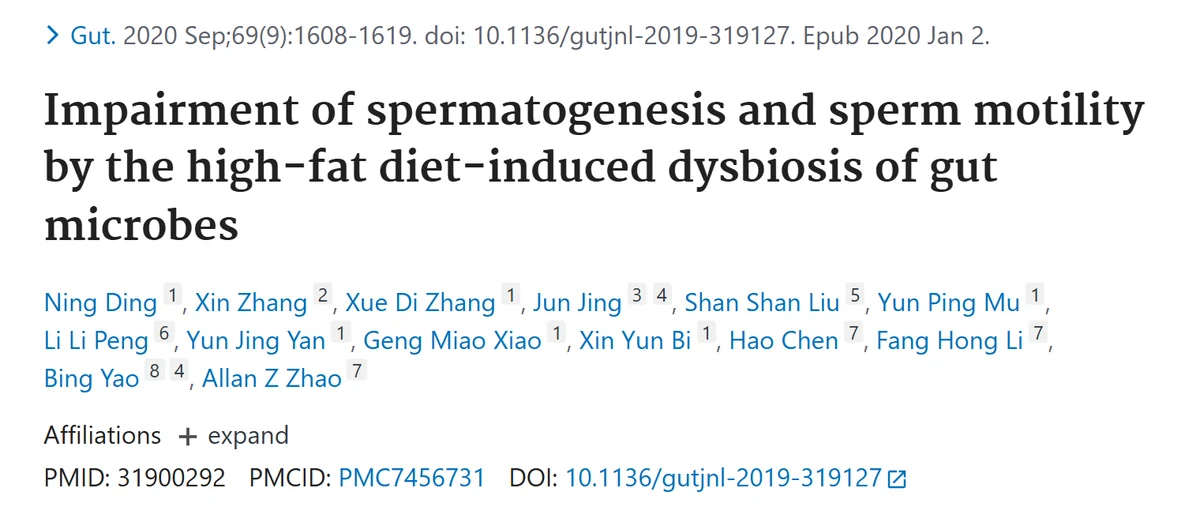
And the gut connection, shown directly. In this study they took gut bacteria from mice on a high fat diet and transplanted them into normal mice on a normal diet. The normal mice ended up with a lower sperm count, lower motility, and endotoxin in their blood. In the human part of the study, the more of one gut bacterium (Prevotella copri) the men had, the lower their sperm motility (r = -0.56, 20 men).
Another study showing endotoxin lowering testosterone in Leydig cells: PMID: 27212810.
I posted two more studies on a high fat diet and the testes here and here. Everything I have on endotoxin is here, and how to fix a leaky gut is here.
Testosterone: inside VS outside
Testosterone is the most important hormone for the testes. But there is a catch, and most men get it backwards.
What the testes need is the testosterone they make themselves. Remember the number: about 100 times higher inside the testis than in the blood.
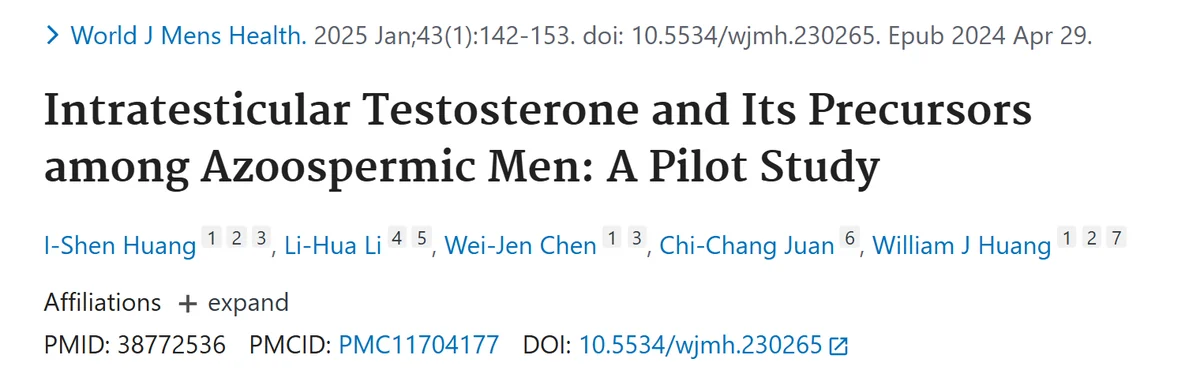
In this study it was measured directly, in fluid taken from the testes of 37 men. In the men who made sperm normally (their ducts were just blocked) the middle value was 207.5 ng/mL. For comparison, the men in the volume study above had 5 to 6 ng/mL in their blood.
One surprise in this study: the men whose testes failed to make sperm had even more testosterone inside, 1,528.1 ng/mL. So testosterone inside the testis is needed, but testosterone alone is not sperm.
Now see what happens when testosterone comes from outside. In this study 75 men with low testosterone got testosterone for 4 months, as injections, pellets or a nasal gel. The researchers followed 17-OHP, a blood marker of how much testosterone the testes are making inside.
- Injections: testosterone in the blood +157.6%, the testis marker -65.3%
- Pellets: blood +79.6%, the testis marker -44%
- Nasal gel: blood +114.3%, the testis marker -33.3% (this drop was not statistically significant)
Testosterone in the blood went up. Testosterone in the testes went down. This is the brake from the drawing: the brain sees enough testosterone and stops sending LH and FSH.
It works so well that testosterone is being tested as a male contraceptive. From this review:
- On 200 mg of testosterone enanthate a week, 70% of the men reached zero sperm
- In a second trial, 98% dropped to 3 million/mL or less
- When a progestin drug is added to the testosterone, 90 to 95% of men drop under 1 million/mL
And this review on TRT and steroids adds the recovery numbers. After stopping testosterone, 67% of men were back to 20 million/mL after 6 months, 90% after 12 months and 100% after 24 months. It comes back, but it can take two years.
So if you care about your testes, the goal is to make them produce more testosterone, not to replace it. You do that by removing what blocks the Leydig cell (cortisol, endotoxin, estrogen, prolactin) and giving it raw material.
More on this: Steroids 101, my prolactin article, how to increase DHT, and a study I posted on DHT, cortisol and sperm production.
Vitamin E
Vitamin E was discovered as the fertility vitamin. Rats that did not get it could not reproduce.
This old study checked what it does to the axis, in rats and in men.
The rats ate one of three diets for 7 months: no vitamin E, normal, or extra vitamin E.
- The rats with extra vitamin E had more testosterone, in the blood and inside the testis
- The rats without vitamin E had lower FSH and LH
Then 11 men (average age 54) took 483 mg of vitamin E a day for 8 weeks. Before and after, they got an injection of hCG, which acts like LH, to see how strongly the testes answer.
- Before vitamin E: testosterone went from 415.5 to 609.2 ng/dL (1.47 times)
- After vitamin E: from 552.7 to 1015.7 ng/dL (1.85 times)
Same signal, stronger answer from the testes.
Now the fertility trials. In this study 101 couples were doing IVF. Half of the men got 400 mg of vitamin E a day for 3 months, half got a placebo. Nobody knew who got what.
- Live births: 41.46% with vitamin E vs 20.46% with placebo
- Pregnancy: 43.9% vs 25% (this one was not statistically significant)
Twice the babies. And the interesting part: the regular sperm numbers (count, motility) were no better than placebo. The sperm did not look different. They worked better.
In this study 90 men took 400 units of vitamin E or a placebo for 3 months after varicocele surgery.
- Motility improved by 10% with vitamin E vs 6% with placebo
- Sperm count and shape were not significantly different
And the biggest one. In this study 690 infertile men took 400 units of vitamin E with 200 µg of selenium every day for at least 100 days.
- 52.6% improved in sperm motility, shape or both
- 10.8% got their partner pregnant naturally
- 36.6% did not respond
This study had no placebo group, so it is weaker than the two above.
To sum it up honestly: in the controlled trials vitamin E did not raise the sperm count. What it improved is motility and the final result, a baby.
More vitamin E studies I posted: 9 infertile men on 400 mg, 30 men on 600 mg and vitamin E and super sperm.
DHEA
DHEA is raw material for testosterone (look at the drawing again). And remember the asthma study: the men on prednisone had only 26% of the DHEA-S of the controls. Cortisol up, DHEA down.
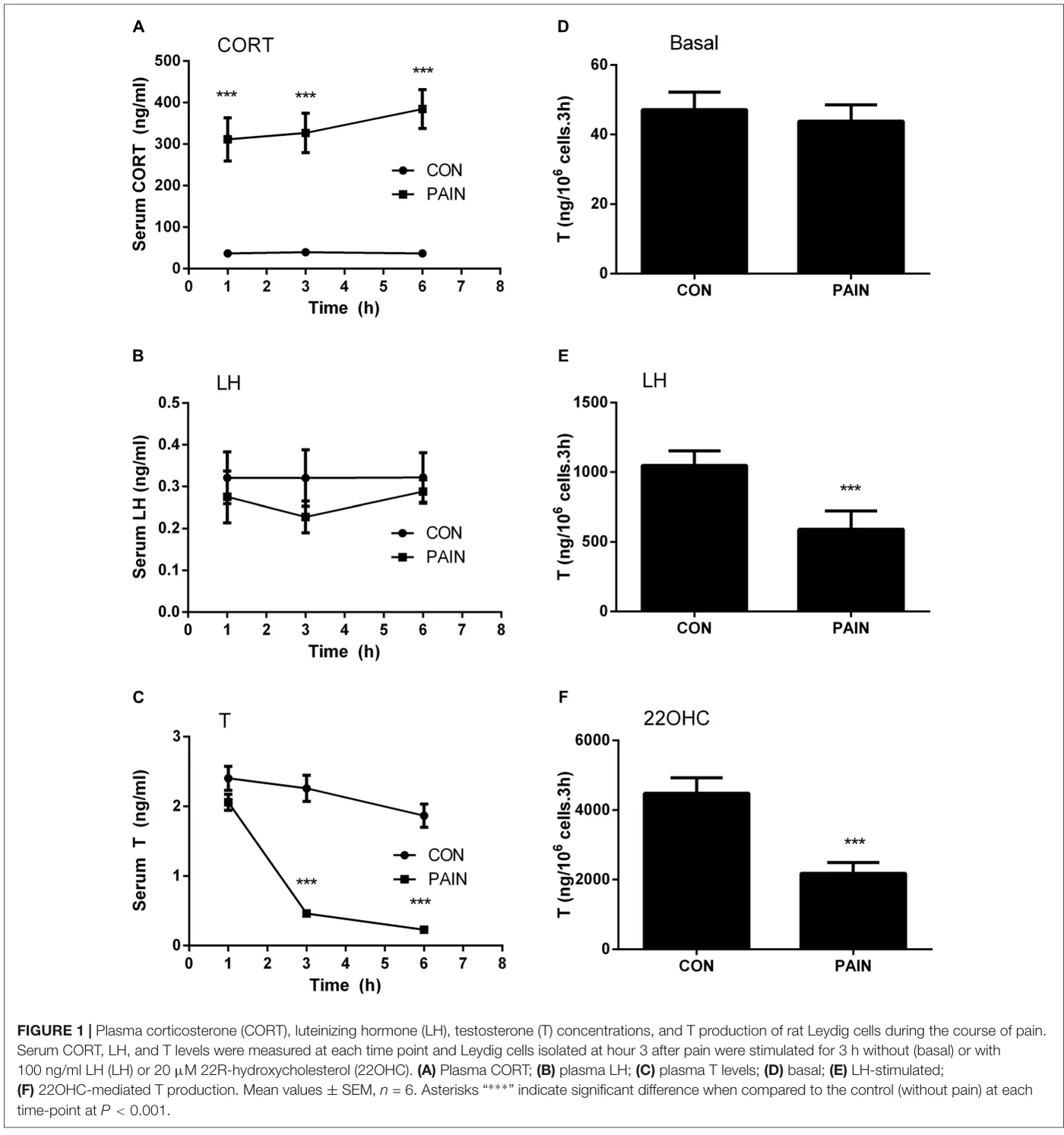
The best study here is this one. Rats were put under pain stress.
- Corticosterone went up from the first hour
- Testosterone dropped at 3 and 6 hours
- The testosterone genes of the Leydig cell (Star, Hsd3b1, Cyp17a1) were down
- Rats that got DHEA (5 or 10 mg/kg) did not have the drop in testosterone
DHEA did not lower the corticosterone in the blood. It changed what happens inside the Leydig cell: the cell switched off more of the corticosterone that reached it. DHEA protected the testis from the stress hormone.
In this study rats got DHEA-S (5 mg/kg) for 6 months.
- Testosterone: 3.9 ng/mL with DHEA-S vs 1.9 ng/mL in the controls
- Testis weight did not change, and sperm production was complete in all groups
Double the testosterone, no harm to the testes. But it did not make them bigger either.
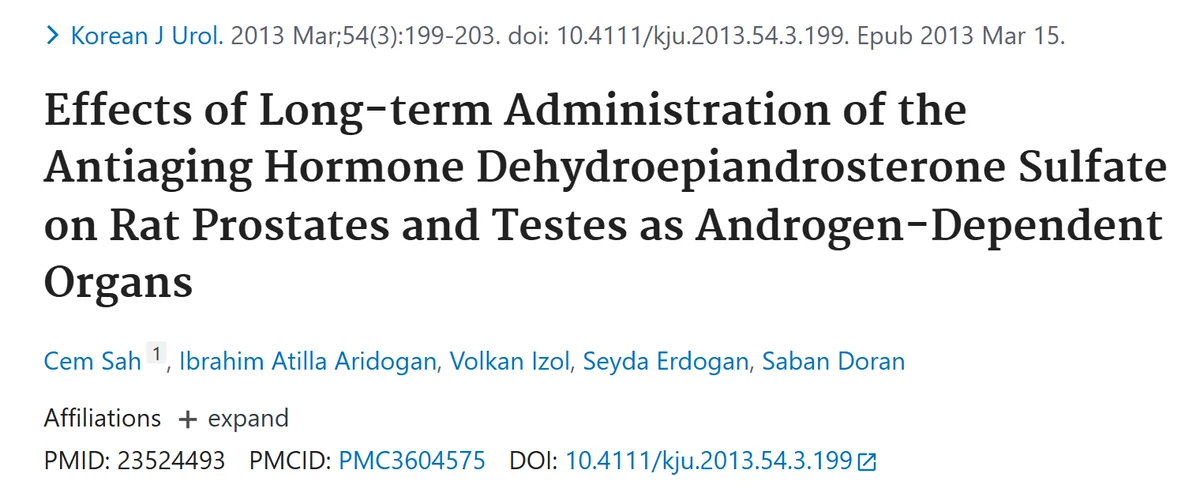
In this study Leydig cells in a dish were attacked with hydrogen peroxide (oxidative stress). DHEA raised their testosterone output, kept more of them alive, and there was less DNA damage.
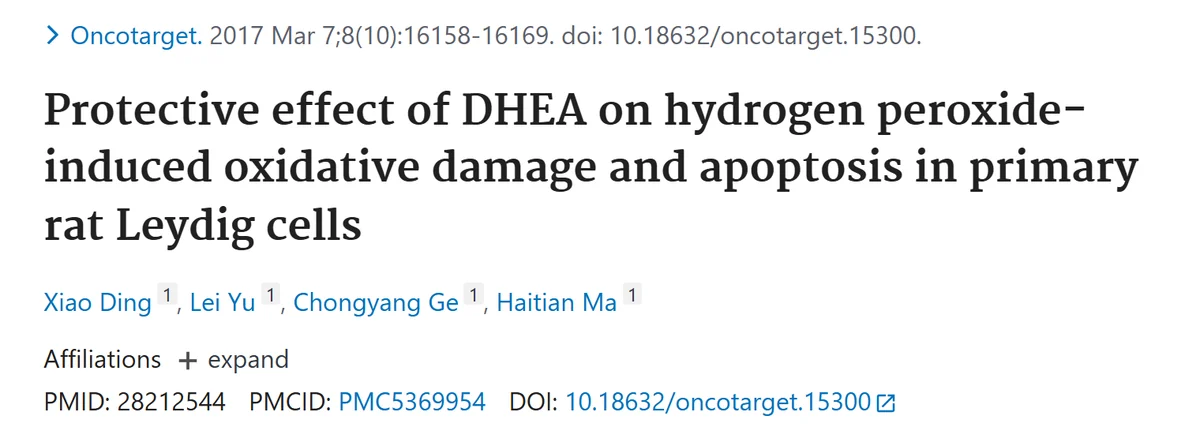
And in humans? In this study men and women aged 65 to 75 took 50 mg of DHEA a day for a year. In the men:
- Total testosterone: 420 to 491 ng/dL with DHEA, 420 to 448 with placebo (not a significant difference)
- Free testosterone index: 44.8 to 53.9 with DHEA, 39.2 to 39.0 with placebo (significant)
So in older men DHEA did not clearly raise total testosterone, but it did raise the free part.
Progesterone
Most people think of progesterone as a female hormone. But it sits on the road to testosterone, and the testis makes it. In the testis fluid study above, the men with normal sperm production had a middle value of 0.7 ng/mL of progesterone inside the testis.
And progesterone has a second job that is even more interesting. It is the key that starts the sperm.
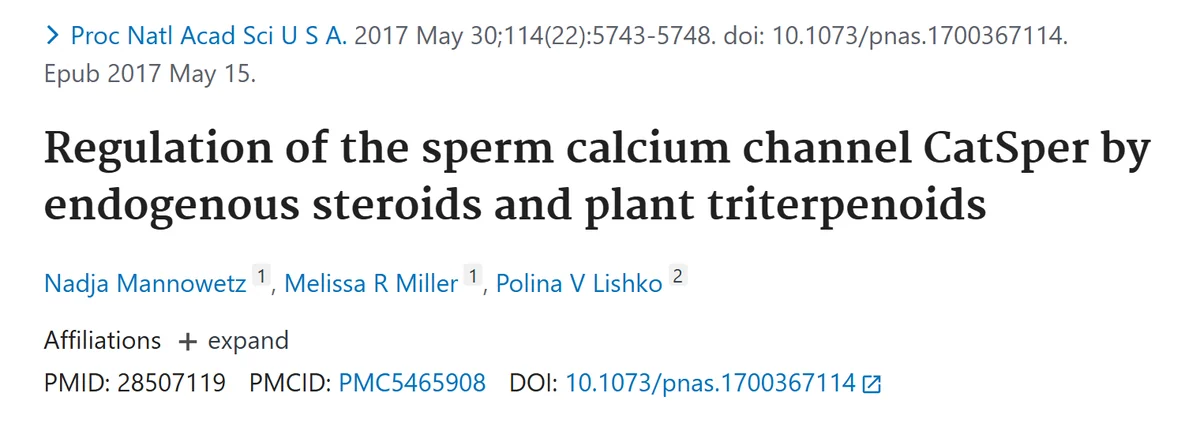
Sperm have a calcium channel in the tail called CatSper. When it opens, the tail starts beating hard. In this study on human sperm:
- Progesterone raised the current through the channel sevenfold
- It worked at tiny amounts (half of the full effect at 7.7 nM)
- Cortisol blocked progesterone from opening the channel
- Testosterone at high amounts blocked it too
So in the dish, cortisol jams the switch even on sperm that are already made.
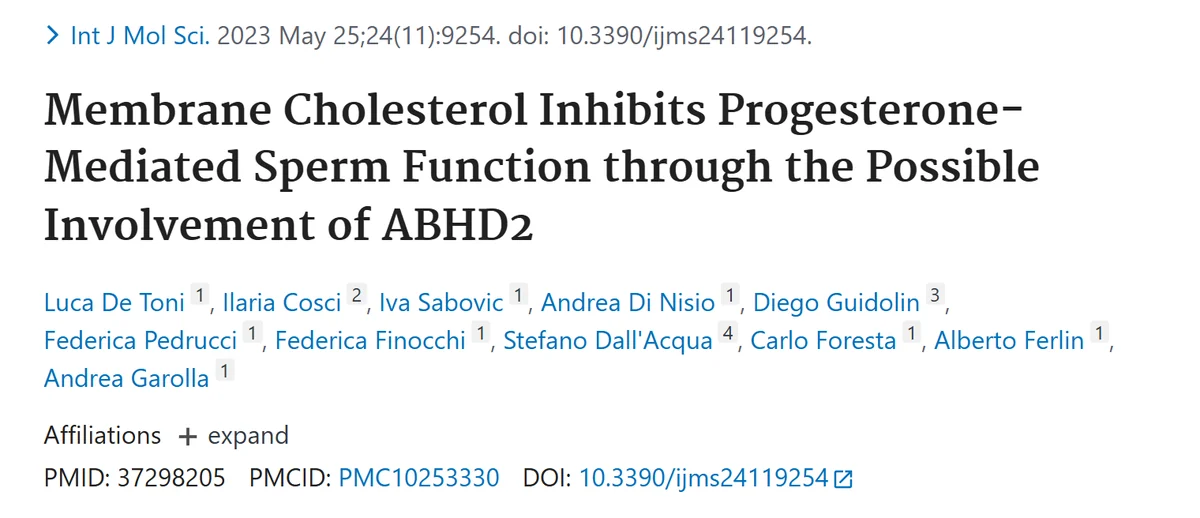
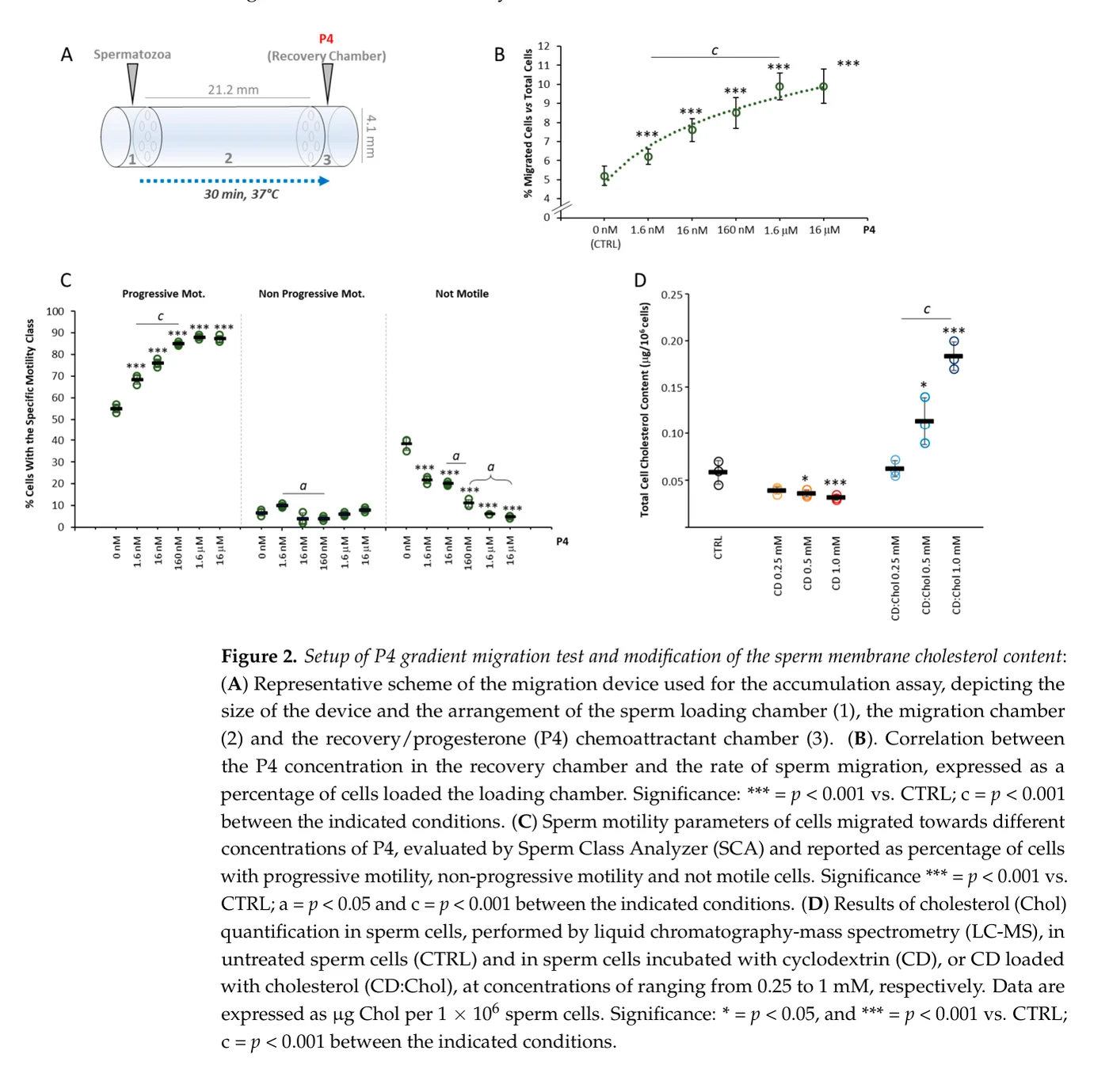
In this study sperm from 12 donors were given a tube to swim through, with progesterone at the other end.
- With no progesterone, under 6% of the sperm crossed
- With rising amounts of progesterone: 6.2%, 7.6%, 8.5% and 9.9%
The more progesterone, the more sperm swim toward it. This is how the sperm finds the egg.
Two honest notes. Do not confuse progesterone with progestin drugs. The synthetic progestins are what the contraceptive trials above add to testosterone to shut sperm production down. And I did not find an open study that gave men natural progesterone and measured the testes, so for now the evidence here is the mechanism.
And sugar?
You were told sugar destroys fertility. In this study 15 young men ate a controlled healthy diet for one week, and in the second week they added 50% more calories from sugar. On average, 375 g of sugar a day.
- Sperm motility went up during the two weeks and stayed high on the sugar
- The 5 men who started with low motility improved the most
- The number of sperm did not change
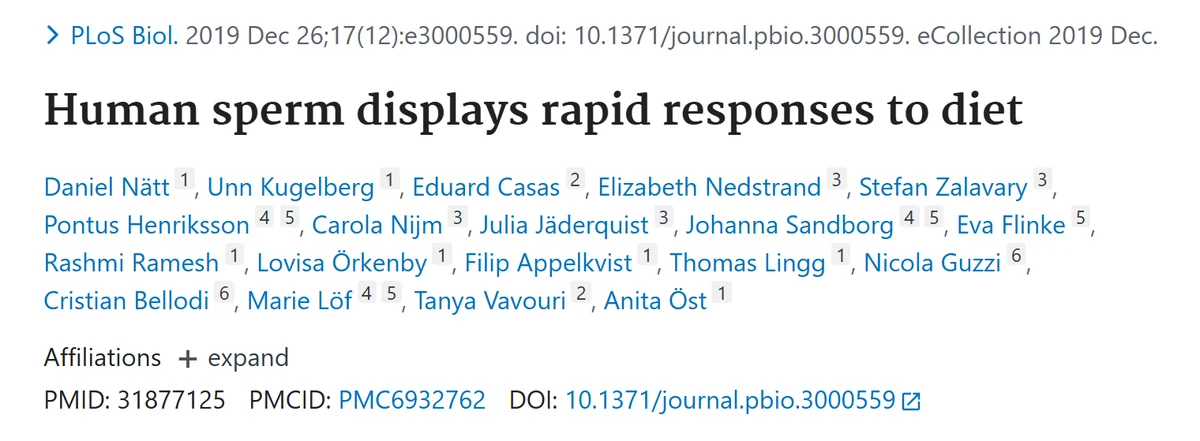
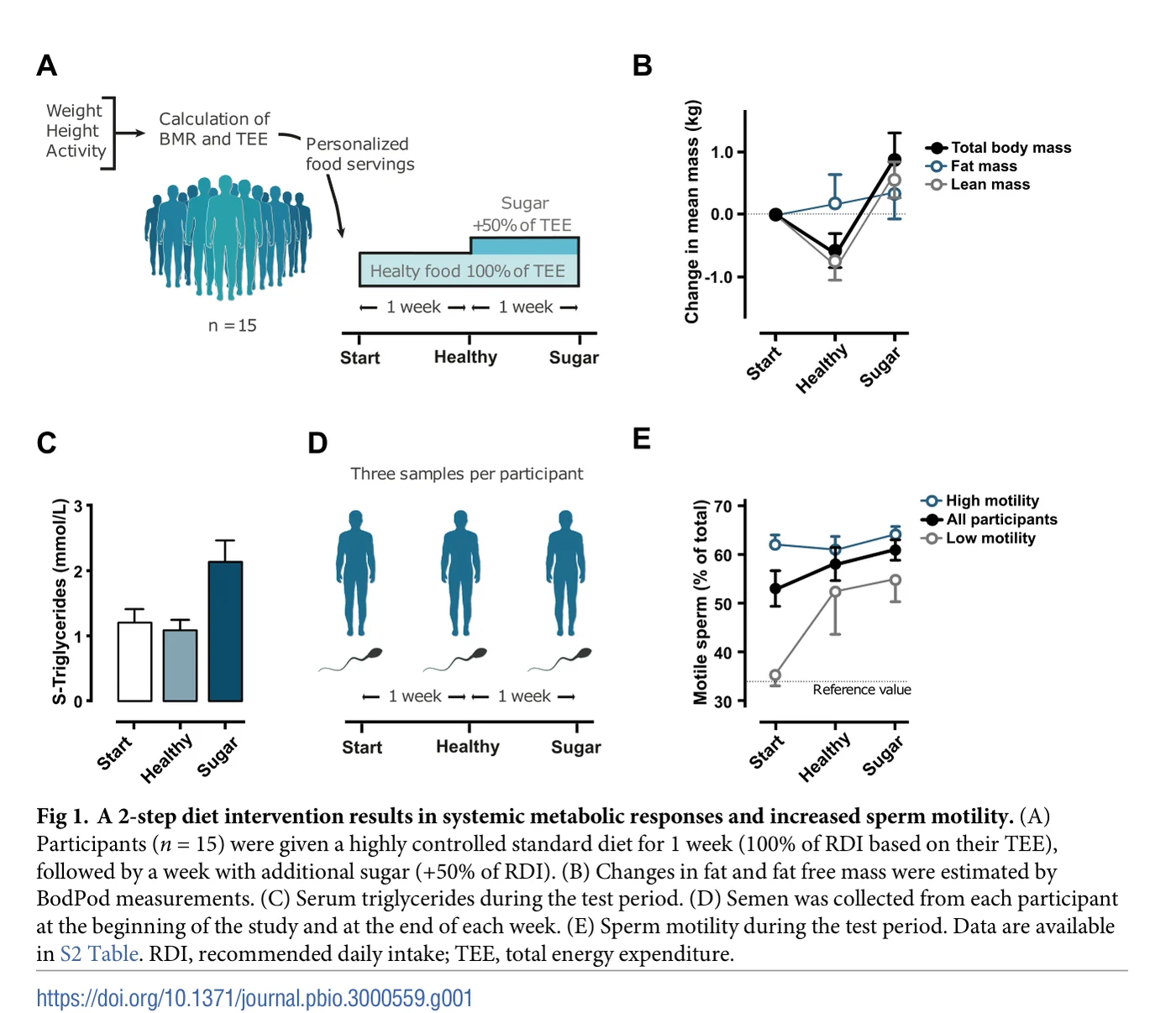
375 g of sugar a day and the sperm only moved better. I posted this study here.
How to improve testicular function?
- Lower cortisol. It is the number one enemy of the Leydig cell. Sleep, eat enough, and don't live in stress. How to lower cortisol.
- Fix the gut. Less endotoxin in the blood means less inflammation in the testes. How to fix a leaky gut.
- Lose the extra fat. In the studies above, more body fat came with more endotoxin and less testosterone.
- Don't replace your testosterone, make it. Testosterone from outside lowers the testosterone inside the testes and can take sperm down to zero. If you are on it and want children, know that recovery can take up to two years.
- Vitamin E. The trials used 400 units (or 400 mg) a day for 3 months.
- DHEA. It protected the testes from stress in rats. The human trial used 50 mg a day.
- Don't fear sugar. The Leydig cell needs fuel and cholesterol to work.
- Keep estrogen and prolactin low. The men with small testes had more estrogen. How to lower prolactin, and a review I posted on aromatase inhibitors and male fertility.
Thanks for reading, I hope this information improves your health.
Oxidative State.